
Consumers Expecting Packages From Businesses Overseas May Face Delays as Postal Services Shut Down Shipments Ahead of New Tariffs

The end of the de minimis exemption means products under $800 will be subject to new duties, though shippers have yet to figure out the mechanics for paying the new fees.
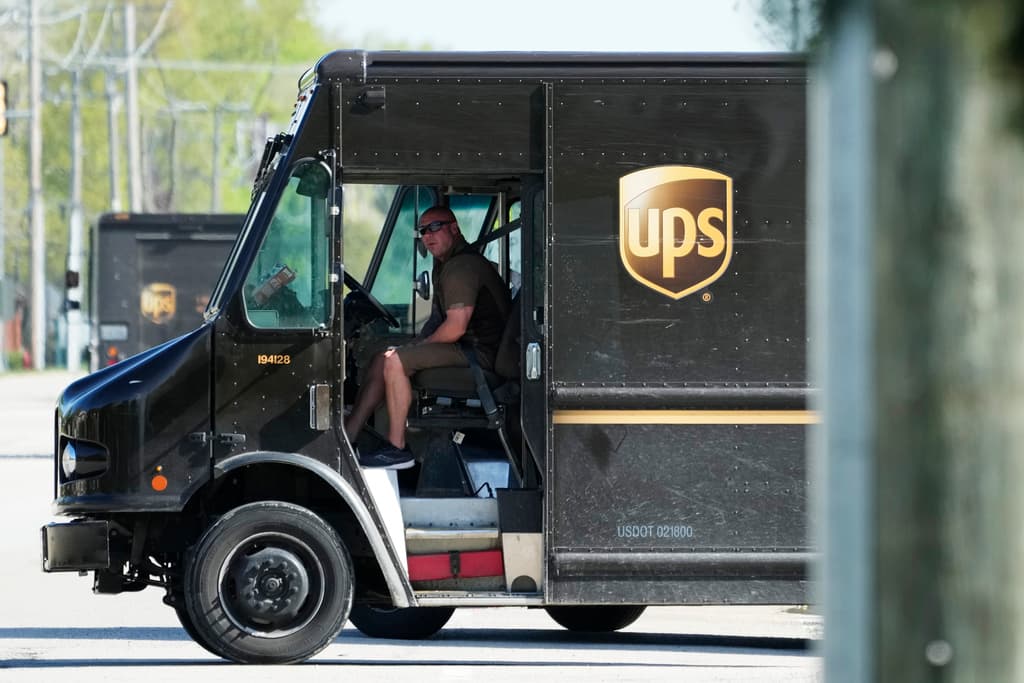
AP/Nam Y. Huh
A UPS truck makes deliveries in Illinois. AP/Nam Y. Huh

Direct-to-consumer shipments from overseas will beginning Friday be subject to new taxes on deliveries valued under $800, an end to a loophole in tariff policy that has led dozens of international postal services to announce they will suspend shipments to America.

Postal services in Germany, France, Britain, Italy, Spain, Austria, Belgium,  Sweden, Denmark, Norway, Czech Republic, Greece, Malta, Liechtenstein, India, Singapore, and Thailand all announced a pause in shipments, saying they did not receive technical guidance until last week for the Friday deadline and are unprepared for the paperwork. The 51-member Association of European Postal Services, PostEurop said it will shut down shipments until member nations can sort out the details. 

“PostEurop members are working very hard on solutions to ensure that postal goods shipping to the USA can continue for both business and private customers, considering also the importance of guaranteeing the Universal Postal Service,” the association said in a statement about the impending duty.

Postal shipment rates were set up to be charged at a flat rate based of the value of the shipped items until February, when the country of origin’s prevailing tariff rate would be imposed. For postal services in national with a 15 percent or lower tariff rate, that would mean shipments incur an $80 flat fee. From 16-25 percent, the rate will be $160 while shippers in nations with tax rates over 25 percent will pay the postal service $200 per shipment.

Non-postal shipments—items sent through FedEx and other international shipping services—will be subject to the tariff rate of the country of origin. Customs and Border Patrol will manage the documentation. Companies that try to evade the rate could face first-time penalties of $5,000.

DHL paused its intake of goods from business customers shipping to America on Friday. “Key questions remain unresolved, particularly regarding how and by whom customs duties will be collected in the future, what additional data will be required, and how the data transmission to the U.S. Customs and Border Protection will be carried out,” reads a press statement issued by the organization.

The de minimis tax was an exemption to taxes on low-priced goods permitted by Congress as far back as the 1930s but raised to values of $800 during the Obama administration. The exemption will still be permitted for items shipped from Communist China and Hong Kong, per an executive order earlier this month that President Trump said he approved while trade negotiations are ongoing. Mexico and Canada were also exempted for now, though the Big Beautiful Bill signed by the president in July eliminates any exemptions beginning in July 2027. 

With the suspension of the de minimis tax and a variety of different tariff rates imposed by the Trump administration, tax rates could vary greatly country by country, just as sales tax varies state by state. ECommerce shipping company, Easyship, offered several examples of how prices may be affected.

“Example: A seller in Vietnam shipping $20 phone cases may now face $80–$200 in duties per order under new IEEPA tariffs,” the company noted in a message to its users.  For companies paying to ship apparel, beauty products, accessories, games, and tech items, a single $45 item from a country with a 15 percent tariff rate would now cost $55.50, assuming the cost is passed onto the consumer.

Easyship suggested getting around the excessive individual shipping costs by mass-mailing products to freight partners in fulfillment centers inside America. 
In May, China’s largest clothing manufacturer, Temu, announced it was no longer shipping clothes to America from China. Instead, it began stockpiling products in American warehouses and using American suppliers to send packages within U.S. borders. It still lost about a third of its merchants operating in America. However, Temu rebounded in July after the exemption from the de minimis suspension and is reportedly expected to recover 80-90 percent of its operations by September.


The New York Sun

© 2025 The New York Sun Company, LLC. All rights reserved.

Use of this site constitutes acceptance of our Terms of Use and Privacy Policy. The material on this site is protected by copyright law and may not be reproduced, distributed, transmitted, cached or otherwise used.

The New York Sun

Sign in or  create a free account

or
By continuing you agree to our Privacy Policy and Terms of Use