Costa Rica Reaffirms Willingness To Accept Migrant, Contradicting ICE Testimony in Federal Court
The judge upbraided the Justice Department for failing to substantiate its claim that Costa Rica is suddenly off the table.
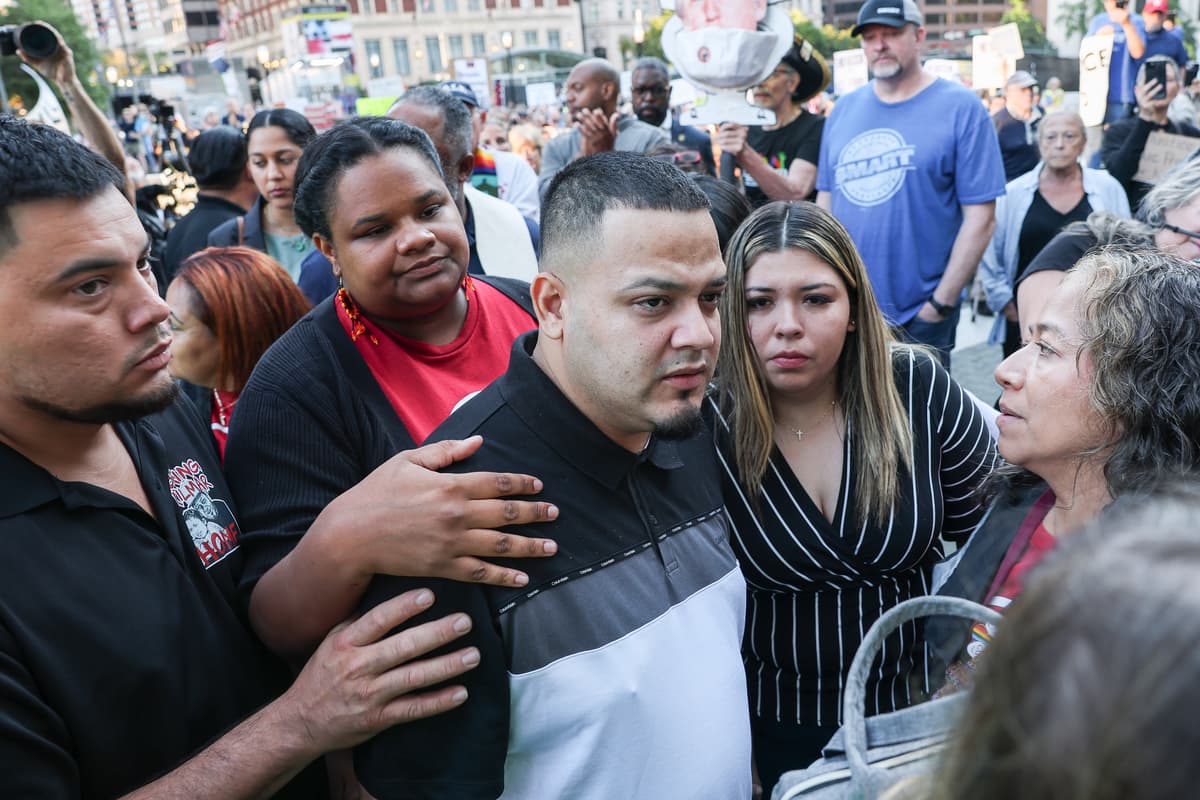

Yet another diplomatic dispute has erupted in the high-profile case of Salvadoran immigrant Kilmar Abrego Garcia, with a top Costa Rican official contradicting U.S. immigration authorities regarding the country’s willingness to let him be deported there.
While Immigration and Customs Enforcement officials testified in federal court that Costa Rica was no longer an option, that nation’s security minister, Mario Zamora Cordero, told The Washington Post late Friday that his country remains ready to receive Mr. Abrego Garcia.
“That position that we have expressed in the past remains valid and unchanged to this day,” Mr. Zamora said in a statement to the paper.
This direct rebuttal challenges the Trump administration’s current push to deport Mr. Garcia to Liberia, the latest flashpoint in a nine-month legal battle that has garnered international attention.
The contentious deportation case began in the spring when Mr. Garcia was deported to his native El Salvador despite an immigration judge’s order protecting him from removal to that specific country. A federal judge subsequently ordered his return to the United States.
Upon returning, the administration brought a criminal charge of human smuggling against him, stemming from a 2022 traffic stop in Tennessee. When a judge ordered his release pending trial, immigration officials promptly re-arrested him for deportation. He has been in immigration detention in Pennsylvania ever since.
The latest confusion stems from conflicting narratives presented inside and outside the courtroom. During a hearing on Thursday, acting deputy assistant director for ICE’s removal operations, Daniel Cantu, said under questioning that the U.S. State Department had informed him that Costa Rica could not accept the migrant right now.
Mr. Cantu offered few specifics on the reasoning, noting only that the option vanished after consultations with State Department counterparts, who advised exploring backups. Consequently, the administration turned its focus to Liberia.
However, Mr. Zamora said he had informed the U.S. Embassy in San José in August that the government would accept Mr. Garcia and provide him legal residency.
Reiterating that Costa Rica has the “highest human rights standards,” Mr. Zamora said the country would receive Abrego Garcia “under humanitarian conditions that guarantee the full respect for his rights and liberties.”
U.S. District Judge Paula Xinis, who has presided over Mr. Garcia’s cases since March, expressed visible frustration during Thursday’s hearing regarding the government’s lack of evidence concerning the Costa Rica claims.
Judge Xinis upbraided the Justice Department for failing to substantiate why Costa Rica – which had previously agreed to grant Mr. Garcia legal status – was suddenly off the table. She noted that the government is “saying Costa Rica has now rescinded” its original offer but had provided no proof.
“If you are saying that … I’d love to see the evidence so that I can rest assured this is not just an empty ‘word salad’ of an affidavit,” Judge Xinis told lawyers for the Trump administration.
Without a valid removal order, Judge Xinis noted that Mr. Garcia is “at a minimum” entitled to certain relief under Supreme Court precedent. She cited Zadvydas v. Davis, which bars the government from indefinitely detaining migrants whose removal is not realistically possible.
Lawyers for the Trump administration had asked Judge Xinis to dissolve an emergency order she handed down in August ordering Mr. Garcia to remain in U.S. immigration custody, stating they planned to immediately deport him to Liberia. The administration has previously failed to remove him to Eswatini, Uganda, and Ghana.
“Today was a zero in my view,” Judge Xinis noted at one point during the proceedings.
Before adjourning, Judge Xinis made clear that this would be the final hearing in the so-called habeas case, in which his lawyers are challenging his detention and the attempt to deport him.
She vowed to issue a ruling “soon,” though she ended the hearing with a warning to the Justice Department regarding missing paperwork. “I don’t even know if it matters here, frankly, because if I make a finding that a final order doesn’t exist, then we are done,” she said.