Could Susie Wiles’s Comment to Reporter About Trump’s ‘Score Settling’ Undermine His Cases Against James Comey and Letitia James?

The 47th president’s chief of staff offers her opinion on the motivations behind the prosecutions of the critics of the president.

Anna Moneymaker/Getty Images
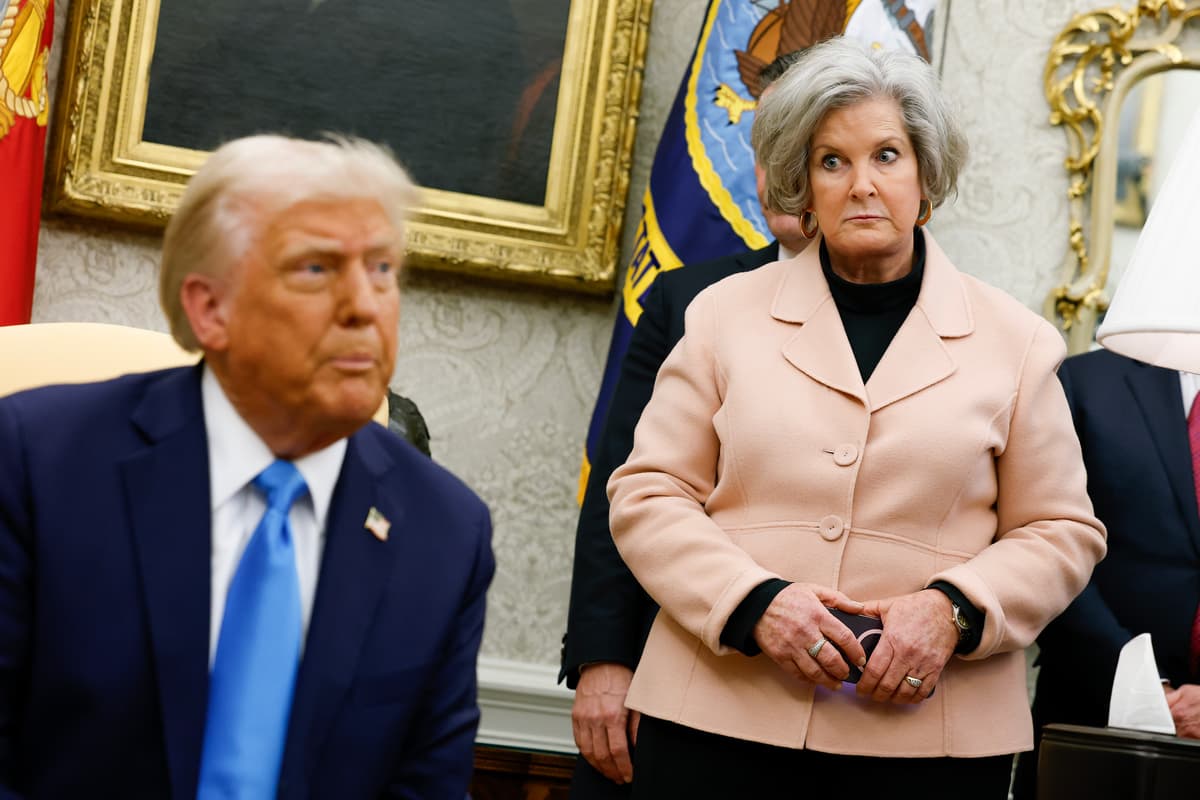
President Trump, accompanied by White House Chief of Staff Susie Wiles, speaks during a meeting with Prime Minister Benjamin Netanyahu in the Oval Office, February 4, 2025. Anna Moneymaker/Getty Images

The startling comments from President Trump’s chief of staff, Susie Wiles , that an observer might think the president was invested in “score settling” against his political opponents – could further disrupt the  criminal prosecutions — dismissed for the moment — of the former director of the FBI, James Comey, and New York’s attorney general, Letitia James. 

The normally taciturn Ms. Wiles, in comments reported by a historian of White House chiefs of staff, Chris Whipple, who published an article in Vanity Fair, quoted Ms. Wiles saying  she reckoned that she reached a  “loose agreement” with the president she serves to pivot away from the prosecutions 90 days after his inauguration. She adds with respect to Mr. Trump’s pushback against what he believes is wrongdoing by the government legal establishment under President Biden and in Democrat-controlled states like New York,  that “when there’s an opportunity, he will go for it.” 

Ms. Wiles calls Mr. Whipple’s article a “disingeniously framed hit piece.”

Ms. Wiles added with respect to Mr. Comey and Ms. James that “It’s not that he thinks they wronged him, although they did. He thinks that they wronged, and they should not be able to do to somebody else what they did to him and the way that you could cure that, at least potentially, is to expose what was done.”

Of the case against Mr. Comey, Ms. Wiles reckoned that  “I mean, people could think it does look vindictive. I can’t tell you why you shouldn’t think that.”  

Ms. Wiles, a political strategist who wields such influence that the president  called her “Susie Trump” on the campaign trail, adds that while she  does not think that “Mr. Trump is on a retribution tour … In some cases, it may look like retribution. And there may be an element of that from time to time. Who would blame him? Not me.” Ms. Wiles says that the case against Ms. James “might be the one retribution” because “she had a half a billion dollars of his money.”

The chief of staff’s reference is to the civil fraud judgment Ms. James, an elected Democrat in deep blue New York,  secured against Mr. Trump, his two adult sons, and their family business from Judge Arthur Engoron. That judgment, though, was overturned by an appellate court who found the penalty so excessive that it violated the Constitution’s Eighth Amendment. 

The court, though, kept the underlying verdict intact, a split decision that led to appeals from both Ms. James and Mr. Trump. Ms. James ran for office denouncing Mr. Trump as an “illegitimate president” and threatening to shine a “bright light into every corner” of his real estate empire. Mr. Trump has claimed that he was selectively targeted across that case and his four criminal ones.

The cases against Mr. Comey and Ms. James were dismissed after a federal judge,  Cameron McGowan Currie, an appointee of President Clinton, found that the prosecutor in charge, Lindsey Halligan, was unlawfully appointed by Attorney General Pam Bondi. Ms. Bondi vowed an “immediate appeal” of that ruling, though none has yet been docketed. Ms. Halligan convened two subsequent grand juries against Ms. James, both of which demurred from handing up indictments. 

Before the cases against Mr. Comey and Ms. James were dismissed, they both moved to toss the case on grounds unrelated to the mechanics of Ms. Halligan’s appointment. The defendants contended that the prosecutions against them were “vindictive” and “selective” because they were driven by what Mr. Comey called in a court filing  “animus through a megaphone” blasted from the White House. 

Defendants must clear a high bar to succeed on a claim of “vindictive” prosecution. They are required to show that the prosecutor acted with “genuine animus” and pursued charges to punish the defendant for exercising a protected right, like speech. Both Mr. Comey and Ms. James point to a message Mr. Trump posted on social media in September, addressed to “Pam,” that asked “What about Comey, Adam ‘Shifty’ Schiff, Leticia??? They’re all guilty as hell, but nothing is going to be done. We can’t delay any longer, it’s killing our reputation and credibility.”

Now it appears that Ms. James and Mr. Comey could have even more fodder for such an argument — if the cases are ever reactivated. The two have larded their brief so far with Mr. Trump’s statements of hostility toward them. Now, Ms. Wiles’s statements about the motivations behind the prosecution could be marshalled as evidence in court that the cases were improperly motivated.


The New York Sun

© 2025 The New York Sun Company, LLC. All rights reserved.

Use of this site constitutes acceptance of our Terms of Use and Privacy Policy. The material on this site is protected by copyright law and may not be reproduced, distributed, transmitted, cached or otherwise used.

The New York Sun

Sign in or  create a free account

or
By continuing you agree to our Privacy Policy and Terms of Use