
Federal Court Says New York Cannot Target Anti-Abortion Groups for Promoting ‘Abortion Pill Reversal’

The court says its injunction ‘serves to secure the First Amendment rights’ to make ‘religiously and morally motivated statements.’

AP/Allen G. Breed, file
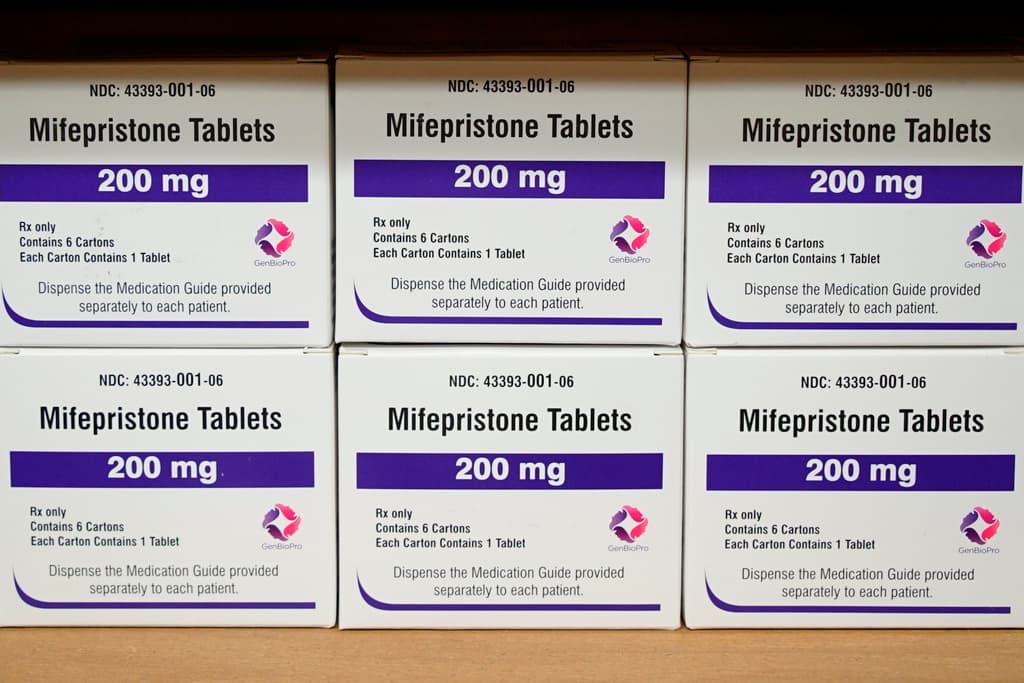
The drug mifepristone at the West Alabama Women's Center at Tuscaloosa, in March 2022. AP/Allen G. Breed, file

A federal appeals court has rejected an attempt by New York’s attorney general, Letitia James, to stop anti-abortion groups from promoting so-called “abortion pill reversal,” or APR, procedures, a potential warning sign for officials across the country seeking to crack down on groups promoting the procedure. 

On Monday, a three-judge panel of the United States Court of Appeals for the Second Circuit unanimously rejected Ms. James’s appeal of a preliminary injunction that stopped her from pursuing lawsuits against certain anti-abortion groups that promote APR. 

APR, in which a pregnant woman takes multiple doses of the hormone progesterone after taking mifepristone in the hopes of stopping an abortion, has become a source of controversy among groups who advocate for abortion access. Ms. James, as well as California’s attorney general, Rob Bonta, sued to stop groups opposed to abortion from promoting APR. 

The National Institute of Family and Life Advocates, or NIFLA, and two other anti-abortion groups, which were not part of Ms. James’ original lawsuit, sued, arguing that the attorney general’s litigation chilled their free speech due to concerns that they would be targeted in the future if they continued to promote APR.

In August 2024, a federal judge ruled in the groups’ favor and issued a preliminary injunction that blocked Ms. James from taking enforcement action against the plaintiffs. The attorney general appealed the decision, calling the injunction a “collateral attack” on her lawsuit against other pregnancy centers.

Ms. James said in her appeal that the anti-abortion groups promoting APR were engaged in commercial speech that can be regulated by the government. She argued that “the speech should be considered commercial because ‘someone must bear the cost’ of APR, be it insurance, the medical provider, or a charity.”

 She has insisted that groups that promote APR are “spreading dangerous misinformation” that lacks “any medical and scientific proof.” 

However, on Monday, the Second Circuit disagreed with her, noting that “based on the uncontroverted evidence in the current record, the speech is religiously and morally motivated,” and the plaintiffs do not perform APR or receive money for their advocacy efforts.

“The NIFLA plaintiffs do not provide APR themselves, but rather provide the public with information about APR and access to third-party providers who can offer APR,” the appeals court said. 

The court said that agreeing with Ms. James’s argument would “potentially subject a sweeping range of non-profits to regulation of their speech for providing the public with information,” such as LGBTQ advocacy groups that provide patients with information about so-called gender-affirming care.

Judge Joseph Bianco wrote, “The preliminary injunction serves to secure the First Amendment rights of the NIFLA plaintiffs by allowing them to make religiously and morally motivated statements that provide information about APR to women who may wish to attempt to counteract the effects of an abortion initiated by oral medication.”

Ms. James’s office did not respond to the Sun’s request for comment by the time of publication. 

Medical groups have raised doubts about the effectiveness of APR. A 2019 study conducted by researchers at the University of California into the use of progesterone was abruptly ended after only 12 women had enrolled. Researchers also said that three of the women were transported to a hospital due to vaginal bleeding. The lead researcher of the study, Dr. Mitchell Creinin, told NPR that because the study was cut short, they could not answer the question of whether APR is effective. There have been no definitive studies to confirm concerns about the procedure’s risks. 

Proponents of APR argue that the procedure is safe, noting that progesterone has been used to prevent miscarriages. They say it has a good safety record and argue that the use of APR has saved more than 5,000 unborn lives. 

Despite the concerns from medical groups about the procedure, judges appear skeptical of attempts by blue states to stop anti-abortion groups from promoting or facilitating it.

In June, a federal judge ruled that an anti-abortion group, Culture of Life Family Services, can sue California for allegedly unconstitutionally targeting groups that promote APR. Meanwhile, in 2023, a federal judge blocked a Colorado law that banned APR, finding that it violated the Constitution’s guarantee of religious freedom. 


The New York Sun

© 2025 The New York Sun Company, LLC. All rights reserved.

Use of this site constitutes acceptance of our Terms of Use and Privacy Policy. The material on this site is protected by copyright law and may not be reproduced, distributed, transmitted, cached or otherwise used.

The New York Sun

Sign in or  create a free account

or
By continuing you agree to our Privacy Policy and Terms of Use