Critics Cite Lax Approach to Juvenile Crime as a Source of D.C.’s Crime Problem

At one point more than 5 percent of all children aged 10 to 17 were arrested by Metropolitan Police each year, statistics show.

Win McNamee/Getty Images
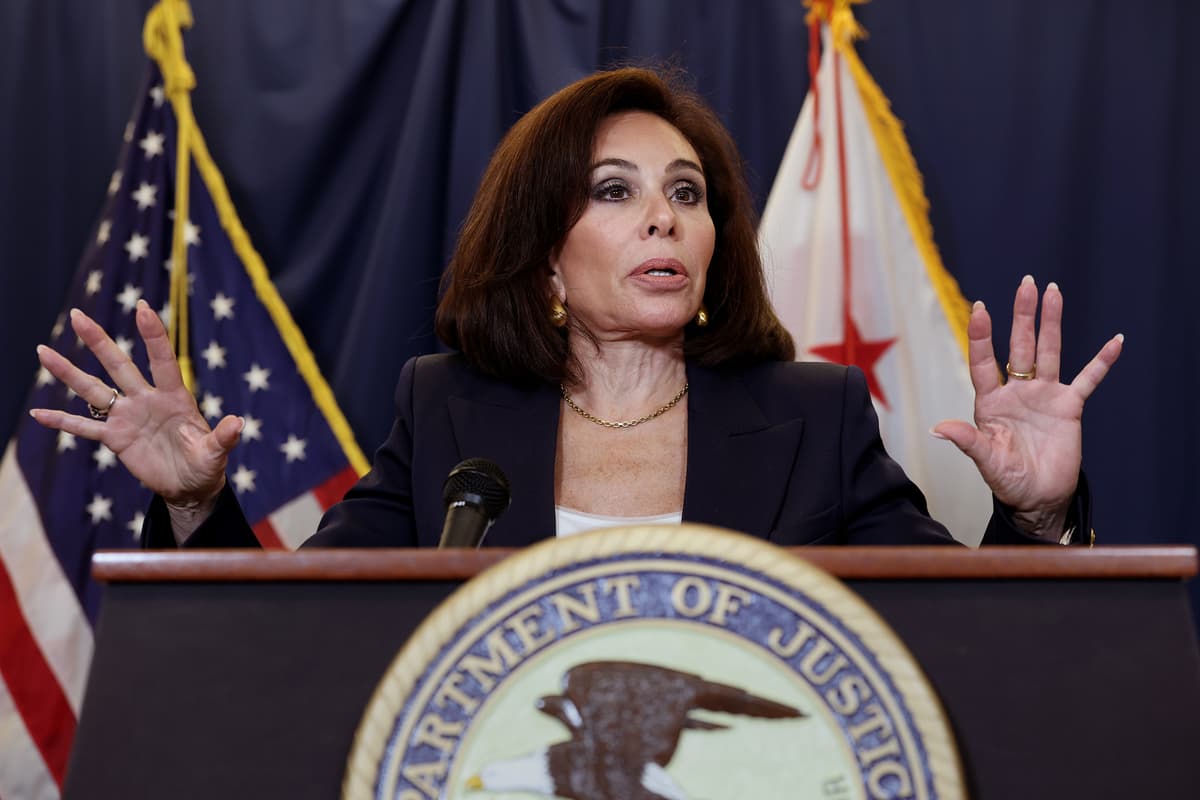
Jeanine Pirro, the U.S. Attorney for Washington, D.C.,holds a press conference in Washington on August 12, 2025. Win McNamee/Getty Images

As federal agents flood the streets of Washington, D.C., on the orders of President Trump, a heated debate is raging over both the legality of the deployment and the role of juvenile crime in the persistent violence that prompted it.

Juvenile crime surged in the nation’s capital during and after the Covid-19 pandemic, with more than 5 percent of all children aged 10-17 being arrested by Metropolitan Police each year, according to a D.C. Policy Center report.

The crime rate for juveniles aged 15 to 20 almost doubled between 2021 and mid-2024 before dropping off over the past 12 months, according to a nonprofit that tracks crime and court proceedings in the district, D.C. Witness.

“It’s a very big issue, and to put this in perspective, over half of the carjackings that currently happen in Washington, D.C., are committed by juvenile offenders,” a Heritage Foundation senior legal fellow and former federal prosecutor, Zach Smith, said to The New York Sun.

“One of the issues that’s driving juvenile crime in the district right now is the fact that there really isn’t appropriate accountability for juveniles when they break the law.”

Washington is unique when it comes to prosecuting crime. The U.S. Attorney’s Office in D.C., now headed by a Trump appointee Jeanine Pirro, a former Westchester County D.A., differs from the other 93 U.S. Attorney’s offices across the country.

Ms. Pirro is tasked with prosecuting local as well as federal crimes in the city but has no jurisdiction over juvenile crime. That task is left to the city’s attorney general, Brian Schwalb, whose office also makes the determination whether a youthful defendant can be charged as an adult.

A 2023 report written by Mr. Smith for the Heritage Foundation suggests Mr. Schwalb may be too slow to prosecute young offenders, referencing an April 2023 public hearing in which he said that his office was committed to treating “kids like kids.”

“I don’t think kids should be treated as adults,” he said at the meeting. “Kids are kids, and when you’re talking about teenagers, particularly — their brains are developing, their minds are developing, and they’re biologically prone to make mistakes — that’s what we’ve all done as we’ve grown up.”

Mr. Smith says that Mr. Schwalb has a “very radical view” of the criminal justice system. “He’s pledged never to prosecute juvenile offenders, no matter how heinous their crimes, no matter how close to 18 they are,” the Heritage senior fellow said to the Sun.

“He’s on record saying that he doesn’t believe we can prosecute our way out of D.C.’s crime problems right now. I think the majority of Americans would disagree.”

Mr. Schwalb’s office did not immediately return requests for comment. However the office says on its website that young people “must face consequences when they break the law, and OAG prosecutes every serious violent offense when we have enough evidence to do so.”

The website adds that the office prosecuted 84.3 percent of violent juvenile offenses in 2024, contributing to “a 35% decrease in violent crime and a 15% decrease in crime overall in 2024 following an unacceptable spike in 2023.”

Ms. Pirro has been vocal about her frustration with the district’s policies and has vowed to change how juvenile criminal prosecutions are handled.

“Under D.C. law, if you’re below 15 years old, you can never be charged as an adult,” she said at a press conference on Tuesday, “even if everybody agreed that you should be. The current law just doesn’t allow for it.”

“If you are 16 or 17 years of age, we can get you for rape one, murder, robbery one, burglary one. But if you shoot someone and don’t kill them, I don’t have jurisdiction.”

“What you get is yoga and you get ice cream socials in family court,” she added. “Well, I’m done with yoga and ice cream socials. We’ve got to change the law to bring them into the justice system.”


The New York Sun

© 2025 The New York Sun Company, LLC. All rights reserved.

Use of this site constitutes acceptance of our Terms of Use and Privacy Policy. The material on this site is protected by copyright law and may not be reproduced, distributed, transmitted, cached or otherwise used.

The New York Sun

Sign in or  create a free account

or
By continuing you agree to our Privacy Policy and Terms of Use