‘Letitia Act’ Championed by Trump Allies Is No Honor for New York’s Attorney General James

The bill, whose name alludes to the New York prosecutor, aims to hold public figures accountable for mortgage fraud.
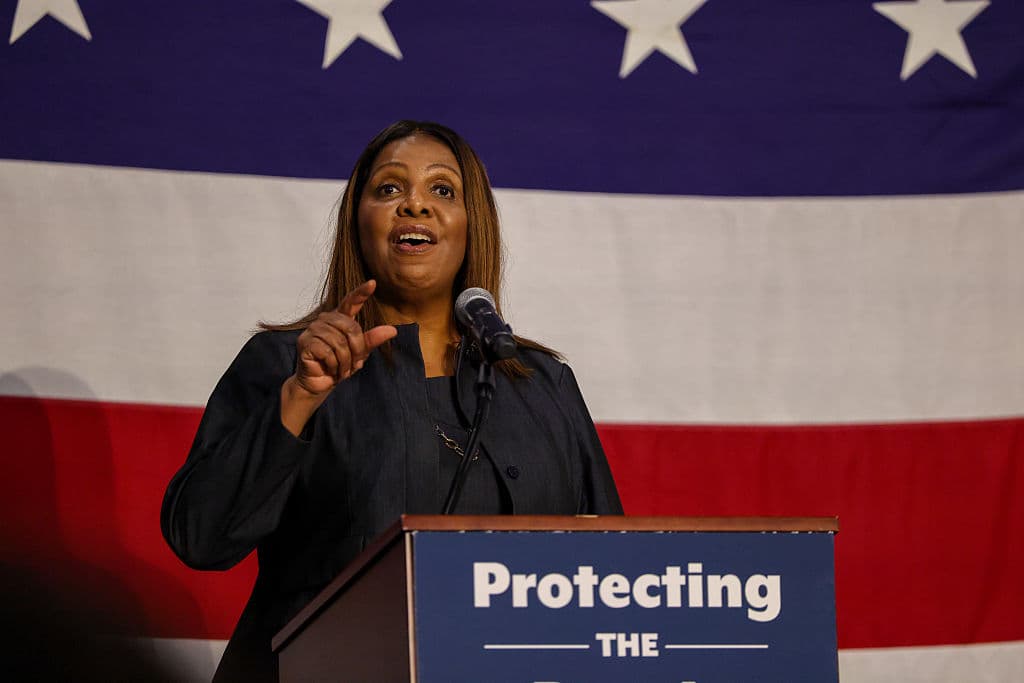

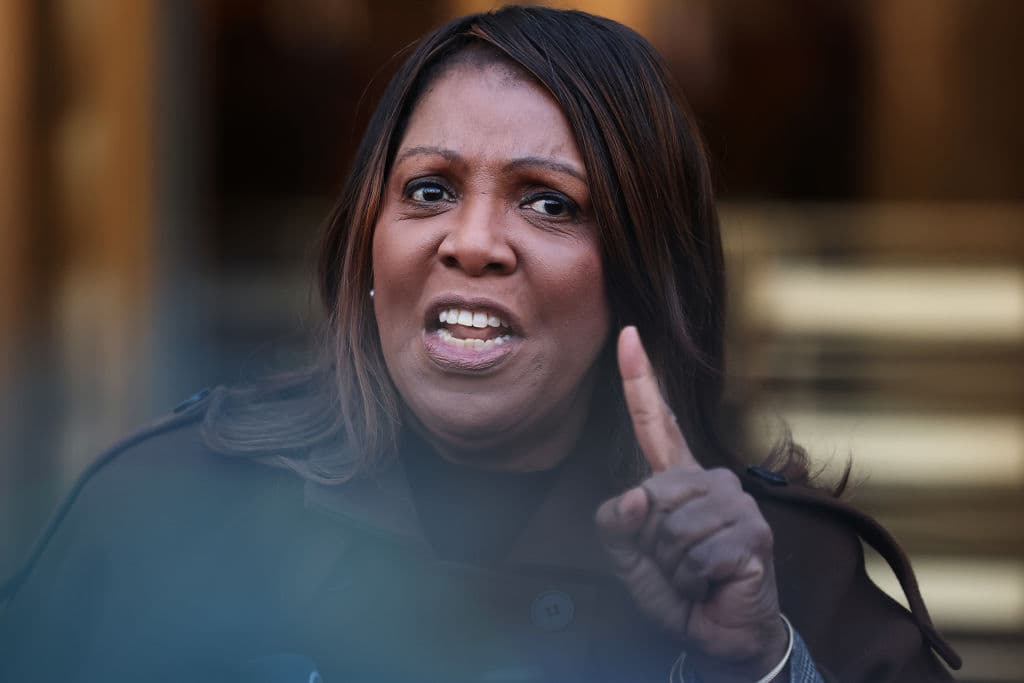
Spencer Platt/ Getty Images
Attorney General James hosts a town hall at SUNY Westchester Community College on May 08, 2025 at Valhalla, New York. Spencer Platt/ Getty Images

The emergence of a new bill in Congress — the Law Enforcement Tools to Interdict Troubling Investments in Abodes Act — underscores the growing legal peril for the inspiration for the bill’s name, Letitia James, New York’s attorney general, as well as for California’s junior senator, Adam Schiff. 

The proposal, which Senator Cornyn vows to introduce soon, aims to increase federal statutory maximum sentences and fines for public officials who “abuse their offices and violate the public trust to commit bank fraud, loan or mortgage fraud, or tax fraud.” It would also create new mandatory minimums “to ensure corrupt public officials serve prison time” — a year for mortgage fraud. 

That penalty, Mr. Cornyn’s office explains in a statement, ratchets up to five years for “officials who engage in a continuing course of criminal conduct.” Mr. Cornyn adds: “This legislation would empower President Trump to hold crooked politicians like New York’s Letitia James accountable for defrauding their constituents, violating their oath of office, and breaking the law.”

The push to expand criminal liability and stiffen penalties comes as the Department of Justice has opened criminal investigations into Ms. James and Mr. Schiff, both for alleged fraud in connection with mortgage documents. The Letitia Act is — so far — supported by six Senate Republicans. One of those, Senator Daines of Montana, explains in a statement, “This bill will increase penalties for public officials who commit fraud and help ensure they serve with integrity and honesty, and I’ll fight with my colleagues to get it across the finish line.”

It’s unclear if —  should the bill pass — these enhanced penalties would apply to the current alleged infractions about which Ms. James and Mr. Schiff are being probed, since the purported offenses precede the potential enactment of the legislation. Generally the law requires fair notice of both the crime and the potential penalty.

Mr. Cornyn is facing a tough re-election race in 2026 due to a primary challenge from the right in the form of the Lone Star State’s long-time attorney general, Ken Paxton. The incumbent’s announcement of the Letitia Act cites the investigation into Ms. James, who has become something of a bête noire for Republicans since she secured a civil fraud verdict against Mr. Trump, his two adult sons, and his businesses. The price tag on that ruling is now north of $500 million.

Ms. James made her pursuit of Mr. Trump central to her campaign for attorney general, vowing on the hustings that she would “be shining a bright light into every dark corner” of his real estate empire. On the night she was elected she declared to Mr. Trump that New Yorkers “are not scared of you.” Her verdict, handed down by Judge Arthur Engoron, was secured without a trial. The judge found Mr. Trump liable for “persistent fraud.”

The heart of Ms. James’s case was the allegation that Mr. Trump inflated the value of his properties — Mar-a-Lago and Trump Tower among them — to secure more favorable loan terms. Judge Engoron, who repeatedly clashed with Mr. Trump in court and eventually imposed a gag order, ventured that the real estate mogul’s misrepresentations “shocked the conscience.”

Mr. Trump’s arguments that his lenders were happy with the loans — meaning that there were no “victims” of the purported fraud — and that his properties were not, in fact, incorrectly valued fell on deaf ears, with Judge Engoron finding his companies guilty without a trial and moving proceedings straight to the penalty phase. The half-billion-dollar judgement he issued was unprecedented. 

Mr. Trump’s appeal to New York’s first appellate court, though, appeared to prosper during oral arguments. One judge likened the allegations to a “commercial business dispute,” and another ventured that the “immense” penalty in the case was “troubling.”

Mysteriously, though, a verdict has still not been handed down more than 300 days after arguments were heard.

The spotlight, though, swiveled to Ms. James with the issuance of a criminal referral for her from the director of the Federal Housing Finance Agency, William Pulte — a scion of the Pulte Homes construction fortune. He accused Ms. James of several acts of mortgage fraud. They include misrepresenting a modest home at Norfolk as her primary residence, misrepresenting the number of rooms in a Brooklyn home, and listing her father as her husband on a loan application. The accusations of mortgage fraud are tinged with irony since Ms. James accused the Trump organization of the same offense. 

Ms. Willis denies those accusations through her renowned  attorney, Abbe Lowell, whose bills are being footed, at least in part, by New York’s taxpayers. He calls the allegations “threadbare” and “cherry-picked,” and part of Mr. Trump’s “revenge tour” against the prosecutor who bested him in court. The Department of Justice and the FBI, though, have determined that there is enough indication of malfeasance to launch formal probes.

Mr. Pulte likewise issued a criminal referral for Mr. Schiff, a longtime antagonist of Mr. Trump who led the first impeachment trial against the 47th president. The lawmaker stands accused of, years ago, listing a Maryland house as his primary home even as he made the same designation for a one bedroom condominium at Burbank, in greater Los Angeles. Mr. Schiff was censured by Senate Republicans for accusing Mr. Trump of colluding with Russia.

Mr. Schiff took to X to defend himself, writing, “Since I led his first impeachment, Trump has repeatedly called for me to be arrested for treason. So in a way, I guess this is a bit of a letdown. And this baseless attempt at political retribution won’t stop me from holding him accountable. Not by a long shot.”

If the Letitia Act becomes law, the DOJ could argue that the quantity of Ms. James’s misrepresentations qualify her for its strictest provisions. There is precedent for such a prosecution. The state attorney for Baltimore, Marily Mosby —  who became a national figure due to her failed prosecution of three Black police officers in the death of Freddie Gray, who was a Black man — was in February 2024 convicted of mortgage fraud.


The New York Sun

© 2025 The New York Sun Company, LLC. All rights reserved.

Use of this site constitutes acceptance of our Terms of Use and Privacy Policy. The material on this site is protected by copyright law and may not be reproduced, distributed, transmitted, cached or otherwise used.

The New York Sun

Sign in or  create a free account

or
By continuing you agree to our Privacy Policy and Terms of Use