Disruptive Climate Change Protests Fuel Growing Public Anger in Europe
Despite the growing public backlash against them, groups such as Just Stop Oil say they have no intention of changing their tactics.
Violence against climate change protesters such as Just Stop Oil is intensifying throughout Europe, with video clips of drivers using their buses to drag sitting protestors off the road and people destroying banners going viral on social media and governments finally beginning to push anti-protest legislation after months of increasing public ire.
An activist interrupted his graduation ceremony at Lancaster University in England on Friday to campaign for action on climate change. Before security dragged the man away, he was booed by his fellow classmates. Despite the growing public backlash, however, members of the group responsible, Just Stop Oil, say they have no intention of changing their tactics.
âCausing disruption is not fun, and we do not take it likely,â Just Stop Oil spokesman Alex De Koning tells the Sun. The group, he added, has tried other, less disruptive efforts that have not been as effective. âMovements which cause disruption are not popular, but they are often successful,â he says.
Just Stop Oil describes itself as a ânonviolent civil resistance group.â It is demanding the United Kingdom halt all licenses for oil, gas, and coal projects.
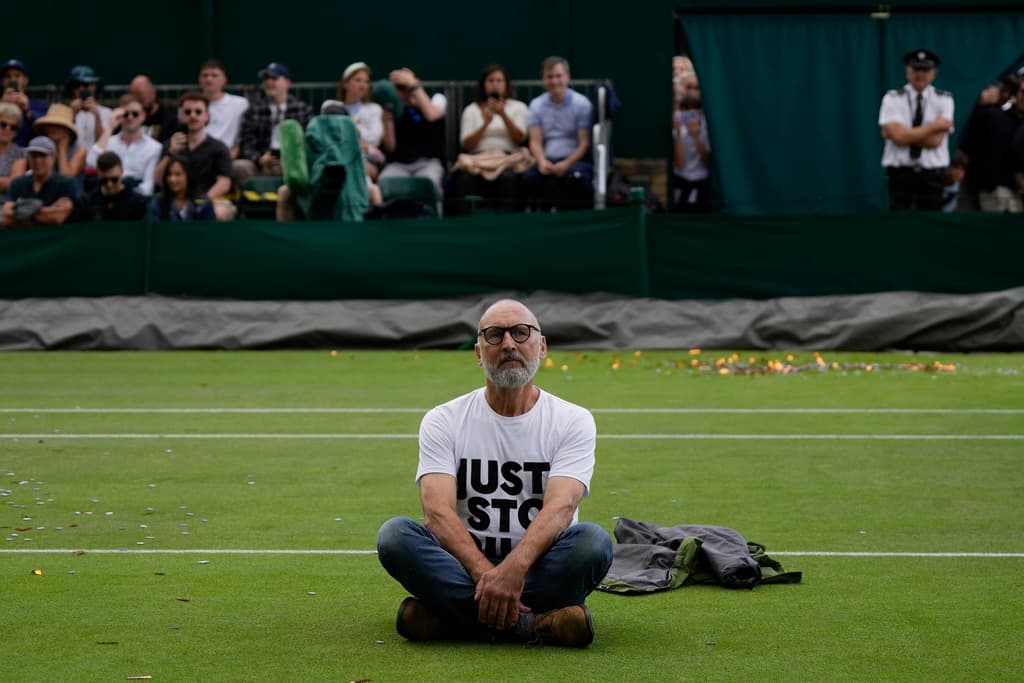
Media attention has increased since last year due to Just Stop Oilâs antagonistic attempts to spread their message. Some of these include roadblocks, interrupting sporting events such as the Wimbledon Tennis Championship, and vandalizing world-renowned art pieces, such as a Van Gogh painting in Londonâs National Gallery.
The same disruptive tactics used by Just Stop Oil are being replicated in America by a UK- based organization, the Tyre Extinguishers. Since June last year, they have slashed the tires of dozens of SUVs in New York, Portland, Pittsburgh, San Francisco, and Chicago. The activist group is calling for a ban of âhuge pollutingâ SUVs in urban areas as a measure against climate change.
A spokeswoman for Just Stop Oil, Zoe Cohen, said in an interview last week that to get media attention the group must cause material damage. âUnless people do things that are slightly transgressive,â she added, âpeople donât notice the difference.â
Their methods have made the protesters widely unpopular across Europe. In Germany, two men forcibly removed protestors off the road. In England, a man tore up banners that activists had while blocking the street and threw them on the ground. A man in London pushed an activist to the floor and kicked his head during a roadblock.
People also find ways to tease the group. Alarms were tied to balloons that floated to the ceiling during a Just Stop Oil meeting by a couple of YouTube pranksters wearing shirts that said âJust Stop Pissing Everyone Off.â
While Mr. De Koning acknowledges that violence against his members is increasing, he says there is also increasing support for their cause. The press âtends to focus on violenceâ rather than the supporters, he claims.
âThe media in the UK and the politicians have been brewing a culture of hate in this country,â Mr. De Koning says. âThey are trying to get ordinary people to turn on each other.â
Home Secretary Suella Braverman said the protests were âunacceptableâ following the disruption of two Wimbledon matches earlier this month. âToday I chaired talks at 10 Downing Street with sporting, police & government teams to help tackle serious disruption of this kind,â Ms. Braverman tweeted.
The United Kingdom government amended its Public Order Act in June this year to allow the prosecution of someone that disrupts the operation of national infrastructure such as roads, railways, and air transport. Before, the police could restrict a protest only if it resulted in âserious public disorder, serious damage to property or serious disruption to the life of the community.â
Under the new law, the government amended the meaning of âserious disruptionâ to now include carrying out day-to-day activities, such as the making of a journey, and the prevention or delay of the delivery of a time-sensitive product to consumers.
The founder of the Climate Emergency Fund, which financially backed activist groups such as Extinction Rebellion and Just Stop Oil, Trevor Neilson, told The Times last month that the methods used by Just Stop Oil have become counterproductive and have not achieved anything.
âItâs become a disruption for the sake of disruption. Working people that are trying to get to their job, get their kid dropped off at school, survive a brutal cost of living crisis in the UK, you know, thereâs a certain hierarchy of needs that they have,â Mr. Neilson said. He resigned from his position in 2021.
There is also a silent majority that is concerned and wants to take action against climate change and the burning of fossil fuels, but doesnât agree with the tactics used by Just Stop Oil, a co-director of the activist group Climate Majority Project, Rupert Read, tells the Sun. The project, he says, aims to represent these people, who want to be heard and seen.
âJust Stop Oil grabs attention,â Mr. Read says. âWhat we do in the emerging âmoderate flankâ is usually less mediagenic, but may well ultimately be more effective.â
For a relatively small group such as Just Stop Oil to have captured the attention of the media and the government is âquite an achievement,â according to a professor of cognitive psychology at the University of Bristol, Colin Davis. Mr. Davis, who has studied social change and peopleâs response to climate change, tells the Sun that the groupâs demands are getting âconsiderable attention.â
The leader of the Labour Party, Keir Starmer, announced earlier this year that it would block all oil and gas licenses if it wins in the next election. âWhile it is not possible to conclude that Just Stop Oil has influenced policies, it has clearly had some impact on the national conversation,â Mr. Davis says.