Drop the Hatch Act Case Against Jack Smith
The law has barely survived constitutional scrutiny and has been more honored in the breach than the observance.
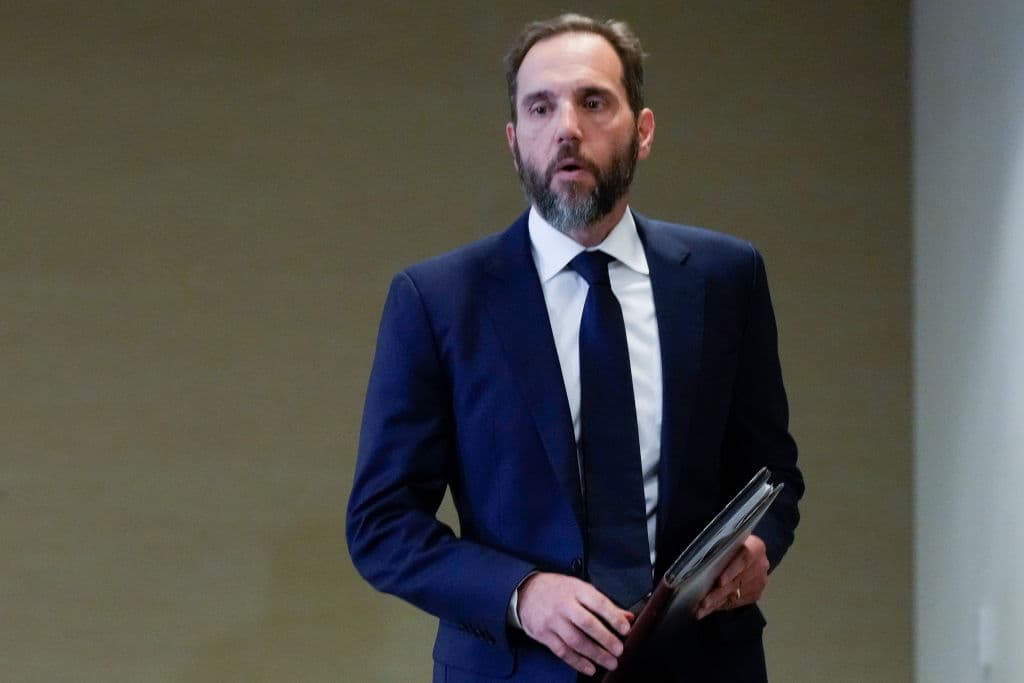

The Hatch Act investigation under way against Special Counsel Jack Smith for his two prosecutions of President Trump strikes us as misguided. The notion appears to have come from a lawmaker we admire, Senator Cotton, and is reportedly now being taken up by the United States Office of Special Counsel, not to be confused with the ex-special counselâs remit to pursue Mr. Trump. The Hatch Act is flimsier.
The Hatch law dates to 1939, when Republicans worried that to sway elections Democrats were doling out patronage to employees of the Works Progress Administration. Senator Hatch of New Mexico grasped an opportunity to strike against the WPAâs powerful administrator, Harry Hopkins, whom Churchill praised for his âflaming soul.â FDR, wavering, signed the bill into law on the last day he could, then claimed credit for it as his own.
The measure restricts political campaigning by federal civil service employees â except the president and vice president. It also forbids various species of bribery and, for federal employees, membership in âany political organization which advocates the overthrow of our constitutional form of governmentâ â like, say, the American Communist Party. Employees in its ambit are prohibited from taking âany active partâ in campaigns.
The Hatch Act, which in 1940 was extended to cover state and local employees whose salaries are paid from state funds, quickly invited legal challenges as a curtailment on protected speech. In a 1947 case, the Supreme Court, by a slender four-to-three vote, beat back challenges to the law on the basis of the First, Fifth, Ninth, and Tenth Amendments to the Constitution. Justice Hugo Black, in a noble dissent, decried the âmuzzlingâ of millions.
The high court ruled again on the Hatch Act in 1973. In United States Civil Service Commission v. National Association of Letter Carriers, the Supreme Court ruled with a six-justice majority that the act did not violate the First Amendment and was not unconstitutionally vague. A stemwinder of a dissent, though, came from Justice William O. Douglas, who, remarkably, had heard the 1947 case. No justice has served longer than the liberal lion.
Douglas in Letter Carriers writes that âspeech, assembly, and petition are as deeply embedded in the First Amendment as proselytizing a religious causeâ â and that the government would hardly think of imposing a religious test on federal employees. He reckoned that the Hatch Actâs ban on âpolitical activityâ amounted to âself-imposed censorship imposed on many nervous people who live on narrow economic margins.â
So the Hatch Act has survived scrutiny, but it has largely been more honored in the breach than the observance. A 2021 report from the OSC found a âwillful disregard for the Hatch Actâ in the first Trump administration on the part of some 13 employees. Kellyanne Conway was found to have violated the Act dozens of times. The OSC called for her removal, which did not happen. Mr. Trump fired the previous OSC director, Hampton Dellinger, in February.
Democrats have been accused of running afoul of the Hatch Act, too. The OSC reckoned that President Bidenâs press secretary, Karine Jean-Pierre, violated the law when she repeatedly used the phrase âMAGA Republicansâ before the 2022 elections. Now it is Mr. Smithâs turn to face the Hatch Act harmonica, possibly to the tune of a $1,000 fine. Never before, though, has a prosecutor been accused of violating this law over the timing of his filings.
We were critics of Mr. Smithâs rush to convict Mr. Trump, with due process being treated as mere speedbumps. A number of Mr. Trumpâs objections to the prosecutions â most notably in respect of immunity â were vindicated in the courts. The 47th presidentâs victory in November amounts to a kind of final verdict on Mr. Smithâs cases. President Trump won. Why end this case with a political whimper?