Another 800 FBI Employees Are Officially Out Amid Patel’s Overhaul

DOGE, firings, and policy shifts are depleting the ranks of veteran FBI agents.
Chip Somodevilla/Getty Images
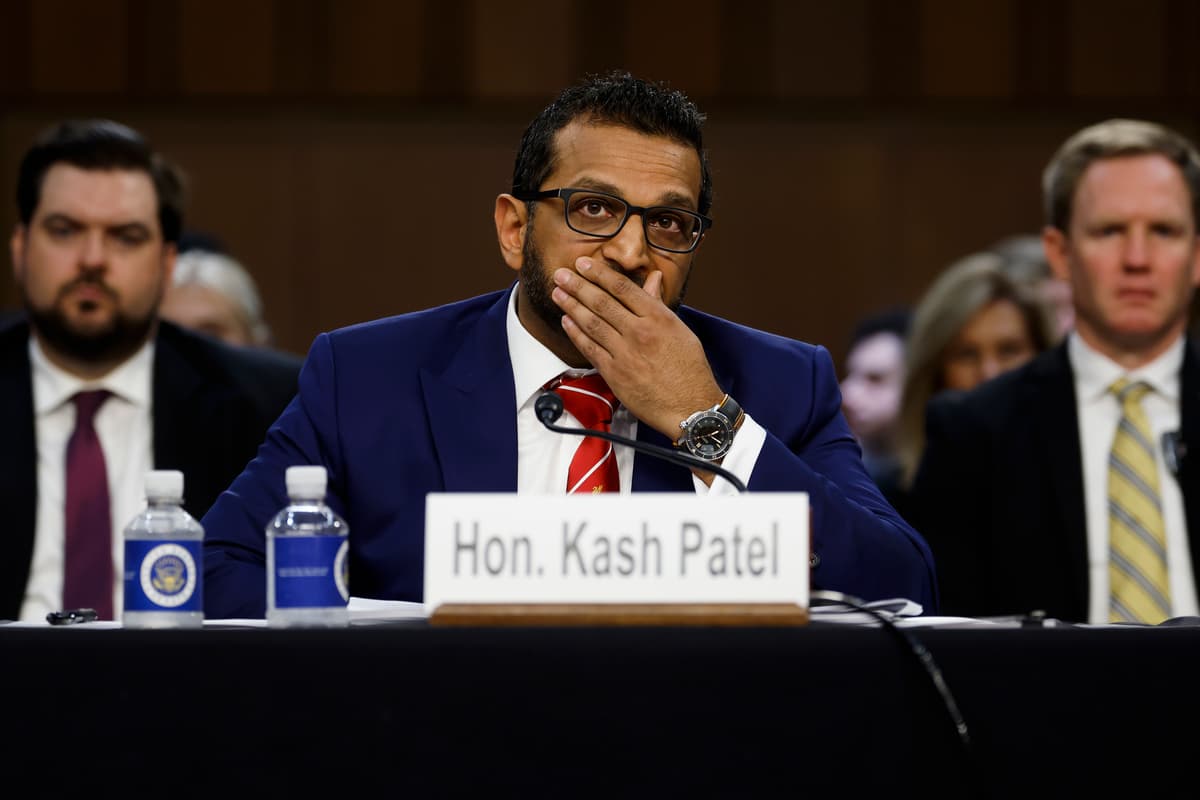
Federal Bureau of Investigation Director Kash Patel testifies on Capitol Hill Tuesday. Chip Somodevilla/Getty Images

An estimated 800 FBI employees — including a significant number of special agents —  will leave  the bureau’s payrolls at midnight Tuesday, the result of the “fork in the road” buyout deals offered by the Department of Governmental Efficiency earlier this year.

Roughly 40 percent of those departing are special agents, according to those familiar with the personnel changes.

An FBI spokesman did not respond to messages from the Sun requesting comment. The FBI Agents Association also did not respond to questions Tuesday.

It is the latest in a series of departures and firings taking place since Kash Patel took command as FBI director earlier this year. Last week, FBI leaders fired more than a dozen agents who were photographed kneeling during a Washington-area Black Lives Matters protest in 2020. Several other supervisory special agents, all female, had already been reassigned in April after being seen kneeling in the photo.

In August, Mr. Patel and his co-deputy director, Dan Bongino, dismissed several high-ranking officials who’d been involved in separate investigations of President Trump. This included a former acting FBI director, Brian Driscoll, who pushed back against the Trump administration’s efforts to identify agents who worked on the January 6 investigation. 

Mr. Driscoll and two other officials — a former assistant director in charge, Steve Jensen, and a special agent in charge, Spencer Evans — filed a joint lawsuit against Attorney General Pam Bondi and Messrs. Patel and Bongino, accusing them of unconstitutionally firing them.

“Patel explained that he had to fire the people his superiors told him to fire, because his ability to keep his own job depended on the removal of the agents who worked on cases involving the President,” the lawsuit, which was filed in U.S. District Court at Washington, said.

During a fiery Senate Judiciary Committee hearing last month, the 45-year-old FBI director addressed reports that in order to plug holes created by the mass exodus, the FBI was offering an abridged version of its hallowed new agent training program at Quantico to qualified 1811s — the Office of Personnel Management’s designation given to criminal investigators — with at least three years of experience at other federal law enforcement agencies. 

The move was seen as an attempt to refill the ranks of special agents who have been fired, resigned, retired, pushed out, or bought out since Mr. Trump took office. Critics questioned Mr. Patel’s decision to remove a college degree requirement for some new recruits as a serious lowering of standards. 

“We’re looking for where the need is greatest, where in the country we need to send them, and how we can change the training requirements, which is why I’m thrilled to have police officers. They might not have a college degree, but they got the street smarts and the cop smarts to become FBI agents,” Mr. Patel told the committee.

Since taking office as the FBI’s ninth director, Mr. Patel has shifted the bureau’s priorities to focus more on “crushing” violent crime, policing Washington, D.C., and stepping up immigration enforcement. One special agent, Charles Tillman, a 13-year NFL veteran, resigned from the FBI, saying agents were forced to work on immigration crackdowns “against their will.”

“Everybody was told, ‘You’re going to go after the most dangerous criminals,’ but what you see on TV and what actually was happening is, people weren’t going after that. Personally, that didn’t sit right with me; that didn’t sit right with my conscience,” Mr. Tillman, who had been an agent at the FBI since 2018, said on the “Pivot” podcast.

More than 100,000 federal employees accepted the buyouts through the Trump administration’s “Deferred Resignation Program,” which gave employees the option of accepting a buyout package or face the risk of being fired. Those who took buyouts remained on the federal payrolls until September 30. The Office of Personnel Management director, Scott Kupor, estimated  the buyouts would save more than $20 billion per year in costs.

“We designed the DRP as a practical, humane, and voluntary option to accelerate workforce transitions in a system that desperately needed movement,” Mr. Kupor said in an August memo.


The New York Sun

© 2025 The New York Sun Company, LLC. All rights reserved.

Use of this site constitutes acceptance of our Terms of Use and Privacy Policy. The material on this site is protected by copyright law and may not be reproduced, distributed, transmitted, cached or otherwise used.

The New York Sun

Sign in or  create a free account

or
By continuing you agree to our Privacy Policy and Terms of Use