Embattled Pulitzer Prize Board Appeals to Florida’s Supreme Court To Stop Trump’s Lawsuit Over New York Times and Washington Post’s Russia Reporting

The Pulitzer board seems intent on fighting Trump’s lawsuit.

Columbia University
The staff of the New York Times and Washington Post pose for a picture with then-Columbia University President Lee Bollinger as they accept the Pulitzer Prize for National Reporting in 2018. Columbia University

The beleaguered Pulitzer Prize Board is taking its attempt to halt President Trump’s defamation lawsuit to the highest court in Florida after a string of legal setbacks. 

The Pulitzer board, which is funded by Columbia University and administers the coveted journalism prizes, asked the Florida supreme court to hear its appeal of a lower court’s May 28 rejection of its request to delay Mr. Trump’s lawsuit until he leaves office.

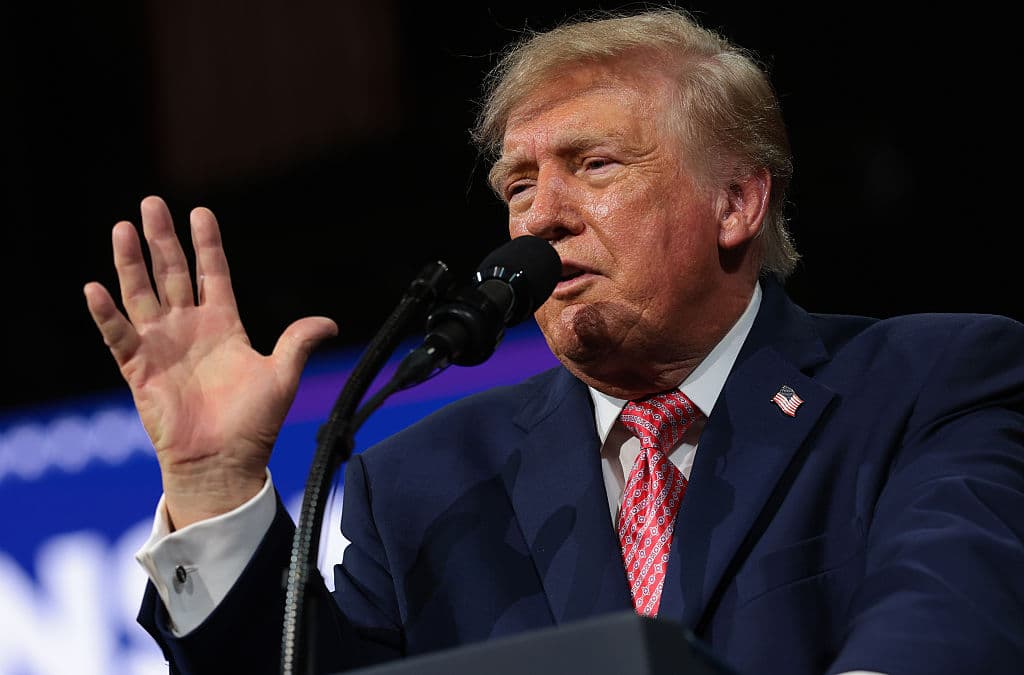
Mr. Trump is suing the Pulitzer board for defamation over its decision to award the 2018 national reporting prize to the New York Times and the Washington Post for their coverage of allegations that Mr. Trump’s 2016 campaign colluded with Russia, and the Pulitzers’ subsequent defense of the decision. 

In its filing, the board said the case is in the Florida supreme court’s jurisdiction “because it expressly construes provisions of the U.S. Constitution.” 

The case would give the Pulitzer Prize Board a chance to try to reverse several losses if the court decides to take the case.

The decision to award the Putlizer to the Times and the Post for their Russia reporting has been denounced in conservative media. The New York Post

The Pulitzer board has repeatedly tried and failed to get the case delayed until Mr. Trump leaves office. On May 28, Florida’s Fourth District Court of Appeal rejected the defendant’s request. In a seven-page decision, the court said the board was “effectively” asking the court to “invoke a temporary immunity under the Supremacy Clause on [Mr. Trump’s] behalf to stay this civil proceeding, even though [Mr. Trump] has not sought such relief.” 

The board made a novel legal argument that allowing the lawsuit to continue would let courts “exercise ‘direct control’ over” the president. While the appellate court noted presidents have many “immunities and protections,” it said that “the law is clear that such privileges are not available to third parties to claim, nor may such privileges be asserted by others on the officials’ behalf.”

The appellate court also rejected the board’s assertion that allowing the case to go to trial would be a distraction to Mr. Trump, saying the president “is in the best position to determine if these proceedings would be a diversion and interfere with the obligations of his office, or whether continued participation is consistent with the performance of his official responsibilities.”

In 2018, the Times and the Post were awarded the national reporting prize for their coverage of allegations that the 2016 Trump campaign colluded with Russian operatives to swing the election. The intense press coverage of the issue — much of which emanated from the Times and the Washington Post — contributed to pressure to appoint a special counsel to investigate the allegations. The awards focused on 20 articles that were written in 2017.

The Pulitzer Prize medal. Via Wikimedia Commons

However, in 2019, the special counsel appointed to investigate the allegations, Robert Mueller, said the investigation failed to find evidence that members of the Trump campaign conspired with Russian operatives, though his team did find evidence of Russian interference. 

Mr. Trump argues that the Mueller report discredited the Times and Washington Post’s aggressive coverage of the story, and has called for the Pulitzer Board to rescind its awards.

In 2022, under pressure from Mr. Trump, the board made a serious legal error when it commissioned two independent reviews, from secret reviewers, to assess whether the 2018 national reporting award should be rescinded. Following the reviews, which it did not release, the board issued a statement saying, “The 2018 Pulitzer Prizes in national reporting stand.”

The board claimed that the two “independent” reviews of the award-winning reporting determined that no “passages or headlines, contentions or assertions in any of the winning submissions were discredited by facts that emerged subsequent to the conferral of the prizes.”

Special Counsel Robert Mueller testifies before the House Intelligence Committee about his report on Russian interference in the 2016 presidential election, July 24, 2019 at Washington, D.C. Alex Wong/Getty Images

That statement reset the clock on the statute of limitations and gave Mr. Trump the opening to sue the board for defamation. If the board had not issued its statement doubling down on the award, there would be no defamation lawsuit.

The Pulitzer board has only rescinded one prize in its long history when, in 1981, it took back an award given to a Washington Post reporter, Janet Cooke, who had completely fabricated the story of an 8-year-old heroin addict named “Jimmy.” The board has resisted calls to revoke the Pulitzer given in 1932 to the Times’s Moscow bureau chief, Walter Duranty, for his boosterish reporting about Josef Stalin that overlooked the mass starvation that killed millions.

Since Mr. Trump filed his lawsuit, the board has faced a string of defeats in trying to delay the trial or get it moved to a different venue than Florida, possibly New York, where it would hope to find a more sympathetic judge and, should the case go to trial, a more sympathetic jury.

The Pulitzer board, made up of editors from mainstream outlets — several of whom, like the New Yorker editor, David Remnick, and an Atlantic writer, Anne Applebaum, are overtly anti-Trump — has so far indicated it is not interested in trying to settle the president’s lawsuit. 

Signage for the Pulitzer Prizes at Columbia University, May 28, 2019.
Signage for the Pulitzer Prizes at Columbia University, May 28, 2019. AP/Bebeto Matthews, file

After the appellate court’s ruling, the board said it is “evaluating next steps and will continue our defense of journalism and First Amendment rights.”

Its decision to appeal to Florida’s supreme court comes as media companies have opted to pay to settle Mr. Trump’s lawsuits. In December, Disney agreed to pay $16 million to settle his defamation lawsuit after an ABC News host, George Stephanopoulos, repeatedly said the president had been found liable for rape. 

Last week, the parent company of CBS News, Paramount Global, agreed to pay $16 million to settle Mr. Trump’s lawsuit over its editing of Vice President Harris’s October 2024 interview with “60 Minutes.” Paramount’s decision to settle what liberal legal observers called a meritless lawsuit was derided as a capitulation to the president in an attempt to win the federal government’s approval of its crucial merger with Skydance Media. 

The Pulitzer Prize operation is funded, housed, and overseen by Columbia, one of the richest American universities, with a $15 billion endowment that would likely be on the hook to pay any judgment or settlement.


The New York Sun

© 2025 The New York Sun Company, LLC. All rights reserved.

Use of this site constitutes acceptance of our Terms of Use and Privacy Policy. The material on this site is protected by copyright law and may not be reproduced, distributed, transmitted, cached or otherwise used.

The New York Sun

Sign in or  create a free account

or
By continuing you agree to our Privacy Policy and Terms of Use