Epstein Grand Jury Transcripts and Records Will Become Public on Order of Federal Judge in Florida

The decision by the Trump-nominated judge follows the passage of the Epstein Files Transparency Act last month.
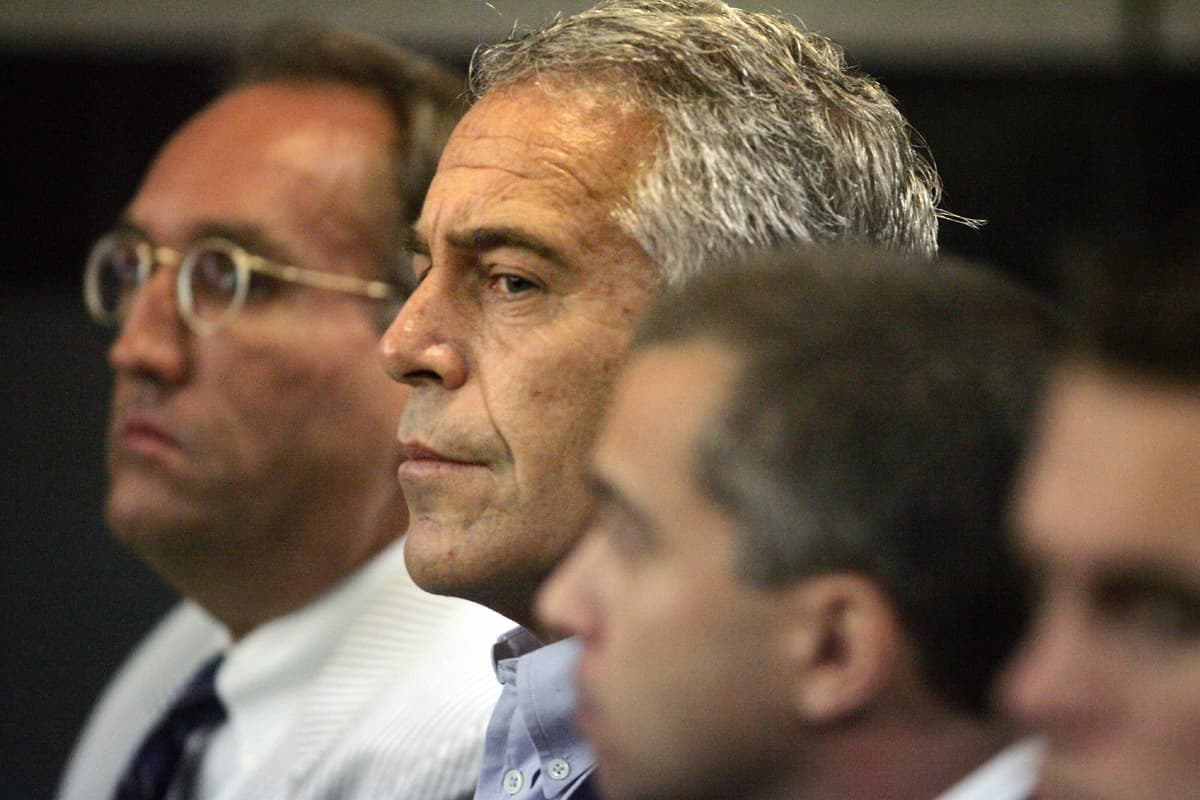

Uma Sanghvi/The Palm Beach Post via AP
Jeffrey Epstein appears in court at West Palm Beach, Florida, on July 30, 2008. Uma Sanghvi/The Palm Beach Post via AP
The New York Sun
NEW YORK SUN CONTRIBUTOR

More Jeffrey Epstein documents are on the way to becoming public after a federal judge in Florida ordered the release of grand jury materials from investigations into the sex offender in 2005 and 2007.

In a two-page order Friday, U.S. District Judge Rodney Smith, nominated in 2018 by President Trump, granted a renewed request from the Justice Department to unseal the records. The decision follows the passage of the Epstein Files Transparency Act last month, which requires the DOJ to release all unclassified records related to Epstein and his accomplice, Ghislaine Maxwell. 

“The Act applies to unclassified records, documents, communications, and investigative materials that relate to Jeffrey Epstein and Ghislaine Maxwell,” Judge Smith wrote. “Consequently, the later-enacted and specific language of the Act trumps Rule 6’s prohibition on disclosure.”

An earlier request this year had been rejected due to strict grand jury secrecy laws.

The Florida grand jury investigation, conducted near Epstein’s West Palm Beach home, examined allegations that the financier was preying on underage girls. The investigation concluded with a controversial 2007 non-prosecution agreement with the federal government, which allowed Epstein to plead guilty to lesser state solicitation charges involving a single minor.

It is not yet clear when the materials will be made public. In its request, the Justice Department stated it “will work with the relevant United States Attorney’s Offices to make appropriate redactions of victim-related and other personal identifying information.”

Similar requests are pending before two judges in New York regarding the 2019 federal sex trafficking charges against Epstein and the 2020 charges against Maxwell. In that case, a lawyer for Epstein’s survivors has raised concerns about protecting their identities.

In a letter to Judge Paul Engelmayer, who is overseeing the Maxwell case, attorney Bradley Edwards said that survivors’ names were exposed when House committees released more than 20,000 documents last month. He urged the court to ensure survivor privacy is protected if more records are unsealed.

“The process that led to these unmistakable violations of the victims’ rights, and to the broken promises of protection made to the victims by Congress, begins with the Estate of Jeffrey Epstein and the Department of Justice and ends with the House Oversight Committee,” Mr. Edwards wrote.

The Justice Department has outlined that the records covered by the protective order in the New York cases could include search warrants, financial and travel records, flight lists, police reports, and notes from interviews with victims and third parties.

Maxwell was convicted of federal sex trafficking charges and is currently serving a 20-year prison sentence. Authorities say Epstein died by suicide in his jail cell in 2019 while awaiting trial.

The DOJ’s move to unseal the records comes after significant public criticism. Earlier this year, the department and the FBI released a joint memo saying that their review of the evidence against Epstein and Maxwell was complete and that no further charges would be filed, a decision that prompted a broad public backlash, including from many Trump supporters.

The New York Sun
NEW YORK SUN CONTRIBUTOR

The decision by the Trump-nominated judge follows the passage of the Epstein Files Transparency Act last month.


The New York Sun

© 2025 The New York Sun Company, LLC. All rights reserved.

Use of this site constitutes acceptance of our Terms of Use and Privacy Policy. The material on this site is protected by copyright law and may not be reproduced, distributed, transmitted, cached or otherwise used.

The New York Sun

Sign in or  create a free account

or
By continuing you agree to our Privacy Policy and Terms of Use