
European Nations Start Countdown Clock on ‘Snapback’ Provisions, Renewed Sanctions on Iran

Europe’s leaders gave Iran more than six years to come clean on its nuclear weapons program. Instead, Iran spent the time enriching uranium and filling its stockpile.
AP/Alex Brandon
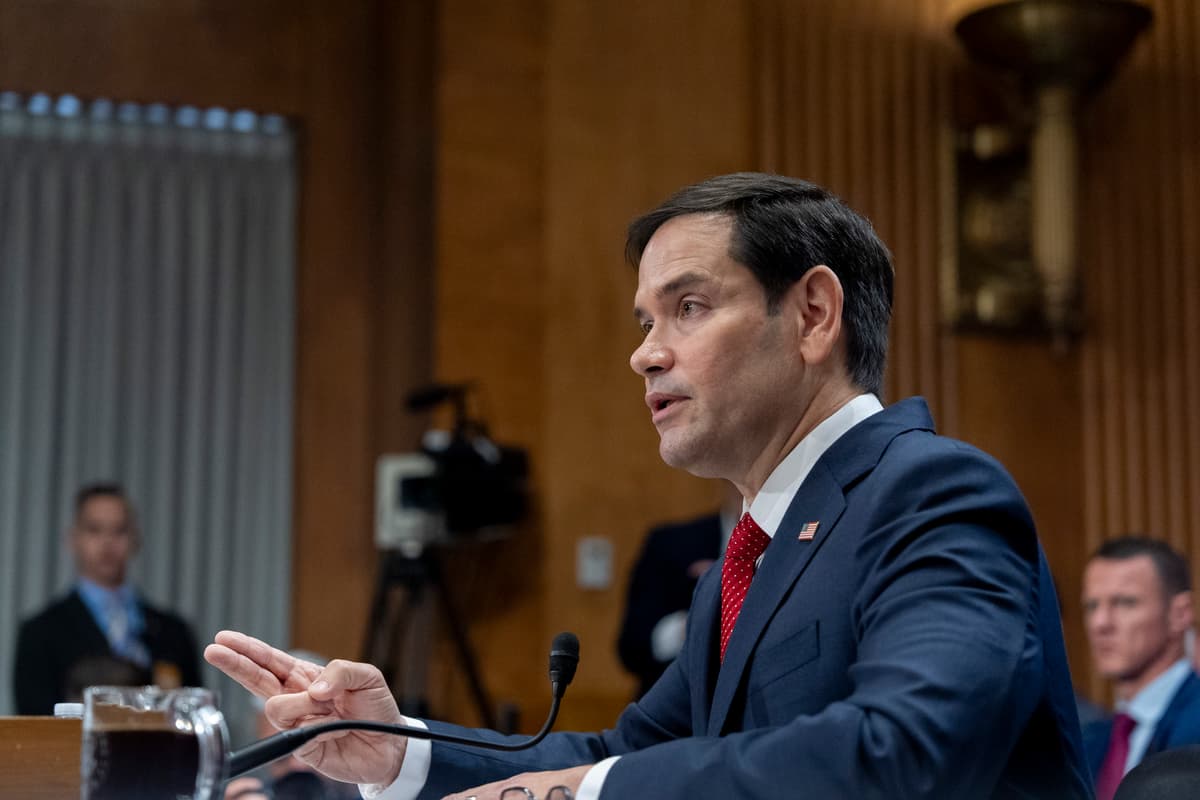
Secretary of State Marco Rubio praised sanctions as a last resort after years of 'outreach and engagement' to give Iran an 'offramp' from its nuclear pursuits. AP/Alex Brandon

Britain, France, and Germany are moving to renew United Nations sanctions on Iran over its unsupervised nuclear program, initiating a “snapback” provision from all-but defunct 2015 nuclear negotiations, a move praised by American officials who note it’s coming six years late. 

Thursday’s triggering of the snapback provision from 2015’s Joint Comprehensive Plan of Action, enacted by a letter sent to the United Nations’ Security Council, gives Iran 30 days to get into compliance with International Atomic Energy Agency inspectors or face renewed sanctions on Iranian assets and arms deals, among other actions.   

The sanctions were suspended as part of the comprehensive plan to give Iran the opportunity to cooperate with the United Nations’ nuclear watchdogs. After America left the agreement in 2018 and Iran renewed its uranium enrichment in 2019, Europe’s leaders gave Iran more than six years to eliminate its nuclear weapons program. Instead, Iran spent the time enriching uranium to 60 percent purity and filling its stockpile to the point it had enough materials to produce nuclear devices. 

“Iran has no civilian justification for its high enriched uranium stockpile — now over ‘9 Significant Quantities’— which is also unaccounted for by the IAEA. Its nuclear program therefore remains a clear threat to international peace and security,” The foreign ministers of the three nations said in a statement after initiating the provisions.

On Wednesday, Iran’s Supreme National Security Council permitted nuclear inspectors from the International Atomic Energy Agency to return to the nation to observe fuel replacement at a Bushehr nuclear reactor, though Iran’s nation’s foreign minister, Abbas Araghchi, said their presence does not signal his nation’s full resumption of cooperation with the watchdog.   

Mr. Araghchi described Thursday’s move by the European nations as “unjustified, illegal, and lacking any legal basis” and warned that Iran will respond appropriately though he did not provide any details how.

Secretary of State Marco Rubio, however, praised the move, describing the decision as a last resort after years of “outreach and engagement” to give Iran an “offramp” from its nuclear pursuits.

“These European allies – the E3 – have laid out a clear case of Iran’s continuing ‘significant non-performance’ of its nuclear commitments, establishing a strong basis for initiating snapback,” he said in a statement, noting that the United States would still consider direct diplomatic consultation with Iran.

“I urge Iranian leaders to take the immediate steps necessary to ensure that their nation will never obtain a nuclear weapon; to walk the path of peace; and to, by extension, advance prosperity for the Iranian people,” Mr. Rubio said.  

France’s Foreign Minister, Jean-Noël Barrot, also offered diplomacy as a means to avoid sanctions. 

“We are determined to make the most of the 30-day period that is now opening to engage in dialogue with Iran,” he wrote on X.

Though Iran, which has threatened in the past to withdraw from the Nuclear Nonproliferation Treaty, could face renewed sanctions, its allies in the Security Council, Russia and China, could veto the sanctions mechanism despite having been part of the comprehensive plan. Russia is set to hold the Security Council presidency in October.

The return of sanctions most certainly will do nothing to reduce tensions between Iran and Israel, which engaged in a 12-day war in June that saw Israel eliminate several Iranian nuclear scientists and top military leaders. America briefly joined Israel in the attacks, dropping 30,000-ton buster bombs on key Iranian nuclear facilities. 

Iran has also been central to Israel’s war in Gaza, as patron to the Hamas terror group while also backing Yemen’s Houthis. On Thursday, Israel launched a second set of strikes in a week against Houthi targets in the capital Sanaa, with Israel’s defense minister, Israel Katz, suggesting in an X post that the attacks were aimed at eliminating the terror group’s leadership.

“After the plague of darkness comes the plague of the firstborn. Anyone who raises a hand against Israel will see it cut off,” he wrote.

Though Iran sounds defiant in the face of renewed sanctions, the nation is experiencing other critical threats. An energy crisis has caused major disruptions in economic activities as its electrical grid is wildly outdated and unable to support demand. It is also experiencing a water shortage, in part attributable to its diversion of resources to its nuclear production. 

Iran’s currency is also near collapse, trading at over 1 million rials to $1, up from 32,000 to $1 in 2015 when the joint plan was first negotiated. Iran’s leadership, however, continues to maintain a tight grip on dissent, increasing arrests and more than doubling the number of executions this year over last. 

With its undivided commitment to nuclear weapons, however, observers suggest the only end to Iran’s pursuit is through regime change.

“The only real guarantee of lasting peace and stability in the region is the removal of this regime, which will stop at nothing to acquire a nuclear bomb,” the exiled son of Iran’s former shah, Reza Pahlavi, wrote on X.


The New York Sun

© 2025 The New York Sun Company, LLC. All rights reserved.

Use of this site constitutes acceptance of our Terms of Use and Privacy Policy. The material on this site is protected by copyright law and may not be reproduced, distributed, transmitted, cached or otherwise used.

The New York Sun

Sign in or  create a free account

or
By continuing you agree to our Privacy Policy and Terms of Use