
Evasion Nation — How Egypt Eludes Responsibility for Gaza’s Palestinians
Little mention is made of how Cairo contributes to the conflict and shirks the obligations toward Gazans that it demands of others.
Egypt shares an eight-mile border with the Gaza Strip. One would think it is an unavoidable player in any discussion about addressing the plight of Palestinian civilians who have endured two years of the Hamas-Israel war. Yet Egypt skillfully manages to avoid being a serious part of the conversation, and the international community allows it to evade responsibility.
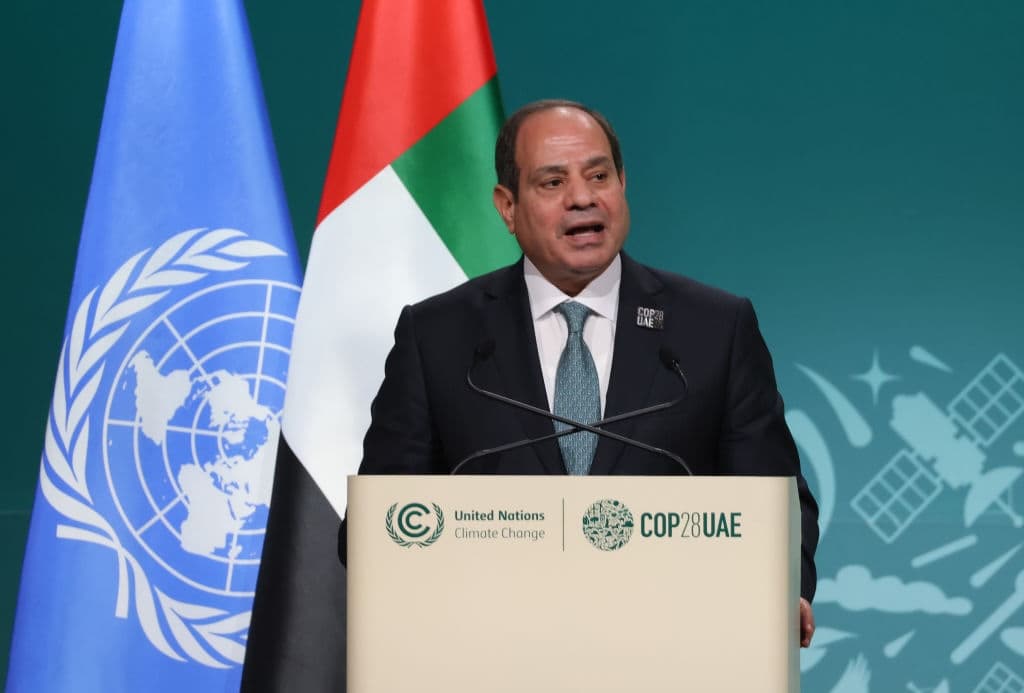
Little mention is made of the fact that Egypt not only contributed to the conflict but continues to shirk the very moral and humanitarian obligations toward Gazans that it hypocritically demands others assume. President Abdel Fattah el-Sisi could teach a masterclass in evasion techniques, and journalists around the world would pack every seat of his lecture hall.
The Philadelphi Corridor runs along Gaza’s border with Egypt. There, in May 2024, Israeli forces discovered a network of 150 tunnels used to smuggle weapons to Hamas terrorists in the Strip from the Sinai. Some 750 Egyptian soldiers had been tasked with securing the region and preventing precisely this activity, but bribes and willful blindness made tunnel engineering and weapons-running into Gaza easy.
Each tunnel cost an estimated $3 million to dig and featured sophisticated infrastructure — not built behind the backs of Egyptian forces, but with their full knowledge.
Lesson number one in Mr. el-Sisi’s syllabus: deny, deny, deny.
Even as Israel posted videos of its tunnel discoveries, the Egyptians refused to acknowledge they had been caught red-handed. Low-level officials issued statements denying the reality we were all witnessing as Mr. el-Sisi remained silent on the matter.
It worked brilliantly. The press soon moved on. October 7, 2023 was made more lethal by the complicity of Israel’s peace partner to the south, but Egypt took no responsibility, and no one held them to account.
Israeli control of the Philadelphi Corridor gave Mr. el-Sisi the perfect excuse to execute his next maneuver: avoid responsibility while foisting it on others.
In 2024 Egypt announced, on principle, that it would allow no aid through Rafah until Israelis left the corridor. Cairo would refuse responsibility for assisting Palestinians with food and medicine, choosing instead to aid them with rhetoric and political posturing.
What the Egyptians were willing to do was divert aid to Israel’s Kerem Shalom crossing weeks later to let Israelis sort out the logistics and run the associated risks of distribution.
Incredibly, without a hint of shame, the Egyptian foreign minister, Badr Abdelatty, managed to say aloud in 2025 that “everyone is watching and doing nothing to support Gaza,” even as his country was doing next to nothing to support Gaza.
Cynical, breathtaking audacity gets him an A on Mr. el-Sisi’s midterm and nearly no scrutiny by the United Nations or CNN.
Egypt’s treatment of Palestinian refugees attempting to flee the fighting represents the ultimate lesson for those trying to master the art of evasion — just say no.
More than 1.5 million Gazans have been displaced, but Mr. el-Sisi, like every other Arab leader in the region, refuses to accept them, even temporarily.
Mr. el-Sisi righteously declared that “the displacement of the Palestinian people is an injustice we cannot take part in.” He added that he would not allow “any mass influx of refugees from Gaza,” claiming this would set a precedent for “the displacement of Palestinians from the West Bank into Jordan.”
In other words, no. There are no negotiations with those who announce from the beginning that they are unwilling to negotiate. And so, Egypt will be given a pass on the refugee question, simply because they preemptively answered it in the negative.
No really means no in Mr. el-Sisi’s Egypt. In June 2025 when dozens of pro-Palestinian demonstrators arrived at the Egyptian border for their “Global March to Gaza” through Rafah they expected a warm welcome.
Imagine their surprise when Egyptian forces dragged them away and deported them, proving that Cairo’s border control capabilities work when applied to activists rather than weapons smugglers.
Imagine their further surprise when they discovered that governments and international organizations largely shrugged off their plight.
Evasion is an attitude — projected boldly, it signals to others that their limited energy is better spent on someone willing to engage. Egypt doesn’t engage.
When activists are detained, when aid trucks are blocked, when terrorist tunnels operate, Egypt offers no elaborate defenses because it recognizes a fundamental truth: explanations invite debate, and debate suggests a willingness to take responsibility.
Evasion is also a relationship — between those who practice it, and those who tolerate it. Egypt has trained the press and the international community to expect little and to demand little from a country that could do more but will not entertain the suggestion that it should.