Expiration of Court Order Discloses Secret Plan To Resettle Thousands of Afghans in U.K. Following Leak of Applicants’ Data
As the mood fouls over immigration policy, British officials bicker over the decision to allow thousands of Afghans who had not qualified for asylum to move to the island nation.

A secret plan to relocate thousands of Afghans into the United Kingdom after their names were accidentally leaked by the defense ministry of a former prime minister, Boris Johnson, has officials pointing fingers at one another over the costly asylum scheme that immigration opponents say makes England less safe.
Nearly 19,000 Afghan translators, facilitators, soldiers, and their families appeared on a list of asylum applicants under a plan widely approved by Britain’s Conservative government and opposition officials following the withdrawal of coalition forces from Afghanistan in 2021.
The initial plan — the Afghanistan Relocations and Assistance Policy — provided specific criteria for applicants to qualify. However, as defense officials spent months vetting the list, they were unaware that a data leak had exposed the names of the applicants — as well as their family members in Afghanistan — to potential retaliation by the Taliban.
It took 18 months — until August 2023 — before defense officials discovered the breach and asked the high court to impose an injunction to prevent media reporting of the incident. The high court granted the injunction and then some, ordering a superinjunction that prevented parliamentarians and government officials from discussing the breach at all.
With the severity of the exposure unknown and applicants uninformed about the data breach, the government of Prime Minister Sunak then set up a secret “Afghan Response Route,” enabling as many as 6,900 additional applicants who did not originally qualify to gain entry to Britain.
“In autumn 2023, previous ministers started work on a new settlement scheme specifically designed for people in this compromised data set who were not eligible for ARAP; not eligible for ARAP but nevertheless judged to be at the high risk of reprisals by the Taliban,” the British defense minister, John Healey, announced on Tuesday after the court lifted its superinjunction.
About 36,000 Afghans have moved to the United Kingdom since the initial relocation policy and creation of an Afghan Citizen Resettlement Scheme by the Home Office in 2021. Mr. Healey said the scheme to let in the additional Afghans had been revoked after a government report concluded that it is “highly unlikely” the Taliban may still be getting a list of targets from the leaked spreadsheet.
The announcement of the secret resettlement plan added fuel to an incendiary debate over immigration and crime on the island nation. Immigration opponents say foreign nationals commit far more crimes than their percentage of the population, and note that Afghans are 20 times more likely than British nationals to be convicted of a sexual offense.
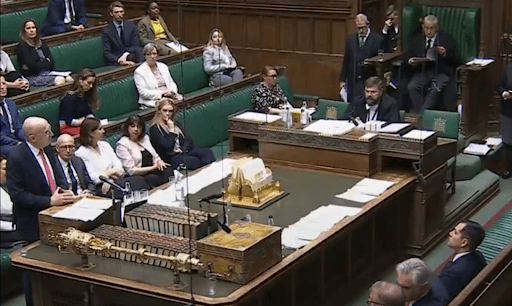
“I want to provide assurance, Mr. Speaker, both to the House and to the British public that all individuals relocated under the Afghan Response Route, ARAP, or the Home Office’s ACRS scheme undergo strict national security checks before being able to enter our country,” Mr. Healey told parliament on Tuesday.
With the relocation program now public, a member of parliament, Suella Braverman, who had served as Mr. Sunak’s home secretary between October 2022 and when she resigned in November 2023 over what she says was a disagreement about lax immigration policy, issued a statement Wednesday criticizing the defense ministry’s asylum scheme.
“In all this disgraceful betrayal of the people by their own government, I feel only shame. I, and a handful of others fought this; but we failed to stop it,” she wrote. “The last Conservative government let you down. The cover-up was wrong, the super injunction was wrong and the failure to stop unwanted mass immigration has been unforgiveable. So, I am sorry.”
The opposition’s shadow secretary of state for justice and shadow lord chancellor, Robert Jenrick, who held several Conservative leadership positions during the resettlement efforts, called the Afghan Response Route “a complete disaster.”
“The British public have lost all confidence in our immigration system. This sorry saga encapsulates why. The public are right to be angry — they should never have been put in this position,” Mr. Jenrick wrote on X.
Mr. Jenrick noted that while the British government had an obligation to keep safe “those who had genuinely risked their lives for us and those we’d endangered, who now face credible threats,” most of those on the list did not work alongside or serve with British forces.
“It means thousands with few links to Britain have come here — and will continue to come here — at a cost of billions to the public,” he wrote.
The Afghan Response Route, while discontinued for new applicants, is still shuttling approved Afghans to England, and is expected to cost 850 million pounds when all is said and done. The total cost for moving Afghans to the United Kingdom under the three resettlement programs could reach £6 billion.
Four hundred and fifty-seven British service members lost their lives in Afghanistan. Responding to criticism of the plan, the former defense minister, Ben Wallace, under whose watch the leak occurred, defended the decision to relocate Afghans who helped save British lives.
“Can any of us guarantee that no one coming here either as resettled immigrant or even as a tourist wont commit a crime. No we can’t. But that doesn’t mean we turn our back on people who saved British lives,” he said in an X post on Wednesday.