Factories Are the Key to Trump’s Trade Policy
Instead of tariff retaliation wars, the president generates a number of strategic deals with our key trading partners.
The reciprocal tariff deadline came and went at midnight last night, and guess what? The results are in, and the world economy and its trading system has not collapsed.
Once again, the experts are wrong
There’s no tariff inflation, no tariff recession, no tariff catastrophe.
Instead of tariff retaliation wars, President Trump has generated a number of strategic deals with our key trading partners.
The European Union, United Kingdom, Japan, South Korea, Vietnam.
Important talks have been extended for Canada, Mexico, and China.
Even with Canada, where a nominal rate of 35 percent has been put in place. The fact remains that more than 90 percent of Canadian-American trade is compliant with the United States-Mexico-Canada Agreement — which means that 35 percent is really a token number.
A Washington policy analyst, Dan Clifton, calculates that the overall effective tariff rate for America will be roughly 13 percent to 14 percent.
Therefore, that has nothing to do with the Smoot-Hawley tariff, which was 60 percent back in 1930.
And the One Big Beautiful Bill, with its tax cuts, deregulation, and energy production, overwhelms the modest increase in the American tariff rate.
Yet here’s a key point I want to make: factories.
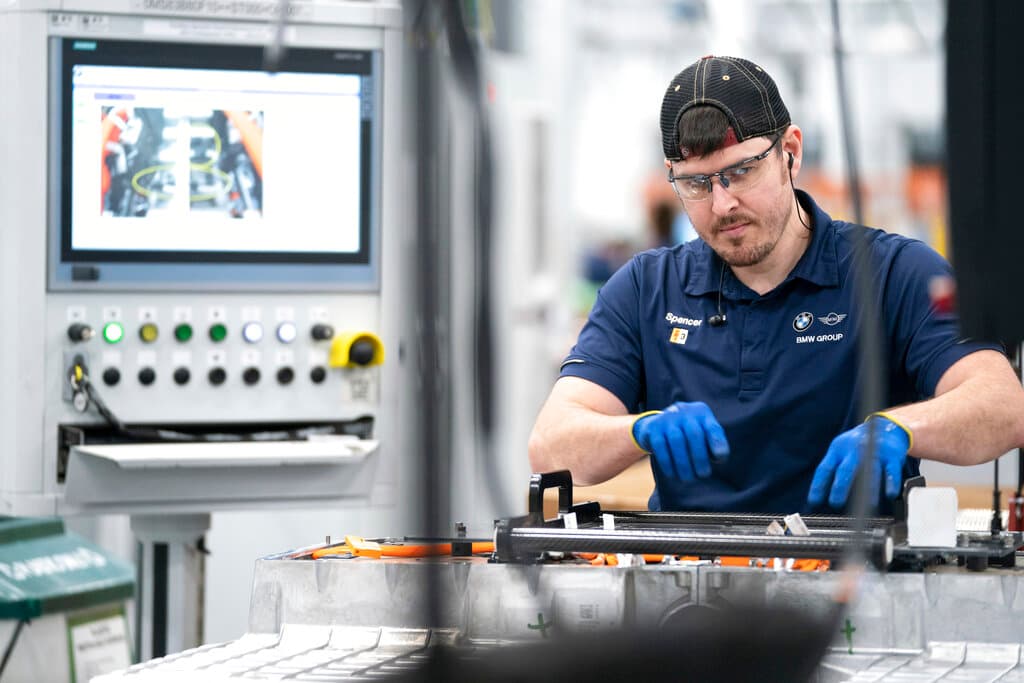
Mr. Trump, more than anything else I believe, wants a wave of new factories in the United States. Especially in strategic sectors like semiconductors, pharmaceuticals, steel, energy, and defense.
Mr. Trump is guarding these strategic sectors of the American economy, according to Steve Cortes, in his recent article published by TIPP Insights, and Mr. Cortes is right.
And if you look under the hood of the big beautiful bill, you will find major league tax incentives to attract foreign investment, and stimulate even more domestic investment with full cost expensing for business equipment, research and development, and — here’s the key new element — factories.
Mr. Trump is saying to foreign and domestic investors: I want you to build factories that will make America the world leader in these key areas, and I’m giving you enormous tax incentives to do it.
So chipmakers are tariff-free if they build in America. Drug companies too. Steel, aluminum, advanced defense technologies.
He’s telling those business people like Tim Cook and Jensen Huang: You can buy down your tariffs with direct investment in factories located in America.
The more I think about Mr. Trump’s trade policy, the more I think it’s about factories.
New factories create new jobs.
Higher take-home pay. New technologies. More innovation.
As an eminent economist, Joseph Schumpeter, put it 75 years ago — gales of creative destruction. The new replaces the old.
No question, Mr. Trump wants to level the playing field with countries that have been taking advantage of us for decades.
He absolutely wants to open new markets for American business.
Sometimes, he’s using tariffs for national security.
At the end of the day, though, I believe more than anything else, Mr. Trump wants to build new factories in America.
From Mr. Kudlow’s broadcast on Fox Business Network.