Families Sue Musk’s Tesla Over Fatal Cybertruck Fire That Trapped Students Inside Burning Vehicle
‘This case arises from catastrophic design defects in the Tesla Cybertruck that turned a survivable crash into a fatal fire,’ the suit says.
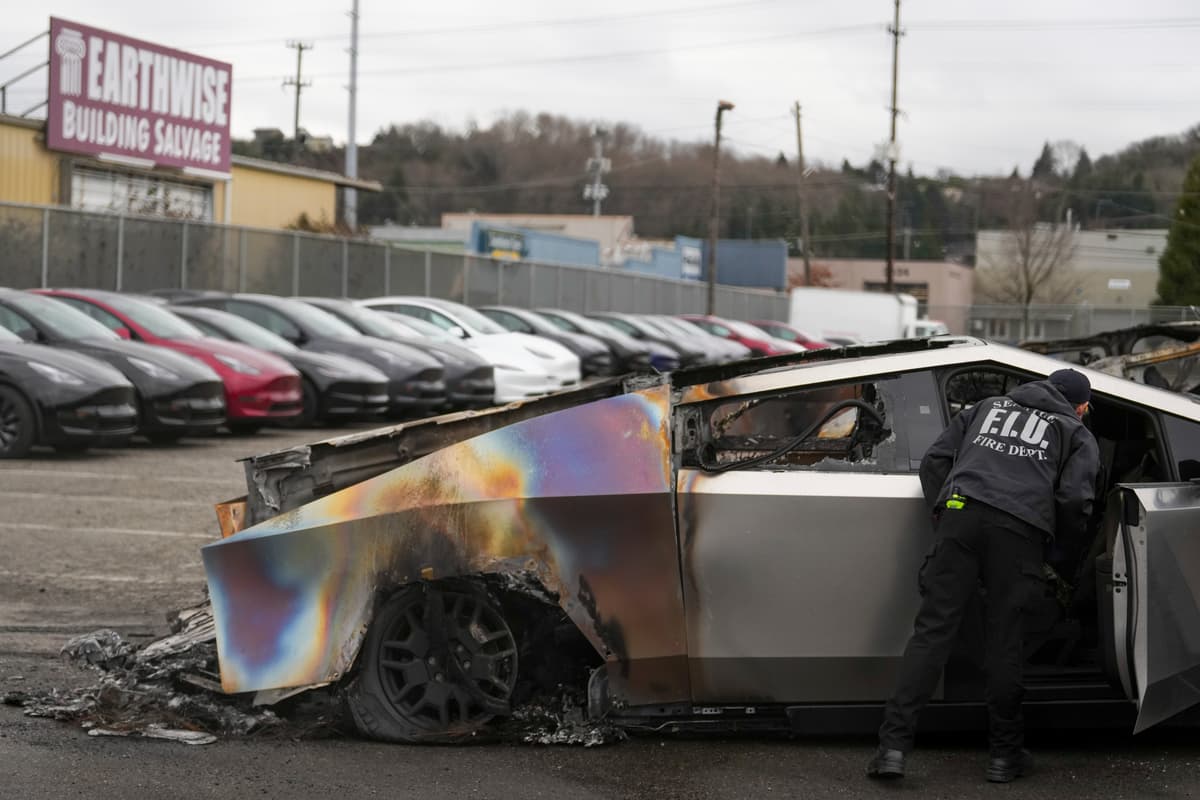

The parents of two college students killed in a Tesla Cybertruck crash have filed lawsuits claiming the vehicle’s door design prevented their children from escaping a deadly fire, highlighting ongoing safety concerns about the electric pickup truck.
Krysta Tsukahara, 19, and Jack Nelson, 20, died alongside driver Soren Dixon, 19, when their Cybertruck crashed into a tree at high speed at Piedmont, California, last November. The lawsuits allege that while the students initially suffered only minor injuries from the impact, they died from burns and smoke inhalation after becoming trapped inside the burning vehicle, the San Francisco Chronicle reported.
“This case arises from catastrophic design defects in the Tesla Cybertruck that turned a survivable crash into a fatal fire,” the parents of Nelson said in a complaint filed in California’s Alameda County Superior Court on October 2 — the same day the family of Tsukahara filed their amended wrongful death lawsuit, first filed in April.
The families claim Tesla’s electronic door system failed during the emergency, and the manual release mechanisms were too difficult to locate and operate in the chaos of the fire. The wrongful death lawsuits focus on Tesla’s door latch design, which relies on a 12-volt battery separate from the vehicle’s main power source. When power is cut off by a crash, the electronic door mechanism may fail to function.
“Rear passengers like Jack were left with only a concealed mechanical release that was obscure, nonintuitive and highly unlikely to be located or operated in the smoke and chaos of a post-crash fire,” according to the lawsuit filed on behalf of the Nelson family.
For Cybertruck rear passengers, the manual release requires lifting a rubber mat at the bottom of the door’s storage pocket and pulling a cable underneath — a process the families argue is nearly impossible during an emergency.
Krysta’s father, Carl Tsukahara, believes his daughter would be alive today if escaping the vehicle had been easier.
“This company is worth a trillion dollars,” he said of the automotive manufacturer founded by billionaire Elon Musk, KTVU in San Francisco reported. “How can you release a machine that’s not safe in so many ways?”
The lawsuits claim Tesla has been aware of door-related safety issues for years but failed to address them. “For more than a decade before the crash, Tesla had repeated and direct notice that its reliance on electronic door systems created a serious risk of entrapment,” the Tsukahara lawsuit says.
The San Francisco lawyer representing the Nelsons, Andrew McDevitt, told the New York Times, “It’s just absolutely unforgivable. You know people have died and you continue to do it.”
The cases follow other similar incidents involving Tesla vehicles. In August, a Florida jury awarded $243 million in damages for a fatal crash involving Tesla’s driver assistance system. The company also previously settled a lawsuit involving Kevin McCarthy, who died after becoming trapped in a burning Model S in 2016.
The National Highway Traffic Safety Administration opened an investigation in September into Tesla door issues, examining complaints about 2021 Model Y vehicles where owners reported being unable to open rear doors after exiting the front seats. In four cases, owners had to break windows to free children trapped inside.
Tesla’s chief designer, Franz von Holzhausen, acknowledged the company is working on new designs to make doors easier to open during power failures. “That’s something we are working on, and it’s in the car soon,” he said on Bloomberg’s “Hot Pursuit” podcast in September.
The families emphasized that their legal action seeks accountability rather than punishment. “The four young people in the Cybertruck were close friends and outstanding individuals, each on the verge of making meaningful contributions to the world,” Todd and Stannye Nelson said in a statement. “They were all victims of Tesla’s unsafe design.”