Fani Willis’s Case Against Trump Is Frozen in Limbo Amid Silence From Court About Her Disqualification Over Secret Romance
The Peach State’s highest tribunal is sitting on the district attorney’s appeal of her disqualification from landmark prosecution.
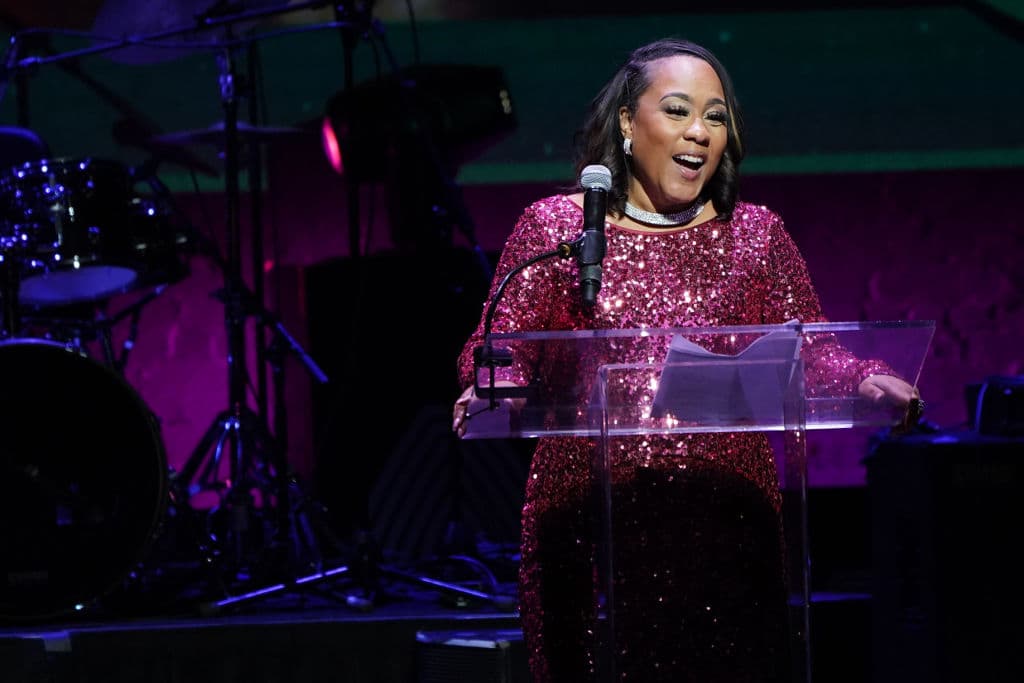

The silence of Georgia’s supreme court on whether it will consider the disqualification of the Fulton County district attorney, Fani Willis, from her prosecution of President Trump leaves her — and her case — in limbo some two years after she first brought her sprawling racketeering case.
Ms. Willis, who won re-election in November in a rout, has appealed her disqualification by the Georgia court of appeals to the Peach State’s highest judicial tribunal. The Georgia supreme court, like the United States Supreme Court, possesses the power of discretionary appeal — meaning it can elect to review the ruling of the court of appeals or deny Ms. Willis’s petition for certiorari.
Ms. Willis was disqualified from the case against Mr. Trump and 18 others in December, and she filed her appeal in January. Georgia statute provides no timeline for when a decision on review is to be rendered, and the case is frozen until Ms. Willis’s fate is decided. The allegation that Mr. Trump helmed a “criminal racketeering enterprise” is still pending. Mayor Rudolph Giuliani and Chief of Staff Mark Meadows are also among the charged.
The disqualification of Ms. Willis stems from the secret workplace romance she conducted with a special prosecutor, Nathan Wade, whom she hired for the landmark case. Mr. Wade, who had never prosecuted a felony and was in the midst of a messy divorce, was paid more than $650,000 by Ms. Willis’s office for his services. Once Mr. Wade was retained, he and Ms. Willis traveled together to destinations like Aruba, Belize, and Napa Valley.
Ms. Willis contends that she paid Mr. Wade for those excursions with cash that she stored at her home. Her father, a former Black Panther luminary, testified under oath that keeping fiat money in large quantities was a “black thing.” Ms. Willis and Mr. Wade denied under oath that their affair began before he was hired. Cellular telephone data, though, shows that the pair exchanged thousands of text messages before Mr. Wade joined the case.
The defendants — including Mr. Trump — argued that the relationship between Mr. Wade and Ms. Willis compromised their due process rights. The trial judge, Scott McAfee, found that the lovers’ behavior emitted an “odor of mendacity” and amounted to a “significant appearance of impropriety.” He also determined that Ms. Willis’s rhetoric — she accused her opponents, in a historic black church, of “playing the race card” — was “legally improper.”
Judge McAfee, though, ruled that if Mr. Wade departed the case, Ms. Willis could stay on. He resigned the same day that the decision was handed down, and has since reflected on television that workplace affairs are “as American as apple pie.” While the two represented at one point that they were broken up, they have since been seen in public together.
Judge McAfee’s decision was overturned by a two-to-one vote of the Georgia court of appeals. The review court found this to be the “rare case in which disqualification is mandated and no other remedy will suffice to restore public confidence in the integrity of these proceedings.” Finding that Ms. Willis lied about when her relationship began, the court reckoned that the romance impacted “her broad pretrial discretion about who to prosecute and what charges to bring.”
The finding that Judge McAfee “erred by failing to disqualify DA Willis and her office” was objected to by Judge Benjamin Land, who reasoned, “It is not our job to second-guess trial judges or to substitute our judgment.” He was “troubled by the fact that the majority has taken what has long been a discretionary decision for the trial court to make and converted it to something else.”
The court of appeals, while it disqualified Ms. Willis, declined to dismiss the charges she secured — the judges reasoned that such a move would be “extreme.” If Ms. Willis’s disqualification holds, an independent committee will be tasked with appointing a new prosecutor who will then decide whether to push the case forward or drop the charges.
Ms. Willis has a date at the Supreme Court this fall — albeit in another matter. The high tribunal has agreed to hear Ms. Willis’s appeal over whether a state senate committee can subpoena her and her office for testimony and records. She is contesting summonses from the Republican-dominated Senate Special Committee on Investigations that pertain to her relationship with Mr. Wade.