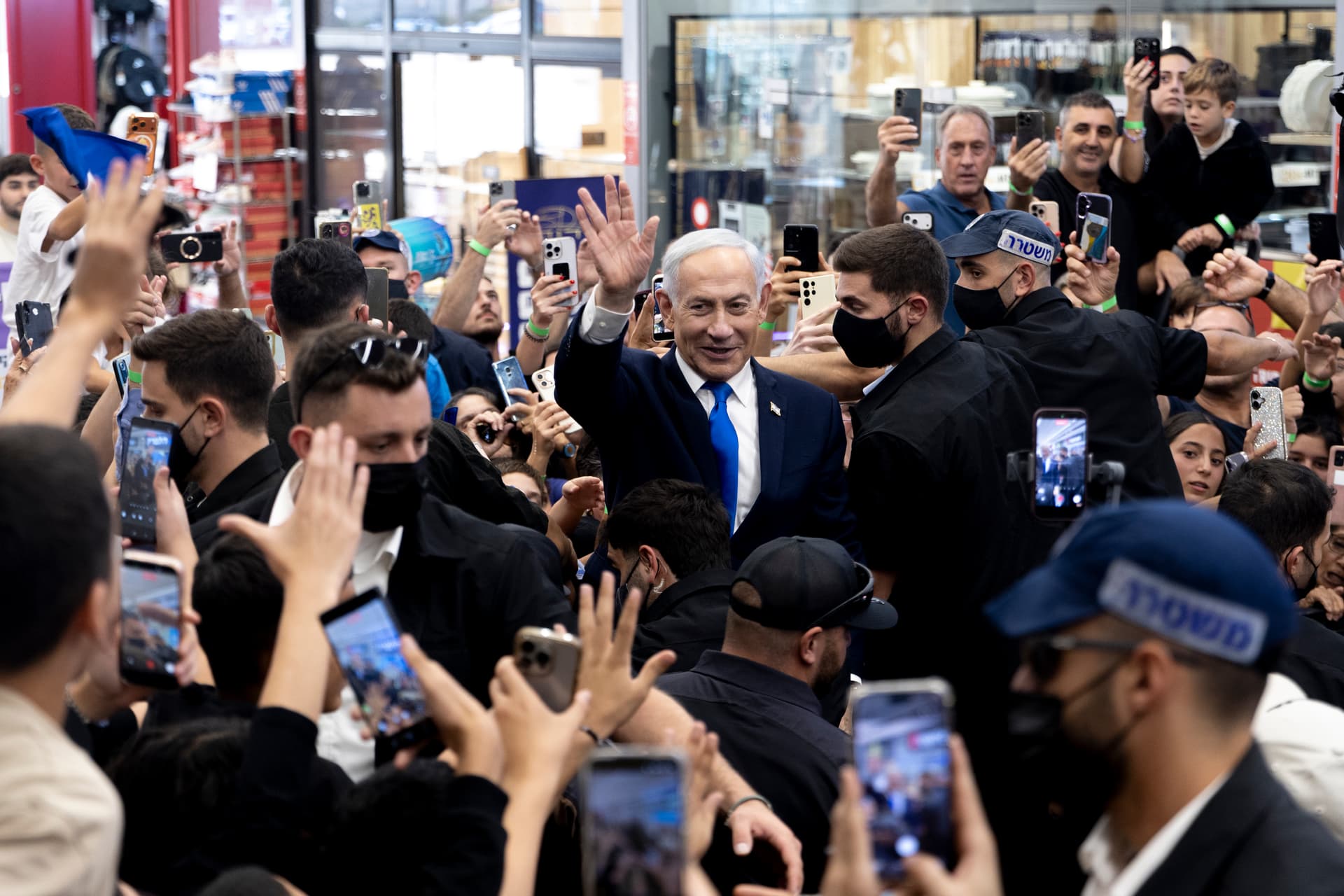
FCC Boss Carr Warns NBC, ABC, and CBS: Biased Broadcast Networks That Air ‘Partisan Circus’ Could Lose Their Licenses

The chairman says the reluctance to yank broadcast licenses has led to Americans having more trust in ‘gas station sushi’ than legacy broadcasters.

Media Research Center
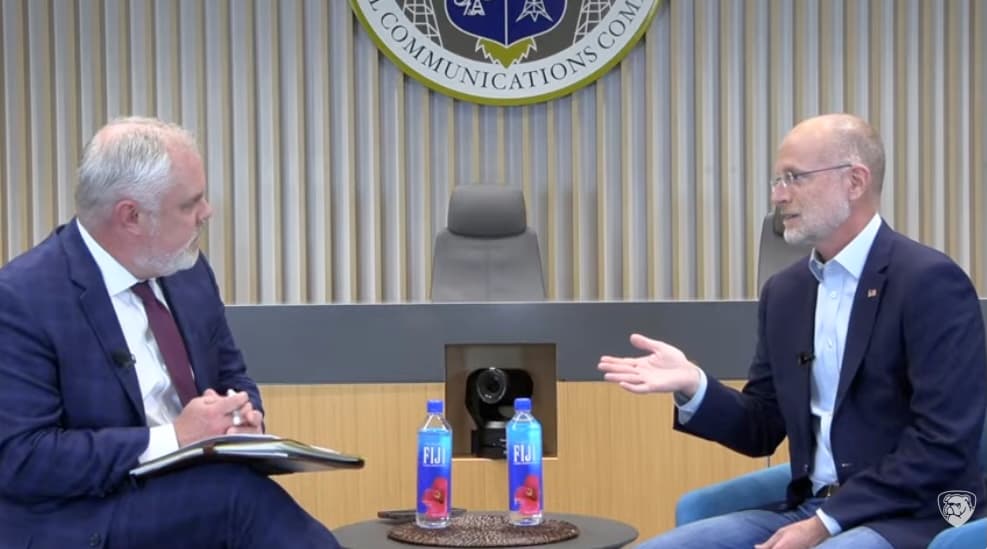
FCC Chairman Brendan Carr (R) appears on the Media Research Center's podcast with MRC's David Bozell. Media Research Center

The chairman of the Federal Communications Commission, Brendan Carr, is doubling down on his threat of pulling broadcast licenses if a network “run[s] a narrow partisan circus.”

Mr. Carr, who has used his agency’s regulatory power to pressure broadcasters into balancing their news content and eliminating diversity, equity, and inclusion policies, has previously stated that he thinks the FCC should be more open to revoking broadcast licenses. Last spring, he suggested that news outlets could have their licenses revoked for referring to an illegal immigrant, Kilmar Abrego Garcia, as a “Maryland man” without balancing the epithet with a qualification.

During an interview with the president of NewsBusters, David Bozell, the FCC chairman spoke about his agency’s “public interest” requirements for local broadcasters that carry the content from companies such as ABC and NBC.

“There’s thousands of TV stations out there, just four national programmers, and those licensed TV stations that distribute the programming from ABC and CBS … have an obligation to serve the public interest, which means looking out for the interest of the local community,” Mr. Carr said. “You can’t run a narrow partisan circus and ultimately be holding a broadcast license. You can do that on cable, you can do that on a podcast, but licensed broadcast TV is just fundamentally different.”

The four major broadcast networks – ABC, NBC, CBS, and Fox – have licenses that give them exclusive access to public airwaves that viewers can watch for free using old-fashioned antennas. The use of these airwaves has been enormously profitable to the networks – billions and billions of dollars of ad revenue each year. 

Even as the broadcast networks have seen a massive decline in audience over the last 40 years – first due to cable and now due to streaming – they remain relevant as the home of the biggest sporting events, including the most important NFL football games, and continue to make vast amounts of money. They also continue to program several hours of news a day, in part to sustain their relationship with highly profitable local TV stations they own or are affiliated with.

By contrast, cable news and streaming networks are transmitted via privately owned methods, and the government currently does not have a vehicle with which to regulate them.

In addition to the networks’ uniformly negative coverage of President Trump and the MAGA movement, Mr. Carr also suggested national broadcasters have failed to meet the “public interest” standard by refusing to cover “some of the biggest, most important stories of the past five years,” such as details of Hunter Biden’s laptop. 

The refusal to cover those stories, Mr. Carr said, has led to Americans having more “trust in gas station sushi than legacy, mainstream media.”

He said that he believes the FCC’s reluctance to revoke broadcast licenses contributed to the collapse in Americans’ trust in the media.

“I’ve said from the get-go: Broadcast licenses are not sacred cows. If you think there’s nothing you can do to lose a license, then it’s not a license. That’s called a property right. And that’s something very fundamentally different,” Mr. Carr said. “And so, I’m very open to the idea that there’s broadcasters out there that may very well end up losing their licenses. Now, of course, there’s a whole process that has to be run there that people don’t really focus on.”

Instead of simply revoking broadcast licenses, he floated an alternative idea of an “auction” to allow broadcasters to pay to get out of the “public interest” requirement. 

The threat of revoking broadcast licenses comes as Mr. Trump has repeatedly said programmers should be punished for their negative coverage.

In September, the president spoke to reporters about ABC’s decision to suspend late-night host Jimmy Kimmel for saying that a “MAGA gang was desperately trying to characterize this kid who murdered Charlie Kirk as anything other than one of them.”

The suspension came after Mr. Carr appeared to threaten ABC with regulatory action, saying it could take the “easy way,” and handle the matter itself, or the “hard way.” The chairman has insisted he was not making a threat and simply stating that outside parties might file a complaint with the FCC, which it would be obligated to investigate. 

Speaking to reporters on Air Force One about the Kimmel situation, Mr. Trump said, “[Legacy broadcasters are] giving me all this bad press, and they’re getting a license.”

“I would think maybe their license should be taken away,” he added.

In August, Mr. Trump said ABC and NBC are “two of the worst and most biased networks in history,” as he said that “97 percent” of their coverage is comprised of “bad stories” about his administration. 

“IF THAT IS THE CASE, THEY ARE SIMPLY AN ARM OF THE DEMOCRAT PARTY AND SHOULD, ACCORDING TO MANY, HAVE THEIR LICENSES REVOKED BY THE FCC. I would be totally in favor of that because they are so biased and untruthful, an actual threat to our Democracy!!!” he wrote. 

The president notably left out CBS News, which was acquired by Skydance, a media company led by David Ellison — the son of Trump supporter and the world’s richest man, Larry Ellison.

The younger Mr. Ellison’s company made written commitments to practicing unbiased journalism and eliminating DEI policies at CBS’ parent company, Paramount, before the FCC approved the acquisition deal.  

It’s still early days for Mr. Ellison’s supposedly new CBS News, and CBS’ flagship news program, “60 Minutes,” has continued to broadcast anti-Trump programming, resuming a series of stories it began airing in its previous season about what it considers to be President Trump’s endangering of national security and “the rule of law.”

While critics have accused Mr. Carr of abusing his power and trying to censor dissenting opinions, he has insisted he is acting within the bounds of his authority and asserted that there is simply a different standard for companies that broadcast over the public airwaves versus cable networks. 

_____________

Correction: Four is the number of major broadcast television networks. An earlier version misstated the number.


The New York Sun

© 2025 The New York Sun Company, LLC. All rights reserved.

Use of this site constitutes acceptance of our Terms of Use and Privacy Policy. The material on this site is protected by copyright law and may not be reproduced, distributed, transmitted, cached or otherwise used.

The New York Sun

Sign in or  create a free account

or
By continuing you agree to our Privacy Policy and Terms of Use