FDA Accelerates Alternative Treatment for Autism, Prompting Caution From Specialists
HHS secretary hails leucovorin as ‘exciting,’ but others say more research is needed.
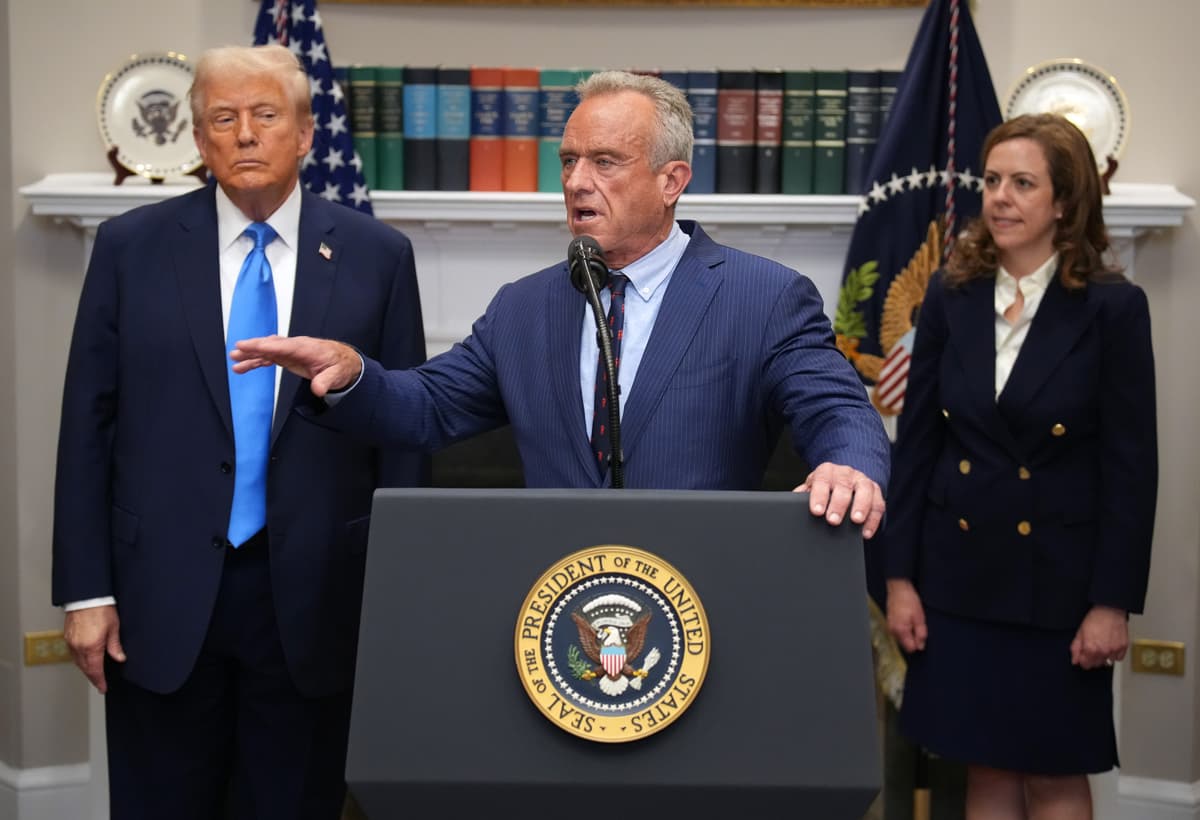
The secretary of the Department of Health and Human Services, Robert F. Kennedy Jr., is overseeing an accelerated Food and Drug Administration process allowing the maker of an alternative drug for autistic children to submit a new use application, despite autism researchers arguing for the need for more robust clinical trials and research.
The drug, leucovorin — a folinic acid traditionally used to lessen the side effects of some cancer treatments — is championed by parents as an alternative therapy for children with cerebral folate deficiency, a neurological disorder that shares symptoms similar to autism spectrum disorder, such as language impairment and sensory processing issues.
The FDA is collaborating with GSK, the original maker of the branded leucovorin calcium, Wellcovorin, to fast-track a label update that would formally list it as a treatment for CFD in adult and pediatric patients.
GSK sold the drug under its brand name, Wellcovorin, until 1997. Today, Hikma, a U.K.-based company, manufactures the generic version of the drug.
While physicians have long prescribed leucovorin “off-label,” the updates will improve insurance coverage and make it easier to prescribe.
“This effort reflects the FDA’s commitment to identify opportunities to repurpose drugs to treat chronic diseases. The FDA remains committed to finding and treating the root causes of autism,” the FDA’s Center for Drug Evaluation and Research director, George Tidmarsh, said in a statement last month.
A GSK representative told Reuters on Monday that it is completing the new use application for the branded version of the drug “as quickly as possible.”
Those with CFD are unable to fully utilize folic acid or vitamin B9, which is crucial to brain development. A 2021 report suggested that 38 percent of people with autism also have CFD. Leucovorin tablets work by supporting folate absorption and helping neurological development and function in those with CFD.
Yet some doctors fear the FDA is relying on limited research that shows “suggestive” benefits for a small subset of patients with autism. The nation’s largest autism research organization, Autism Speaks, argues that larger controlled clinical trials are still needed to evaluate leucovorin’s efficacy.
“There is little evidence to suggest that the benefits observed can be generalized to the broader autistic community,” the chief science officer of Autism Speaks, Andy Shih, told Fox News last month.
“There are some studies showing some benefit in improving communication with these kids,” the director of the UChicago Medicine Neurodevelopmental Clinic, Karam Radwan, told People.
A partnership between the National Institutes of Health, the Department of Defense, and Autism Speaks is conducting three mid-stage trials to study the effect of a new, liquid version of leucovorin. Each trial involves up to 80 children and data are expected to be available around December, Reuters reports.
Previously, label updates for generic drugs could take up to 18 months and were usually reserved for cancer drugs with new clinical data, a Skadden attorney, Rachel Turow, told Reuters.
In a statement, the FDA conceded the “limitations” of existing data on leucovorin’s use on patients with autistic features and said “additional studies are needed to assess safety and efficacy.” The HHS said in a statement that leucovorin is not a cure for autism and “may only lead to improvements in speech-related deficits for a subset of children.”
Mr. Kennedy has pledged to take “bold action” to tackle what he calls an autism “epidemic” that now affects 1 in 31 American children in the United States. At a White House press conference last month, Mr. Kennedy hailed leucoverin as “an exciting therapy that may benefit large numbers of children who have suffered from autism.” Mr. Kennedy also advised pregnant women not to use acetaminophen like Tylenol, citing evidence that suggested a link between the drug and autism.
A retired autism researcher at the University of California, San Francisco, Robert Hendren, said that while he has not seen a “remarkable response” in previous studies, leucovorin has “a good place” in treating autism.
“I don’t think we’re going to find leucovorin as a cure for autism or even a real significant treatment,” Mr. Hendren told STAT News. “But I know Kennedy and Trump promised that they would have the cause of autism and a cure for it by September, and I guess [leucovorin] was the best they could do.”