Fears of ‘Surveillance State’ as Police Around the Globe Expand Use of Live Facial Recognition

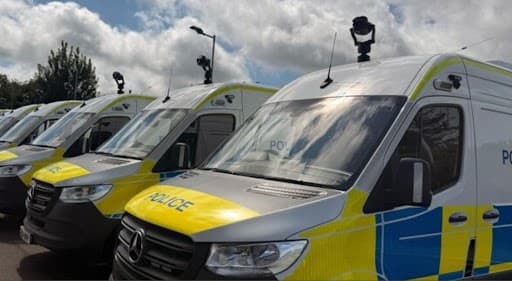
The latest technology includes roving vans equipped with live facial recognition cameras.
Via the United Kingdom Home Office
In the United Kingdom, vans are being equipped with special AI software to scan people's faces to check against police watchlists. Via the United Kingdom Home Office

As police start to rely more on live facial recognition cameras as part of their surveillance tools, privacy advocates are warning of an “Orwellian” future.

It was recently uncovered that New Orleans police secretly relied on a private network of facial recognition technology that scanned city streets for two years to search for crime suspects in a possible violation of city law.

Milwaukee Police are in the process of considering purchasing facial recognition technology saying it is a “potent investigation tool to quickly and effectively generate leads.” It is continuing to evaluate it despite growing opposition. The city’s Equal Rights Commission is concerned about discrimination against what it called “historically marginalized groups,” Wisconsin Watch reported Thursday.

The New York Police Department has been using facial recognition for years to identify suspects in a variety of violent crimes. The city council passed a series of bills earlier this year to regulate police use of the technology due to potential abuse.

The systems in the United States generally rely on fixed cameras in specific locations. The United Kingdom is going even further in deploying facial recognition.

The camera-equipped vans are being deployed in cities across the United Kingdom.

Home Secretary Yvette Copper claims safeguards are being put in place that require checks be done against police watchlists.

“We will provide police with the tools they need to do their jobs,” Ms. Cooper said. “Facial recognition will be used in a targeted way to identify sex offenders or people wanted for the most serious crimes who the police have not been able to find.”

Some police forces, including the Metropolitan Police and South Wales Police have already used their own live facial recognition systems for several years.

“The increased access to live facial recognition vehicles to forces that previously did not have the capability is an excellent opportunity for policing,” the National Police Chiefs Council’s Lindsey Chiswick says.

That has critics raising concerns of a rising surveillance state.

Labor Party Baroness Shami Chakrabarti calls the technology “intrusive” and worries that it is a step towards a “total surveillance society” in the country.

But South Wales Police claim the technology is being used in only specific uses and has never resulted in any false alerts.

“We understand the concerns which are raised about the use of live facial recognition technology and we use any new technology ethically and spend time and effort making sure it’s deployed in line with all legislation and guidance,” the chief superintendent of South Wales Police, Tim Morgan, said.

That is not alleviating the fears of civil liberties group Big Brother Watch, which calls the live facial recognition system “Orwellian.” It is planning legal action to try to block its expansion.

“Police and private companies in the UK have been quietly rolling out facial recognition surveillance cameras, taking ‘faceprints’ of millions of people — often without you knowing about it, the group states. “This is an enormous expansion of the surveillance state — and it sets a dangerous precedent worldwide. We must stop this dangerously authoritarian surveillance now.”


The New York Sun

© 2025 The New York Sun Company, LLC. All rights reserved.

Use of this site constitutes acceptance of our Terms of Use and Privacy Policy. The material on this site is protected by copyright law and may not be reproduced, distributed, transmitted, cached or otherwise used.

The New York Sun

Sign in or  create a free account

or
By continuing you agree to our Privacy Policy and Terms of Use