Federal Judge Issues Blistering Rebuke of Trump Efforts To Deport Pro-Palestinian Student Protesters

‘Trump has pardons and tanks … what do you have?’ one anonymous correspondent asks a federal judge who has challenged the president previously.

AP/Yuki Iwamura
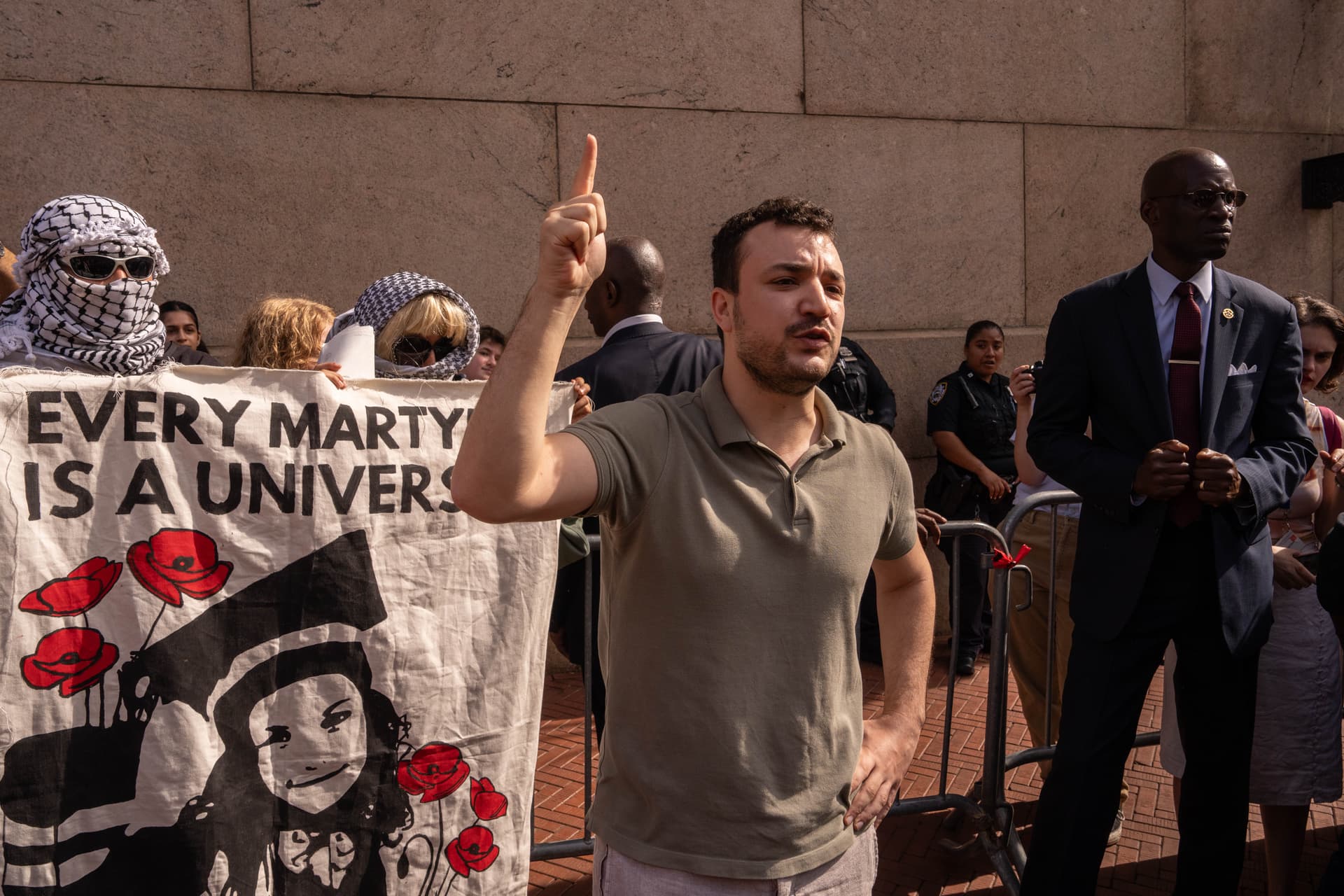
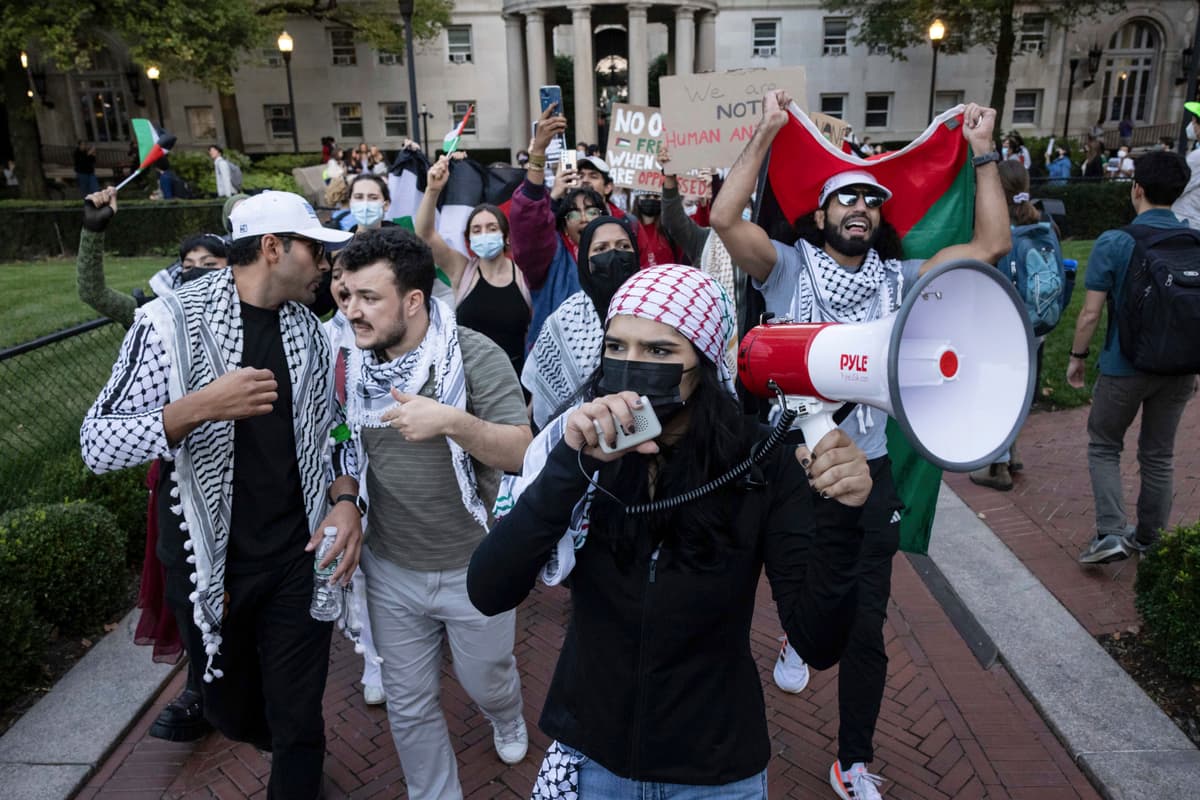
Mahmoud Khalil, second from left, demonstrates during a protest at Columbia University in 2023. AP/Yuki Iwamura

In an extraordinary 161-page opinion bookended by ominous correspondence from anonymous citizens, a federal judge ruled Tuesday that Trump administration officials violated the Constitution by targeting visa-holding students for deportation because of their anti-Israel activism. 

U.S. District Judge William G. Young, who was appointed by President Reagan, opened his decision by including a copy of a postcard he received in chambers. The handwritten note, dated June 19, 2025, asked: “Trump has pardons and tanks … what do you have?”

Judge Young’s reply set the tone for the rest of his order: “Dear Mr. or Ms. Anonymous: Alone, I have nothing but my sense of duty. Together, We the People of the United States — you and me — have our magnificent Constitution. Here’s how that works out in a specific case.”

The ruling addresses a lawsuit filed by the American Association of University Professors and the Middle East Studies Association challenging the federal government’s efforts to crack down on antisemitism on campus by arresting and detaining visa-holding students engaged in anti-Israel student protests. 

In most cases, the government cited a provision in the Immigration and Nationality Act that allows the government to deport non-citizens who pose “potentially serious adverse foreign policy consequences for the United States.”

After a nine-day trial in which Judge Young examined five deportation cases, he concluded that the secretary of state, Marco Rubio, the homeland security secretary, Kristi Noem, and their subordinates “acted in concert to misuse the sweeping powers of their respective offices” to target non-citizen anti-Israel activists for deportation “primarily on account of their First Amendment protected political speech.” 

Judge Young stated that the officials concocted a scheme in which they wielded the National Immigration Act to target a few anti-Israel activists “for speaking out” in order to terrorize “similarly situated” non-citizens “into silence.” He concluded that the “effect of these targeted deportation proceedings continues unconstitutionally to chill freedom of speech to this day.” 

The judge reserved particular scorn for the government’s enforcement tactics, including using masked federal agents to conduct street arrests. Rejecting testimony that masks protected the agents’ identities, Judge Young wrote: “ICE goes masked for a single reason — to terrorize Americans into quiescence.” He compared the practice to “cowardly desperados and the despised Ku Klux Klan.”

The judge also addressed broader constitutional concerns about executive power, dedicating a section to what he termed “Justice in the Trump Era.” He wrote that the president “has learned that — at least on the civil side of our courts — neither our Constitution nor laws enforce themselves,” noting Mr. Trump “can do most anything until an aggrieved person or entity will stand up and say him ‘Nay.'”

He continued: “I fear President Trump believes the American people are so divided that today they will not stand up, fight for, and defend our most precious constitutional values so long as they are lulled into thinking their own personal interests are not affected. Is he correct?”

Judge Young closed his ruling by returning to his anonymous correspondent: “Thanks for writing. It shows you care. You should.” He invited the author to visit the Boston courthouse to “watch your fellow citizens, sitting as jurors, reach out for justice,” adding: “Where a jury sits, there burns the lamp of liberty.”

The ruling does not immediately order policy changes, though Judge Young said he would schedule a remedy hearing to determine appropriate relief. 

The ruling marks the latest in a series of clashes between Judge Young and the Trump administration. In July, Judge Young blocked the government from terminating medical research grants to institutions with diversity, equity, and inclusion programs, finding the terminations violated the First Amendment.

That ruling was rebuked by Justices Neil Gorsuch and Brett Kavanaugh of the Supreme Court, who argued that recent decisions on similar cases in the high court’s emergency docket rendered Judge Young’s order impermissible. 

“When this Court issues a decision, it constitutes a precedent that commands respect in lower courts,” Justices Gorsuch and Kavanaugh wrote.


The New York Sun

© 2025 The New York Sun Company, LLC. All rights reserved.

Use of this site constitutes acceptance of our Terms of Use and Privacy Policy. The material on this site is protected by copyright law and may not be reproduced, distributed, transmitted, cached or otherwise used.

The New York Sun

Sign in or  create a free account

or
By continuing you agree to our Privacy Policy and Terms of Use