

Federal Judge Rules in Favor of School Nixing Book About Gay Penguins Raising a Chick
The judge says authors do not have a right to demand school libraries ignore a book’s ‘viewpoint’ while curating their collections.
A federal judge says authors have no First Amendment right to use school libraries to “right to speak” or to force schools to keep their books on the shelves.
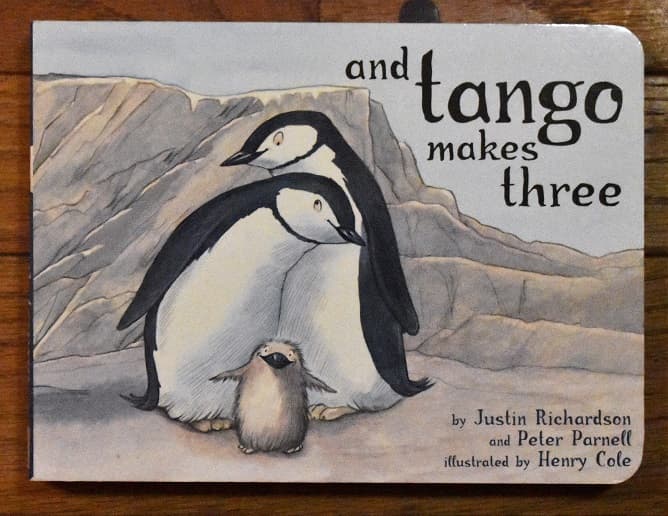
The Escambia County School Board in Florida was sued in 2023 after it decided to remove a children’s book titled “And Tango Makes Three,” which tells the story of two male penguins who adopt and raise a penguin chick. The authors of the book, Peter Parnell and Justin Richardson, say it “illustrates that same-sex parents exist, that they can adopt and raise offspring, and have healthy and happy families.” They filed a lawsuit against the school board, alleging that their book was targeted for removal due to “narrowly partisan, political reasons.”
The lawsuit litigation has played out amid a years-long discussion over whether schools should remove LGBTQ books from their libraries, which critics allege constitutes government censorship.
This week, the chief judge on the U.S. District Court for the Northern District of Florida Tallahassee Division, Allen Winsor, ruled in favor of the school board’s decision to remove the book.
Judge Winsor noted that the Escambia school board argued that “any speech at issue here is government speech,” which “does not implicate any students’ or authors’ First Amendment rights at all.”
“It argues, with some force, that a school library’s decision on which books to collect (or not collect) constitutes its own expression about which books belong in the library or which books students should be reading,” Judge Winsor said.
He wrote the board’s argument was supported by a May decision by the United States Court of Appeals for the Fifth Circuit, in which a plurality of judges on that court found that a “public library’s collection decisions are government speech.”
The jurist noted that there are still arguments about whether book curation constitutes government speech. But, he said in this case, the “good news” is that he does not have to “decide the difficult government-speech issue.”
“If book curation is government speech, the board wins on the merits because the First Amendment would not reach its speech,” he wrote. “Even if book curation is not government speech, the board still wins on the merits: when the government decides which books to choose, it is not creating a forum for others to speak, and it is not otherwise implicating Plaintiffs’ First Amendment rights.”
Judge Winsor said the authors “have no First Amendment right to speak through the library,” and a student who was a plaintiff in the lawsuit has “no First Amendment right to receive the Author Plaintiffs’ message through the library.” He also said the authors do not have a right to “demand the library ignore the book’s viewpoint when determining whether to include it in its collection.”
The judge said students who want to book will “simply” have to “get it elsewhere.”
Judge Winsor then ruled in favor of the school board’s motion to dismiss the case.
The Florida Freedom to Read Project reacted to the ruling, posting on BlueSky that it is “at odds” with a ruling from another federal judge who struck down a portion of a Florida law that established a process for parents to object to reading material in schools that “depicts or describes sexual conduct.”
“Ask your state and federal legislators to codify the freedom to read into law. Let them know we will not accept blatant viewpoint discrimination in our publicly-funded libraries and schools under the guise of ‘government speech.’ Libraries belong to the people,” the post added.