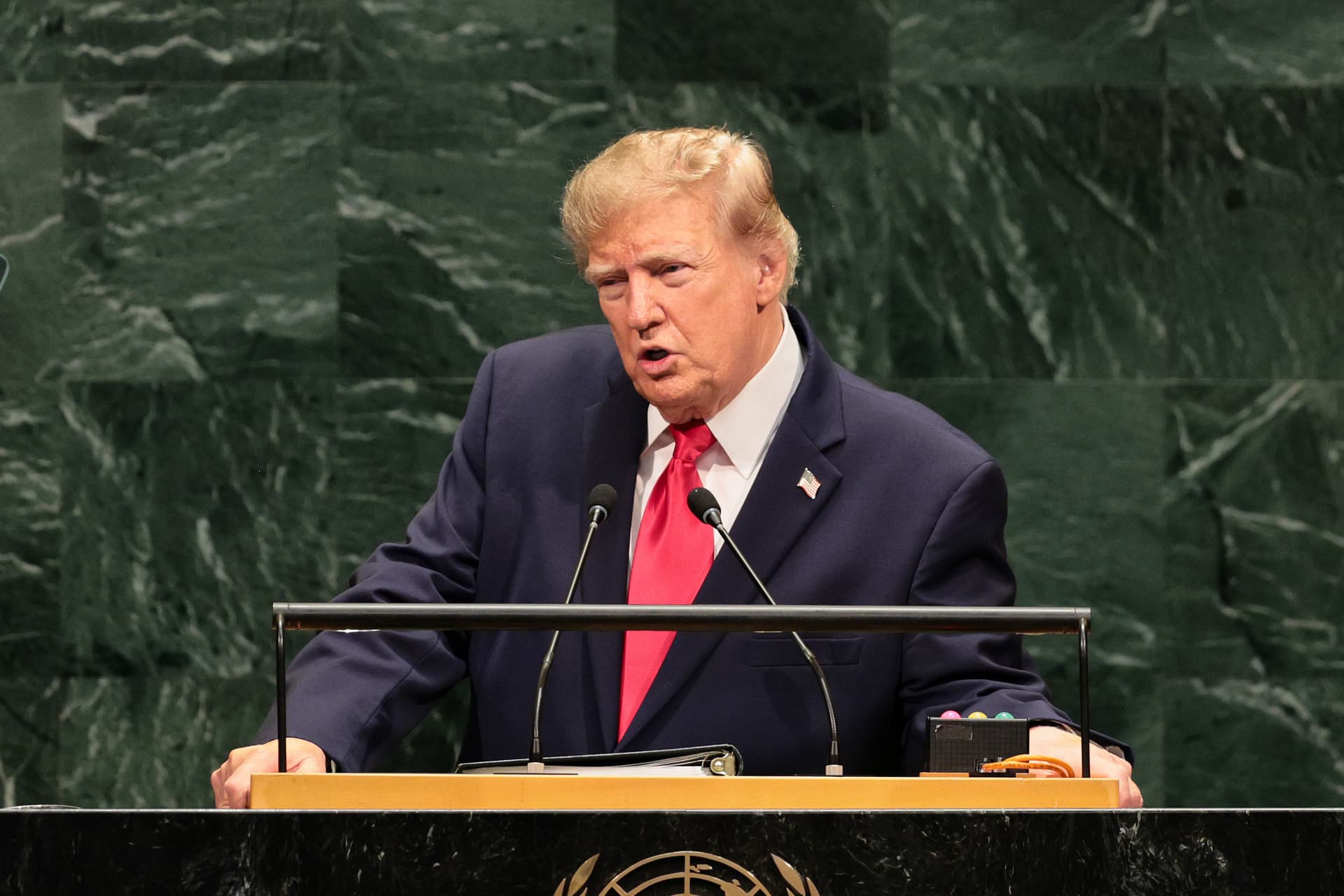
Federal Judges To Decide Whether Texas Can Use Its New Mid-Decade Maps

The judges may stop Republicans’ attempt to pick up five House seats.
AP/Rich Pedroncelli
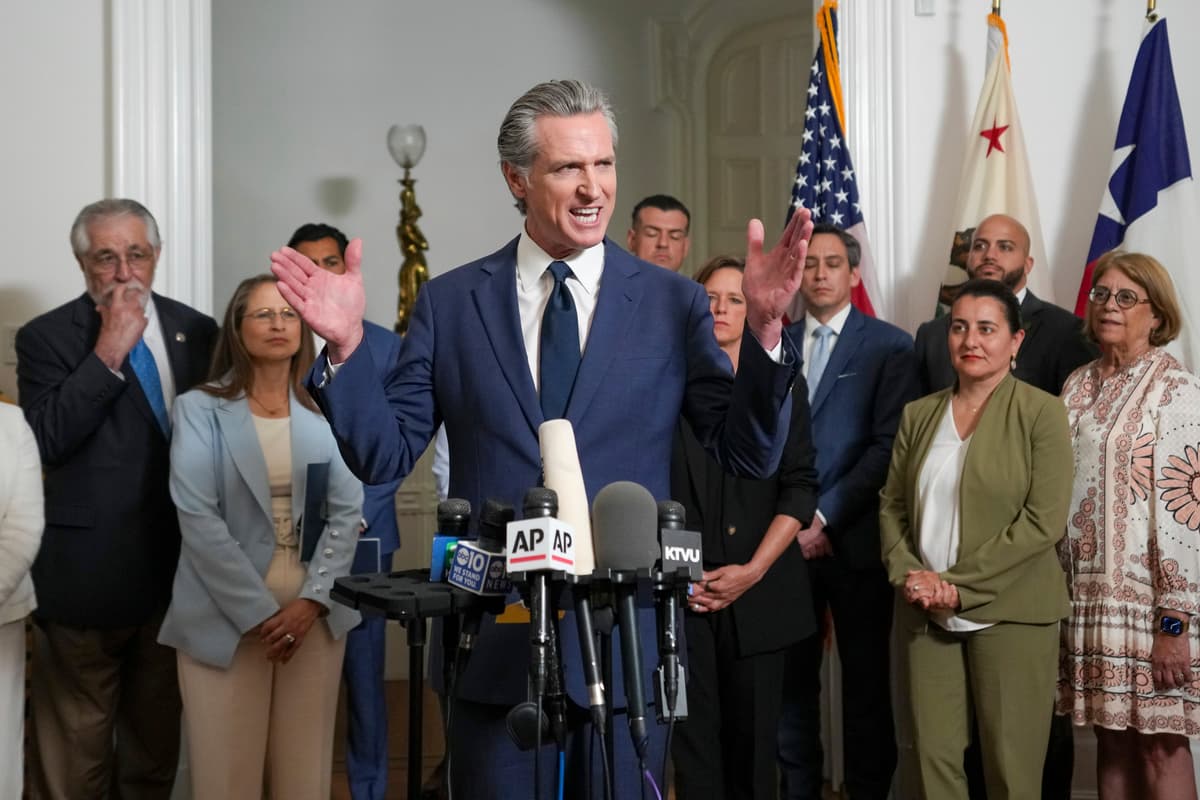
Accompanied by California and Texas lawmakers, Governor Gavin Newsom, center, discusses the push to redraw California's Congressional voting districts. AP/Rich Pedroncelli

A panel of federal judges will decide whether Texas can use its new congressional maps, drafted as part of its controversial mid-decade redistricting effort, for the 2026 midterm elections. 

Texas’s unusual decision to redraw its maps in the middle of the decade led California’s governor, Gavin Newsom, to launch a push for his state to redraw its map to give Democrats in his state more seats. Other red states, such as Missouri, Indiana, and Utah, have also moved to redraw their maps.

Three federal judges at El Paso will hear arguments beginning on Wednesday to determine whether Texas can use the new maps. At issue is the question of whether race factored into Republicans’ decisions, or if they were only focused on partisan gain. Republican officials say they were only focused on increasing political gains for their party and that race did not factor into their decisions when drawing the new maps, which are expected to help the party pick up five seats. 

The NAACP and the Lawyers’ Committee for Civil Rights Under Law filed a federal lawsuit in August, seeking to block Texas from using its new maps.

The president of the NAACP, Derrick Johnson, said in a statement that it is “quite obvious that Texas’s effort to redistrict mid-decade, before next year’s midterm elections, is racially motivated.”

“The state’s intent here is to reduce the members of Congress who represent Black communities, and that, in and of itself, is unconstitutional,” Mr. Johnson said. 

The U.S. Supreme Court has held that racial gerrymandering is unconstitutional, but it has said partisan gerrymandering is legal. In 2024, in the case of Alexander v. South Carolina State Conference of the NAACP, the justices said that to prove a case of racial gerrymandering, plaintiffs must show that race was the “predominant factor motivating the legislature’s decision to place a significant number of voters within or without a particular district.”

The plaintiffs in Texas’s case note that when Governor Greg Abbott first called a special session to pass the new maps, he cited a letter from the Department of Justice that said there had been “unconstitutional racial gerrymanders” in the state. 

Critics argue the justice department gave Texas cover to try to dilute the voices of minority voters. The president of the Lawyers’ Committee for Civil Rights Under Law, Damon T. Hewitt, said in a statement, “The Trump administration told Texas in no uncertain terms to create illegal, discriminatory maps, and Texas actively carried out the mandate. This is an intentionally harmful and discriminatory effort, and we must call it out as such.”

However, Texas says its decision to redraw the maps was driven solely by partisan reasons and that race was not a factor. In a filing last week, the state quoted the House minority leader, Hakeem Jeffries, saying, “As is often the case, ‘When Donald Trump says jump, the Republicans simply ask how high.’”

“Mindful of history showing that a president’s political party tends to lose House seats in mid-term election years and concerned that a Democrat majority would disrupt his national agenda, President Trump demanded that Republican legislatures fight fire with fire,” the state said. “He called on Texas lawmakers to find five additional congressional seats; he then sought to impose whatever political pressure he could to secure the Legislature’s agreement.”

The filing added, “It is this political arms-race that motivated Texas legislators to redistrict mid-decade, not race.”

The same judges who will hear arguments about the mid-decade maps also have yet to weigh in on a legal challenge to Texas’s 2021 maps and whether they constitute racial gerrymandering — a case that has been delayed for years. 

The lawsuit could derail Republicans’ plan to help protect their majority as the new maps will have to be in place by November 8, when candidates start filing their campaign paperwork. A preliminary injunction against the maps could prevent the state from using them. 


The New York Sun

© 2025 The New York Sun Company, LLC. All rights reserved.

Use of this site constitutes acceptance of our Terms of Use and Privacy Policy. The material on this site is protected by copyright law and may not be reproduced, distributed, transmitted, cached or otherwise used.

The New York Sun

Sign in or  create a free account

or
By continuing you agree to our Privacy Policy and Terms of Use