
Florida’s ‘Alligator Alcatraz’ To Be Completely Emptied of Illegal Migrants in Matter of Days
‘We are probably going to be down to 0 individuals within a few days,’ a state official says in an email exchange regarding chaplaincy services at the detention facility.
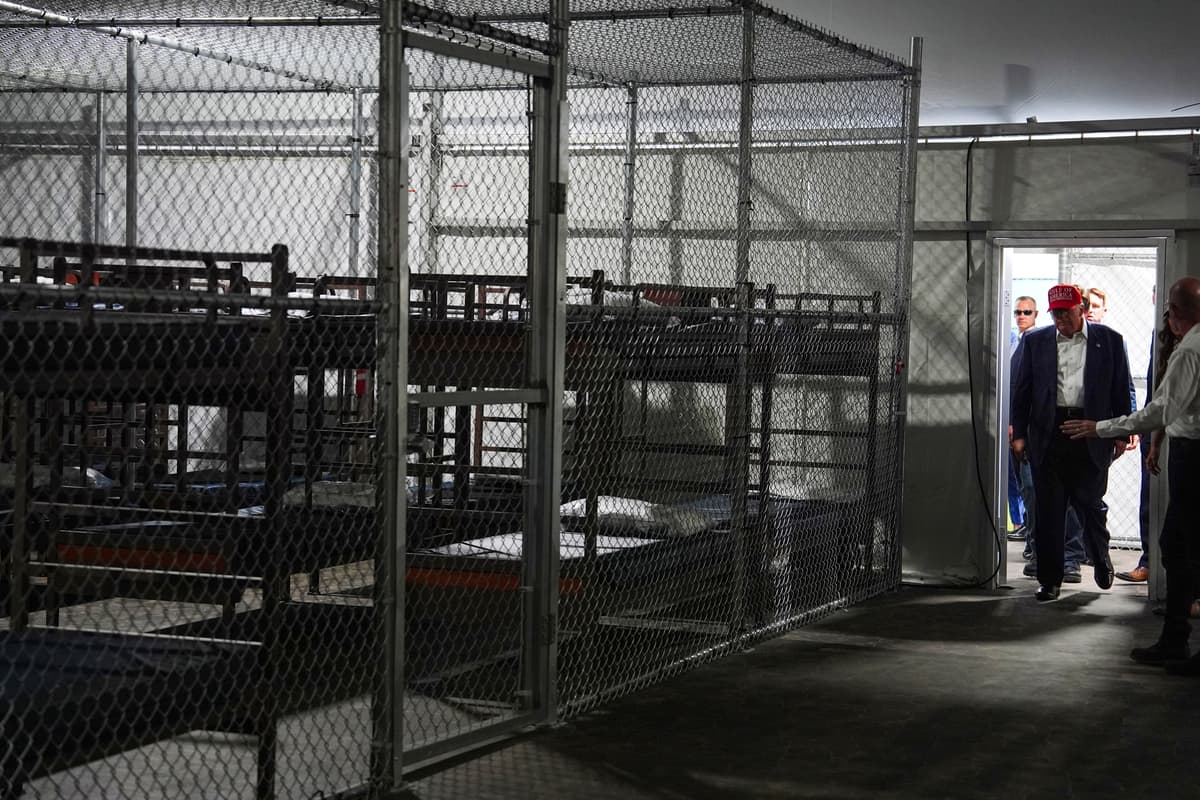

Florida’s notorious “Alligator Alcatraz” — an immigrant detention center hastily erected atop an abandoned airstrip in the remote Everglades — will be vacated entirely in a matter of days, even as Governor Ron DeSantis’s administration scrambles to defy a federal judge’s shutdown order.
The stark admission was made in an email exchange obtained by the Associated Press, in which the executive director of Florida’s Division of Emergency Management, Kevin Guthrie, told a South Florida rabbi, Mario Rojzman, on August 22 that “we are probably going to be down to 0 individuals within a few days” — effectively admitting the controversial detention center would not need chaplaincy services.
Both Mr. Rojzman and his executive assistant confirmed the veracity of the message to the news agency. Officials for Mr. Guthrie’s office, which has overseen the construction and operations of “Alligator Alcatraz,” did not immediately respond to the Sun’s requests for comment.
Mr. DeSantis attempted to put a positive spin on the matter when questioned about the email exchange at a recent event at Orlando, saying that the dwindling population of inmates was a direct result of an uptick in deportations carried out by the Department of Homeland Security.
“Ultimately, it’s DHS’s decision where they want to process and stage detainees, and it’s their decision about when they want to bring them out,” he said.
While Mr. DeSantis attempts to distance Florida from responsibility for the removals, federal attorneys recently asserted in court filings that “any decision” to detain unauthorized immigrants at the center “would be Florida’s decision, not DHS’s,” and that the facility operates using “state funds on state lands under state emergency authority.
Mr. Desantis’s office hastily issued $245 million in contracts to erect and operate the facility. The emergency executive order enabled the governor to suspend competitive bidding requirements. The state was expected to apply to the federal government for reimbursement through FEMA’s Shelter and Services Program, however it has not yet done so. The largest state contract, issued to Critical Response Strategies for $78.5 million was to pay for wardens, correctional officers, and other staff.
Last Thursday, a federal district court judge, Kathleen Williams, delivered a stinging rebuke to the Trump administration, ruling that it cannot continue funneling migrants to the embattled facility — not over concerns regarding due process or conditions in holding areas, but to protect wildlife in the surrounding region.
The judge’s preliminary injunction responds directly to a lawsuit filed by the Miccosukee Tribe and environmental groups, who contended the state bypassed proper ecological reviews and warned the facility posed “irreparable” harm to the sensitive Everglades ecosystem. The government argued that since the state paid for the facility, it was not bound by the federal environmental review process. The judge said since the prisoners were federal, the funding source was irrelevant.
The federal government has not stated where former detainees are being sent and does not advertise where its detention facilities are situated across the nation, though at least one former detainee was sent to a center at El Paso, Texas.