Israel Intensifies Attacks Against Lebanon
This article is from the archive of The New York Sun before the launch of its new website in 2022. The Sun has neither altered nor updated such articles but will seek to correct any errors, mis-categorizations or other problems introduced during transfer.

BEIRUT, Lebanon (AP) – Israel intensified its attacks against Lebanon on Thursday, imposing a naval blockade, twice hitting Beirut’s airport, and blasting two Lebanese army air bases near Syria. Hezbollah fired more than 100 rockets into Israel, which said one also struck the port city of Haifa.
The Shiite militant group denied it had rocketed Haifa, where no injuries were reported, though two days of violence elsewhere left at least 57 people dead on both sides of the border. The crisis began with a Hezbollah raid on Israel that resulted in the capture of two Israeli soldiers.
The Israeli ambassador to the United States, Daniel Ayalon, called the attack on Haifa “a major, major escalation.” The city, 30 miles south of the border, is home to 270,000 residents and a major oil refinery.
“Those who fire into such a densely populated area will pay a heavy price,” said David Baker, an official in the Israeli prime minister’s office.
Hezbollah’s deputy leader Sheik Naim Kassem denied that the group had fired on Haifa, telling Al-Jazeera by telephone that the group would do so if Beirut or its southern suburbs were attacked.
Late Thursday, helicopter gunships fired missiles on Beirut’s airport, setting fuel tanks ablaze, Lebanese security officials said. TV footage showed flames shooting up from the airport.
Warplanes earlier punched holes in the runways and at two military air bases.
Israel’s army chief Brig. Gen. Dan Halutz warned that “nothing is safe” in Lebanon and said Beirut itself _ particularly Hezbollah offices and residences _ would be a target. Maj. Gen. Udi Adam said Israel had hit hundreds of targets and hadn’t ruled out sending in ground troops.
Lebanon asked the U.N. Security Council to demand a cease-fire. The United States vetoed an Arab-backed resolution that would have demanded Israel halt its military offensive in the Gaza Strip.
The Israeli army said Hezbollah fired more than 100 rockets into northern Israeli towns, killing a middle-age man and a woman and wounding more than 35 civilians. Hezbollah said it was using a new missile that appeared to be more advanced than previous models.
Two days of Israeli bombings, the heaviest air campaign against its neighbor in 24 years, had killed 47 Lebanese and wounded 103, Health Minister Mohammed Jawad Khalife said. Eight Israeli soldiers have been killed.
Both sides played a high stakes game following the capture of the two soldiers by Hezbollah: Israel sought to end Hezbollah’s presence on the border, while the guerrillas insisted on trading the captured soldiers for Arab prisoners.
Sandwiched between the two sides was Lebanon, which Israel said it held responsible for Hezbollah’s actions. Hezbollah fighters operate with almost total autonomy in southern Lebanon, and the government has no control over their actions. But Lebanon has long resisted international pressure to disarm the group.
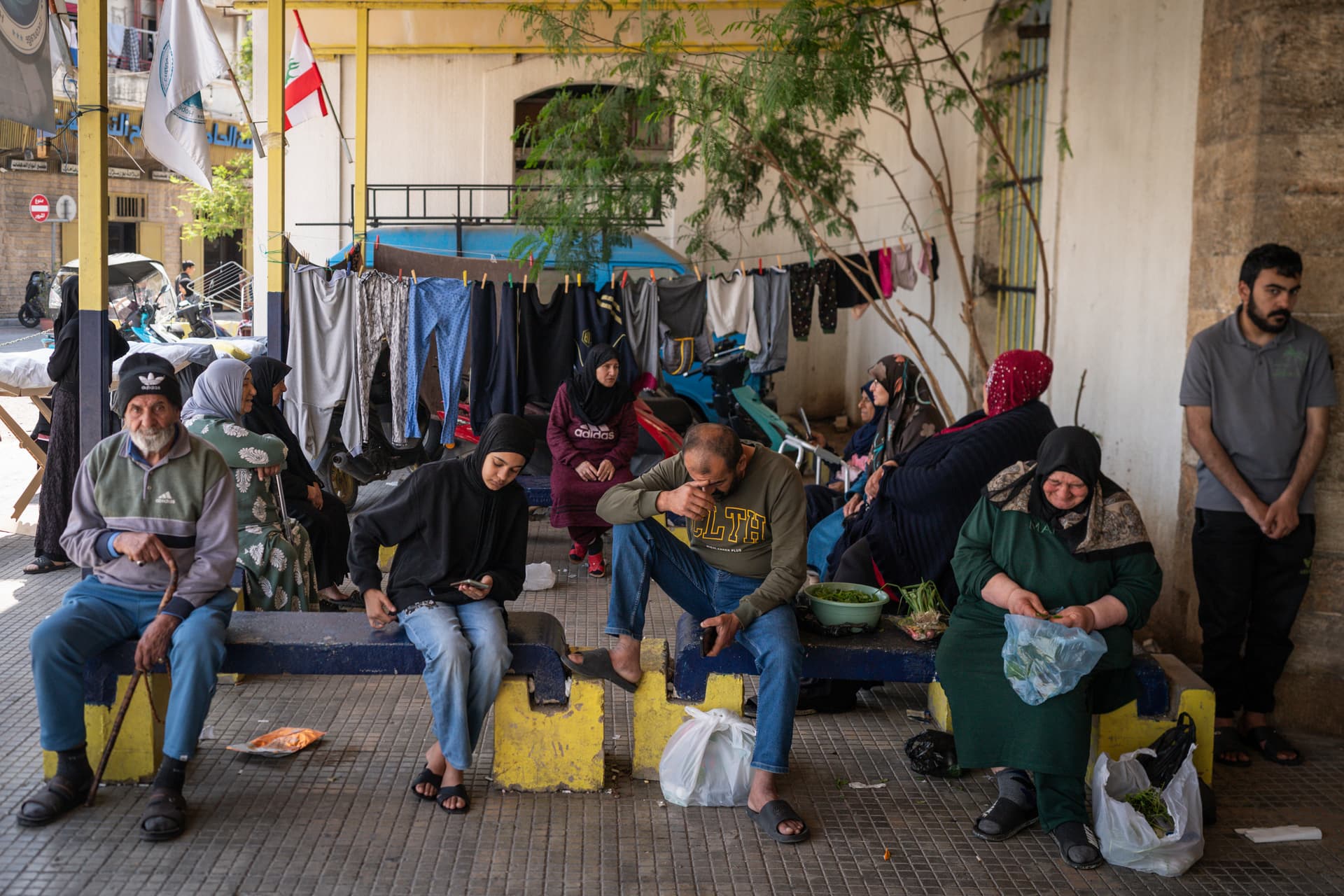
The Israeli warnings of more attacks caused panic in Beirut, and many people stayed home from work. Long lines formed at gas stations and supermarkets.
The violence reverberated throughout the region and oil prices settled at a new high of $76.70 a barrel.
President Bush defended Israel’s attacks in Lebanon but worried they could weaken or topple the fragile government in Beirut.
“Israel has a right to defend herself,” Bush said at a news conference in Germany with Chancellor Angela Merkel. “Every nation must defend herself against terrorist attacks and the killing of innocent life.”
Western countries, Russia and the United Nations called for restraint and demanded the return of the soldiers. The Arab League called an emergency meeting of foreign ministers in Cairo on Saturday, while the Lebanese Cabinet urged the U.N. to intervene.
U.N. Secretary-General Kofi Annan planned to send three veteran U.N. officials to the Middle East to try to defuse the crisis.
The European Union criticized Israel for using what it called “disproportionate” force in its attacks and EU foreign policy chief Javier Solana said he was planning a peace mission.
Moderate Arab governments reacted with relative restraint, apparently reflecting a sentiment in Egypt, Jordan and Saudi Arabia that Hezbollah _ and by implication its top ally Syria _ had started the fight with Israel.
Palestinian President Mahmoud Abbas warned that Israel’s Lebanon offensive “is raising our fears of a new regional war” and urged world powers to intervene.
The eight Israeli soldiers killed so far is the highest death toll for the army in four years. Three soldiers died in the initial Hezbollah raid, and four were killed when their tank ran over a land mine Wednesday.
Israeli Foreign Ministry spokesman Mark Regev said Israel had information Hezbollah was trying to transfer the two captured soldiers to Iran, which backs Hezbollah. He did not disclose the source of his information.
After hitting roads and bridges in the south all day Wednesday, Israel dramatically expanded its campaign Thursday with their biggest offensive in Lebanon since Israel’s 1982 invasion.
Israeli warships imposed a naval blockade of Lebanese ports, and the Israeli military said it could also target the Beirut-to-Damascus highway, the main land link between Lebanon and the outside world.
Military jets attacked runways at the Rayak air base in the eastern Bekaa Valley and at the Qoleiat air base in the north. Rayak, four miles west of the Syrian border, is home to the country’s main military air base.
Because Lebanon’s army has no operational fixed-wing aircraft and only operates helicopters _ which can take off or land anywhere _ the attacks appeared to be mostly symbolic.
Israeli planes dropped leaflets on the southern suburbs of Beirut, calling on residents to avoid areas where Hezbollah operates.
Israeli Defense Minister Amir Peretz said his forces would not allow Hezbollah guerrillas to occupy positions along the southern Lebanese border.
“If the government of Lebanon fails to deploy its forces, as is expected of a sovereign government, we shall not allow Hezbollah forces to remain any further on the borders of the state of Israel,” Peretz said.
Brig. Gen. Yossi Baidatz, commander of the research arm of military intelligence, told a parliamentary committee Thursday that Hezbollah had about 100 missiles with a range of 25 to 44 miles, a participant in the meeting said. That would put the cities of Haifa and Tiberias within range. The participant didn’t name the missile.
Travelers to and from Beirut were stranded all over the region and beyond after the airport strike. Among them was Foreign Minister Fawzi Salloukh, who was returning from a visit to Armenia and _ like many _ was forced to make his way home through Syria. The main terminal of the $500 million airport remained intact.
The Israeli military said it struck the airport because it is “a central hub for the transfer of weapons and supplies to the Hezbollah terrorist organization.”
It was the first time since Israel’s 1982 invasion of Lebanon and occupation of Beirut that the airport was hit by Israel. The Israelis in 1968 sent commandos to Beirut airport, blowing up 13 passenger planes in retaliation for Arab militants firing on an Israeli airliner in Athens.
Details from the violence included:
_ An Israeli missile hit Hezbollah’s Al-Manar TV studios in southern Beirut, station official Ibrahim Farhat said. One person was hurt; broadcasts continued. An Al-Manar transmission antenna hit near Baalbek stopped transmissions in that area.
_ A civic center attached to a Shiite Muslim mosque near the town of Baalbek was hit.
_ A Lebanese family of 10 and another family of seven were killed in their homes in the village of Dweir, Lebanese officials said.
_ Among the dead Lebanese were a soldier and a Hezbollah fighter.
_ Hezbollah fired rockets at the northern Israeli towns of Safed, Nahariya, Kiryat Shmona and Carmiel, saying it was using a rocket called “Thunder 1” for the first time. The missiles appeared to be more advanced than the inaccurate Katyusha _ the standard Hezbollah rocket.
The Israeli army said several rockets had landed more than 12 miles south of the border, showing that Hezbollah has managed to extend its missiles’ range.