Former Fed Chairmen and Other Top Policymakers Ask Supreme Court To Let Lisa Cook Stay in Role

They argue that it is imperative to preserve the independence of the Federal Reserve.
Mark Schiefelbein/AP
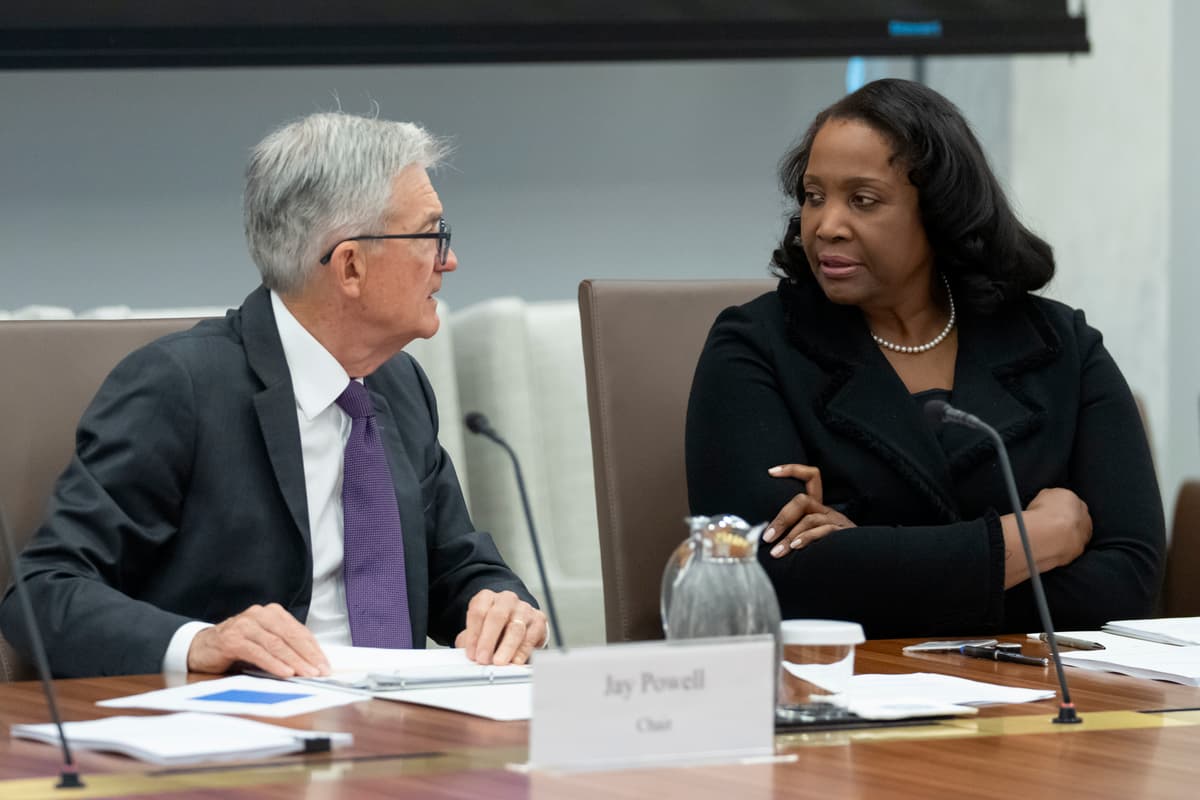
The Federal Reserve chairman, Jerome Powell, talks with Lisa Cook during a Board of Governors meeting at Washington on June 25, 2025. Mark Schiefelbein/AP

Every living former chairmen of the Federal Reserve and other former leading policymakers are asking the Supreme Court to preserve the independence of the central bank and allow a Federal Reserve governor, Lisa Cook, to stay in her role as she fights her firing by President Trump.

A friend-of-the-court brief filed on Thursday also has the support of a group of former Treasury secretaries, Federal Reserve governors, Council of Economic Advisers chairmen, and economists.

Ms. Cook filed a lawsuit to keep her job and lower courts have blocked her immediate removal while the case works its way through the courts. The Trump administration appealed to the Supreme Court to force her immediate removal.

The brief in support of Ms. Cook says granting the government’s request to remove her immediately would upset longstanding protections of the Federal Reserve. “Doing so would expose the Federal Reserve to political influences, thereby eroding public confidence in the Fed’s independence and jeopardizing the credibility and efficacy of U.S. monetary policy,” the brief signed by three former Fed leaders — Janet Yellen, Ben Bernanke, Alan Greenspan — and others states.

“Maintaining the status quo while the lawfulness of the termination is adjudicated, in contrast, would serve the public’s interest by safeguarding the independence and stability of the system that governs monetary policy in this country,” it states.

The brief notes political pressure on the Fed by former presidents Truman and Nixon to lower interest rates led to years of higher inflation and highlights the need for independence.

Former Treasury secretaries who served for Republican and Democrat administrations, including Lawrence Summers, Henry Paulson, and Tim Geithner, are also signatories on the brief but no former Trump administration officials signed it.

The White House reacted to the amici brief with a statement continuing to attack Ms. Cook. “President Trump lawfully used his authority under the Federal Reserve Act to remove Cook from the Federal Reserve Board for cause, an action that will restore accountability and confidence in the Fed,” spokesman Kush Desai adds.

Mr. Trump and his administration have accused Ms. Cook of committing mortgage fraud, citing documents related to two properties Ms. Cook allegedly claimed as primary residences. Some documents show that she claimed one residence as a vacation home and the other as her primary residence, Reuters reports.

Lawyers for Ms. Cook tell the high court that removing her from her post “would threaten our Nation’s economic stability and raise questions about the Federal Reserve’s continued independence.”

Ms. Cook, who was confirmed by the Senate for her seat, says in a filing that her removal could risk “shock waves in the financial markets that could not easily be undone.”

The Department of Justice, in its appeal to the Supreme Court, accuse the lower court jurists of committing “improper judicial interference with the President’s removal authority.”

The DOJ argues that Ms. Cook’s contention and the lower court’s finding that she is entitled to civil service protections is not reconcilable with the president’s removal authority. 

“This theory is untenable and would wreak havoc on sensitive presidential decision-making,” the attorneys write. “The lower court’s due-process theory would invite judicial micromanagement of the President’s exercise of his core Article II powers — even where, as here, courts have no authority to review the substance of the President’s ultimate decision.”

Citing Mr. Trump’s vast powers as president, justice department lawyers argue that judges have no right to review his firing of Ms. Cook at all. Government lawyers argue that federal statutes are vague enough to allow Mr. Trump to remove Ms. Cook, so long as he identifies some reason other than a policy disagreement.

Ms. Cook has not been charged or convicted in connection with the mortgages. Her own response to the Supreme Court was due on Thursday afternoon.


The New York Sun

© 2025 The New York Sun Company, LLC. All rights reserved.

Use of this site constitutes acceptance of our Terms of Use and Privacy Policy. The material on this site is protected by copyright law and may not be reproduced, distributed, transmitted, cached or otherwise used.

The New York Sun

Sign in or  create a free account

or
By continuing you agree to our Privacy Policy and Terms of Use