Georgia Immigration Raid Targeting South Korean Factory Sets Back Korean-American Relations After Seemingly Successful White House Meeting

Korean officials, caught by surprise by the raid, respond with alarm — and indignation — over what they view as an assault on South Korea’s attempts to placate President Trump by boosting investment in America.
AP/Mike Stewart, file
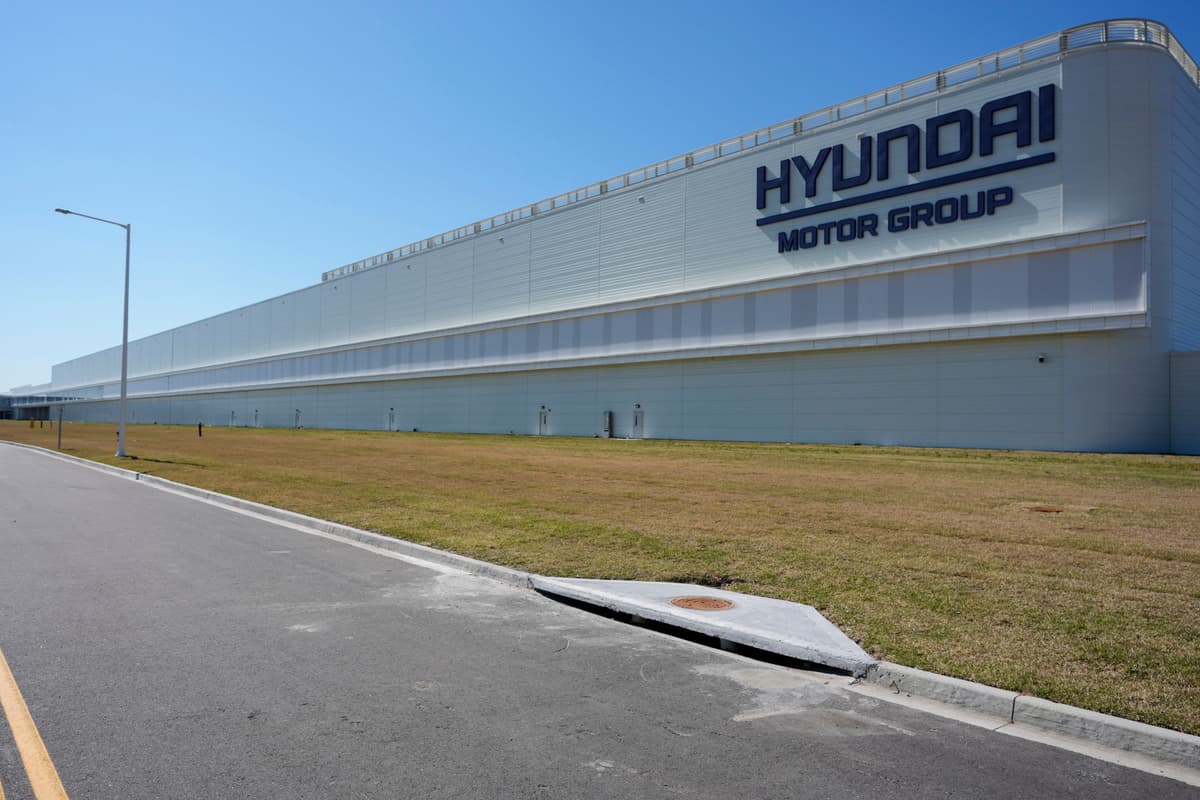
The Hyundai Motor Group Metaplant America at Ellabell, Georgia. The immigration raid was at a factory under construction. AP/Mike Stewart, file

An immigration raid on the site of a large Korean factory under construction in Georgia has spread shockwaves among South Koreans striving to meet President Trump’s demands for vastly increased Korean investment in America. 

Estimates vary, but as many as 300 Korean employees were among 450 rounded up in the raid by Immigration and Customs Enforcement agents at the construction site for a joint venture spawned by two of Korea’s biggest corporate names, Hyundai and LG. They reportedly were handcuffed and taken by bus to interrogation centers. 

Twenty-eight miles west of Savannah, Georgia, the factory, called HL-GA Battery Company, owned jointly by LG Energy Solution and Hyundai Motor, will eventually produce batteries mainly for Hyundai electric vehicles. All told, the site employs about 1,400 employees on a project that represents one of the most important examples of Korea’s pledge to invest another $350 billion in factories on American soil. The cost of the factory is expected to rise to $7.6 billion. 

Korean officials, caught by surprise by the raid, responded with alarm — and indignation — over what they viewed as an assault on South Korea’s attempts to placate Mr. Trump. Koreans hope to persuade him not to impose tariffs of about 15 percent on Korean products, or at least not to raise them.  

At Seoul, a spokesman for Korea’s foreign ministry, Lee Jae-woong, warned, “The economic activities of our companies investing in the U.S. and the rights and interests of our nationals must not be unfairly violated,” according to Korea’s Yonhap News. Mr. Lee said the ministry had “conveyed our concern and regret” to the American embassy while Korean diplomats flew to Georgia to try to gain freedom for those being detained.

South Korea’s biggest-selling newspaper, Chosun Ilbo, said the raid, the first on a huge foreign factory site that precisely represents Mr. Trump’s pleas for increased foreign investment in America, “has left Korean companies in turmoil.”

Half a dozen agencies are now  examining the rights and wrongs of the Korean employees, many of whom came to America on visas valid only for short-term stays, as tourists, students, and the like.  Among those on the scene were agents of Homeland Security Investigations, the FBI, the Drug Enforcement Administration, the Bureau of Alcohol Tobacco, Firearms and Explosives, and the George state police.

A Korean official blamed the arrests on  “the immigration policy of the Donald Trump administration.” 

Fears rose that raids could extend to other huge Korean plants, including the newly opened Hyundai Metaplant America at Marietta,  Georgia, which Hyundai calls “the key pillar of the group’s $12.6 billion investment in Georgia and the largest economic development project in the state’s history.” Hyundai envisions the Marietta plant producing “up to 500,000 electric and hybrid vehicles annually for Hyundai, Kia and Genesis brands,” many to run on batteries produced at the LG-Hyundai plant.

Hyundai Motor has already invested $20.5 billion in American plants and is committed to investing another $21 billion in the next few years, but it’s not the biggest Korean investor. Samsung Electronics is committed to investing a total of $45 billion, including plants at Taylor and Austin, Texas, producing chips. Supply companies from Korea add to the total investment.

The raid on the LG-Hyundai site is likely to prove a headache for Mr. Trump, who got along great with South Korea’s president, Lee Jae-myung, at a recent White House summit at which they talked about tariffs and investment as well as defense — and their shared interest in reopening dialogue with North Korea’s leader, Kim Jong-un.

“Raid at Hyundai-LG Plant Rattles Korean-American Relations,” a headline in the Georgia Asia Times read. “The meticulously planned operation,” it said, “has raised pointed questions about whether the massive foreign investment project was singled out for political messaging.”


The New York Sun

© 2025 The New York Sun Company, LLC. All rights reserved.

Use of this site constitutes acceptance of our Terms of Use and Privacy Policy. The material on this site is protected by copyright law and may not be reproduced, distributed, transmitted, cached or otherwise used.

The New York Sun

Sign in or  create a free account

or
By continuing you agree to our Privacy Policy and Terms of Use