

‘Gorgeous’ Experience Promised With 4K Restoration of One of Spielberg’s Early Features, ‘The Sugarland Express’

Spielberg’s picture was of a piece with the times, elbowing its way alongside entertainments like Dennis Hopper’s ‘Easy Rider,’ Monte Hellman’s ‘Two-Lane Blacktop,’ and Terence Malick’s ‘Badlands.’
Via the IFC Center
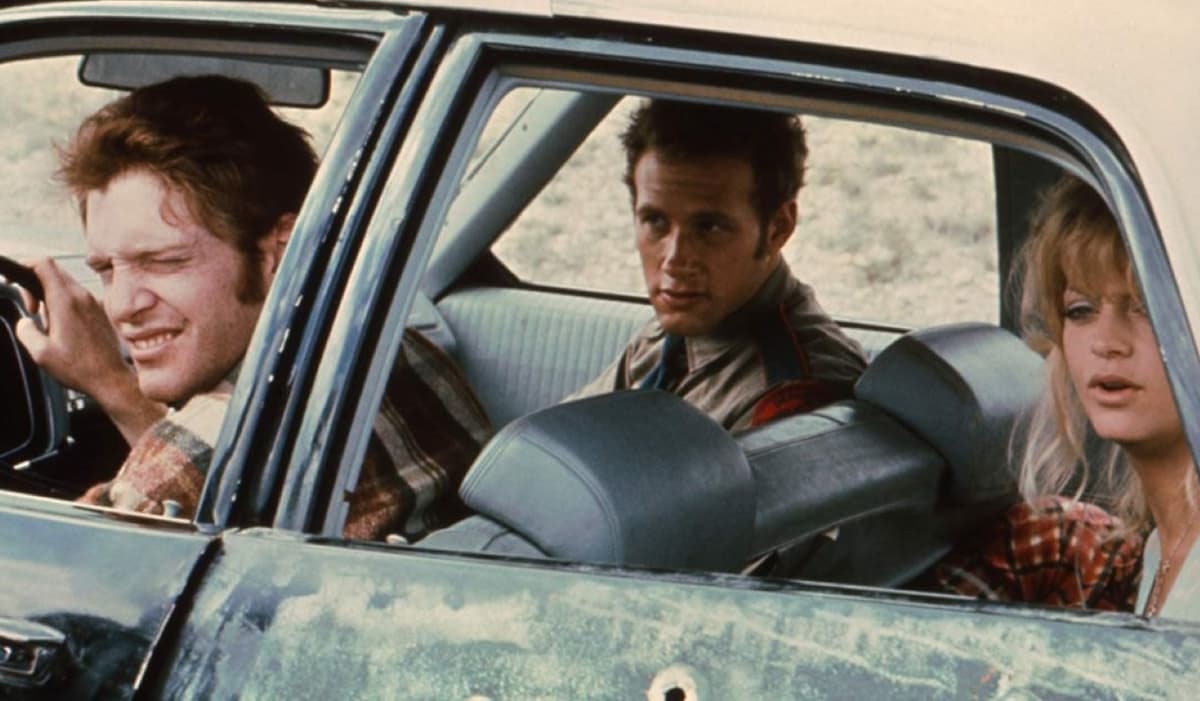
William Atherton, Michael Sacks, and Goldie Hawn in 'The Sugarland Express.' Via the IFC Center

“The Sugarland Express” (1974) was the first film by Steven Spielberg to be released in theaters, but it wasn’t his first professional feature. Mr. Spielberg’s first full-length effort was an ABC Movie of the Week, “Duel” (1971), a tense thriller about a traveling businessman pursued by a mysterious assailant driving a big rig. 

The picture did well enough with viewers and critics to prompt Universal Studios into releasing an extended version in theaters. If you’re in the mood for a white-knuckle foray into automotive paranoia, take a chance: “Duel” has held up well.

Can the same be said for “The Sugarland Express”? The IFC Center is hosting a revival of Mr. Spielberg’s movie on the occasion of its 4K restoration, promising a “gorgeous” cinematic experience. This will stand in good stead the late Vilmos Zsigmond, a cinematographer who worked with, among other directors, Robert Altman, Woody Allen, Martha Coolidge, and Michael Cimino. 

The irony is that “The Sugarland Express” is humble in its settings and gritty at its core. The Texas sun is done proud, but so, too, are a host of two-lane highways, fried-food joints, and low-rent gas stations.

“The Sugarland Express” is, if not a sequel to “Duel,” then an extension on the theme of the open road and, with that, the boundlessness of the American landscape. Mr. Spielberg’s picture was of a piece with the times, elbowing its way alongside entertainments like Dennis Hopper’s “Easy Rider” (1969), Monte Hellman’s “Two-Lane Blacktop” (1971), and Terence Malick’s “Badlands” (1973). “The Sugarland Express” is similarly anti-establishment in its purview, though it doesn’t altogether yield to the era’s nihilism or anomie. As a hangover from the 1960s, Mr. Spielberg’s picture is lighter than most.

It’s also unwieldy in shape and uneven in tone. Much of the story borders on farce, through there are moments of relative quietude, particularly in the characters of Captain Tanner (veteran character actor Ben Johnson) and the dynamic between a journeyman criminal, Clovis Michael Poplin (William Atherton), and the man he kidnaps, Patrolman Maxwell Slide (Michael Sacks). Mr. Spielberg’s knack for conjoining comedy, tragedy, and a dash of satire doesn’t gel in this early effort. “The Sugarland Express” is a patchwork in which the seams don’t quite hold.

Mr. Spielberg had a hand in crafting the story of “The Sugarland Express,” leaving the screenwriting to Hal Barwood and Matthew Robbins, the latter of whom would go on to do uncredited work on “Jaws,” “Close Encounters of the Third Kind,” and “E.T. The Extra Terrestrial.” The movie was adapted from a news story concerning Bonnie and Clyde wannabes who abducted a Texas Highway Patrol officer, a crime that resulted in a slow-speed car chase that presaged the tortoise-like pursuit of O.J. Simpson after he was charged with murder in 1994. 

The impetus for “The Sugarland Express” is the intervention of child welfare services into the lives of Clovis and his bride, Lou Jean (Goldie Hawn). Hell hath no fury like a mother scorned: When their baby is put into protective care, Lou Jean gets a notion to smuggle Clovis out of prison on visiting day to get the child. When Lou Jean gets a bee in her bonnet you’d best get out of the way. 

Goldie Hawn. Alan Light via Wikimedia Commons

After hitching a ride with an elderly couple, our outlaws are pursued by Slide, a by-the-book officer of the law. When Clovis and Lou Jean manage to waylay Slide, they threaten to kill him as a means of thwarting further police action. The myriad officers on his trail are advised by Captain Tanner to go slow, put their guns down, and keep their distance.

Once news gets out about a brazen kidnapping done for the sake of a child, Clovis and Lou Jean become media folk heroes lionized by the kind of God-fearing yokels that Hollywood misprises as the common man. Example A is Lou Jean, a character whose motivations are alternately underwritten and overblown. Ms. Hawn answered the challenge by coasting on a signature gum-popping ditziness that is, at moments, transformed into something pathological. Lou Jean is as cute as a button, sure, but watch out for sharp corners.

The three male leads find humanity in the corners of this shaggy dog story, especially Johnson, who had just come off an Oscar-winning performance in Peter Bogdanovich’s  “The Last Picture Show” (1971). His Captain Tanner is a man of the people you can believe in. “The Sugarland Express” is less believable than that or, for that matter, the Spielberg project that would follow — you remember, the movie about a shark.


The New York Sun

© 2025 The New York Sun Company, LLC. All rights reserved.

Use of this site constitutes acceptance of our Terms of Use and Privacy Policy. The material on this site is protected by copyright law and may not be reproduced, distributed, transmitted, cached or otherwise used.

The New York Sun

Sign in or  create a free account

or
By continuing you agree to our Privacy Policy and Terms of Use