Failure of Trump and Bondi To Indict Letitia James for a Second Time Raises Question of Whether They Will Try for a Third
A Norfolk tribunal takes a pass on reviving Trump’s case against New York’s top prosecutor.
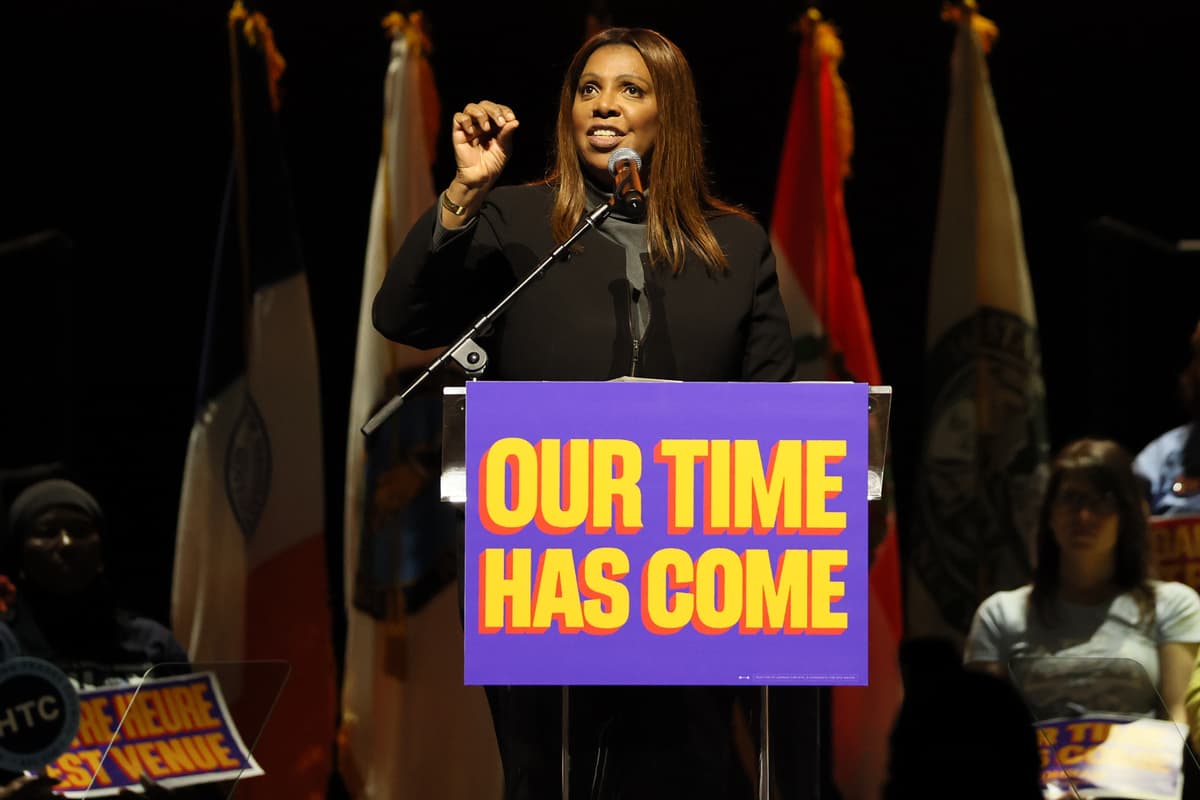
The refusal of a Norfolk, Virginia grand jury to indict New York’s attorney general, Letitia James, for a second time puts into sharp relief the floundering effort to convict one of President Trump’s most vocal critics. The question now is whether the Department of Justice will try to indict Ms. James a third time.
Ms. James’s lawyer, Abbe Lowell, called the failure to indict on Thursday “a decisive rejection of a case that should never have existed in the first place. This should be the end of this case. If they continue, undeterred by a court ruling and a grand jury’s rejection of the charges, it will be a shocking assault on the rule of law.” The prohibition of double jeopardy, though, only attaches once a jury is empaneled at trial.
The first indictment of Ms. James, for two counts of mortgage fraud, was dismissed last week after Judge Cameron McGowan Currie found that the presiding prosecutor, Lindsey Halligan of the Eastern District of Virginia, was unlawfully appointed. Attorney General Pam Bondi vowed an “immediate appeal,” but has instead sought a second set of charges.
Grand juries rarely refuse prosecutors the charges they seek. The old proverb is that they would “indict a ham sandwich,” and grand juries regularly hand up charges in more than 90 percent of cases. Ms. Halligan’s first grand jury, though, also was skeptical. That body handed down indictments on only two out of the three counts presented by Ms. Halligan.
Judge Currie found that “All actions flowing from Ms. Halligan’s defective appointment were unlawful exercises of executive power and are hereby set aside,” including the indictments of Ms. James and the former FBI director, James Comey. Judge Currie, though, dismissed the cases “without prejudice,” meaning that they could be refiled, as the Department of Justice attempted to do here.
Judge Currie’s disqualification of Ms. Halligan came after the former defense attorney for Mr. Trump — she has never prosecuted a felony before — was appointed to replace the previous interim United States attorney for the Eastern District of Virginia, Erik Siebert, who resigned following his reported reluctance to seek charges against Mr. Comey and Ms. James. ABC News reports that his skepticism was shared by other prosecutors in the office.
Judge Currie ruled that federal law does not permit the attorney general to appoint two consecutive interim United States attorneys to 120-day terms. The statute on which Judge Currie leans indicates that the task of appointing a prosecutor after that initial 120-day period expires belongs to the federal judges in the district, not to the Executive Branch.
That position has been endorsed in New Jersey with the disqualification of the acting United States attorney, Alina Habba by a federal district court judge, Matthew Brann, as well as the Third United States Appeals Circuit. While the Third Circuit does not govern in the Old Dominion, its endorsement of Judge Brann’s ruling suggests that the Fourth United States Appeals Circuit, which oversees Judge Currie, could be inclined to uphold her disqualification.
Ms. James was accused of lying on an application in order to secure a $100,000 loan on a modest Norfolk home. In order to obtain that loan, though, prosecutors contend that she asserted that she would not use the house as an investment property. The DOJ argues that she broke that promise and instead rented it out. In the process, says the government, she reaped some $18,000 in ill-gotten gains.
Thursday was a busy day for Ms. James. She was also contesting, at Albany, the lawfulness of the appointment of the acting United States attorney for the Northern District of New York, John Sarcone. She aims to disqualify Mr Sarcone and quash two subpoenas against her. The first is for violating Mr. Trump’s civil rights in her civil fraud lawsuit against him. The second is for violating the civil rights of the National Rifle Association in a civil action that resulted in millions of dollars in fines.
The determination to convict her likely stems from the $500 million civil fraud verdict she secured against Mr. Trump, his two adult sons, and their family business. That penalty, though not the underlying verdict, was overturned on appeal as being so “excessive” as to violate the Eighth Amendment.
Both Mr. Comey and Ms. James have also argued in court that the cases against them are “vindictive” and “selective.” They both point to a social media post from Mr. Trump, seemingly directed to the attorney general, where he writes “Pam: I have reviewed over 30 statements and posts saying that, essentially, ‘same old story as last time, all talk, no action. Nothing is being done. What about Comey, Adam ‘Shifty’ Schiff, Leticia??? They’re all guilty as hell, but nothing is going to be done.”