

Greenpeace Facing Bankruptcy After Jury Rules Group Must Pay Pipeline Company $660 Million in Damages

The jurors tacked on another $320 million in punitive damages.
AP/Aurelien Morissard
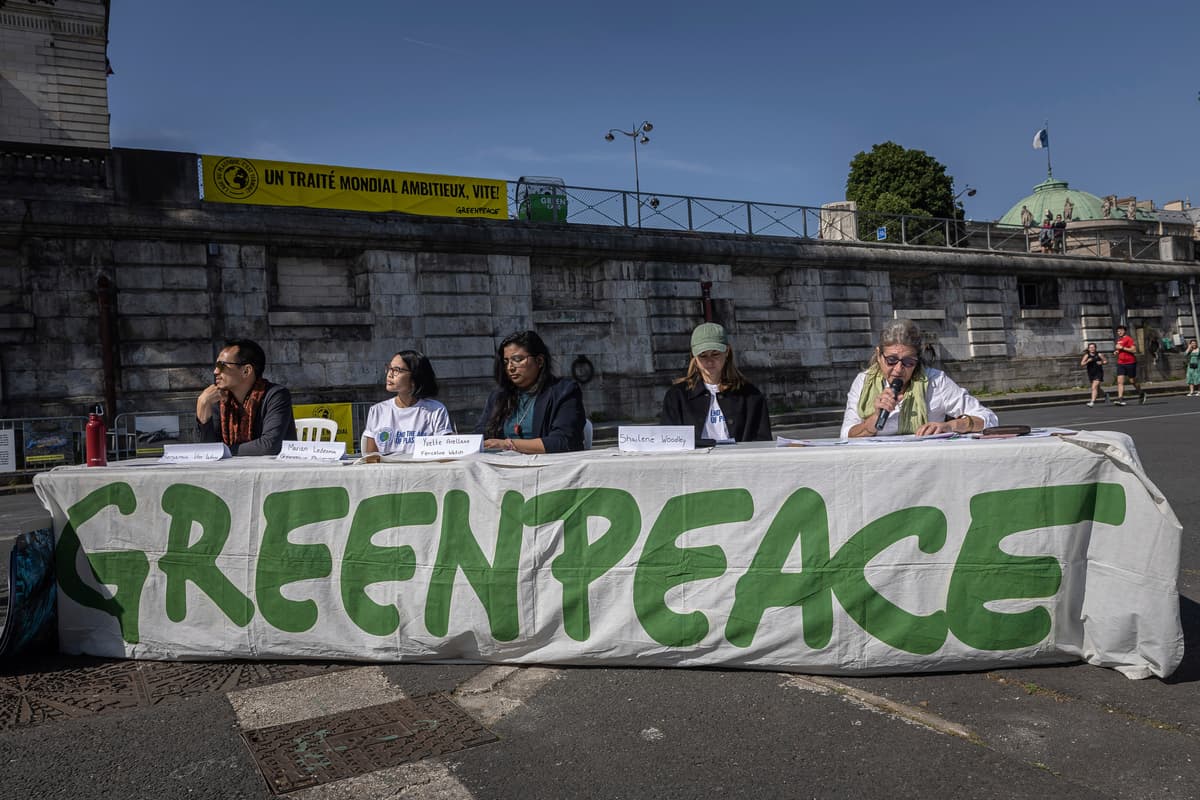
Greenpeace holds press conference at Paris. AP/Aurelien Morissard

A North Dakota jury has handed down a jaw-dropping $660 million verdict against Greenpeace, a sum that could bankrupt the environmental group.

The case stemmed from Greenpeace’s alleged role in orchestrating protests against the Dakota Access Pipeline run by Energy Transfer Partners. Energy Transfer accused Greenpeace of masterminding chaos at the 2016 and 2017 protests, claiming the group spread outright lies and caused financial damage to the tune of hundreds of millions of dollars through property destruction and revenue losses.

“This is more than a win — it’s vindication,” the company’s attorney, Trey Cox, said in a statement. “The jury sent a loud and clear message that Greenpeace’s wrongful and unacceptable actions won’t slide under societal standards. This is about accountability.”

Greenpeace was more morose in its statement after the verdict. “Energy Transfer knows we don’t have $660 million. They want our silence, not our money,” Greenpeace USA interim Executive Director Sushma Raman said.

Before the trial, Greenpeace said the damages sought would amount to $300 million, a figure that is more than 10 times the group’s annual budget. During testimony, Mr. Cox told jurors the cost of the damages done by protesters, plus the delays they caused, ran about $340 million. In an unexpected twist, the jurors tacked on another $320 million in punitive damages to bring the total to $660 million. 

The three-week trial, which ended Wednesday, came nearly four years after Energy Transfer first filed its lawsuit. Greenpeace, once the crown jewel of the environmental movement, now faces a financial catastrophe. 

The lawsuit centered on the Dakota Access Pipeline protests near the Standing Rock Sioux Reservation. The 1,170-mile underground pipeline from North Dakota to Illinois was approved in 2016, spurring protests from Native Americans, who said it would disrespect sacred land and endanger their water supply, the Missouri River. Thousands of protesters from across the country joined the months-long demonstrations.

Greenpeace claimed it played a relatively minor role, focusing on training protesters in peaceful civil disobedience methods at the request of indigenous organizers. They denied any involvement in violence or illegal activities, stating that Energy Transfer exaggerated the group’s influence to silence critics.

Energy Transfer, however, said Greenpeace played a major role in the protests. “While we are pleased that Greenpeace has been held accountable for their actions against us, this win is really for the people of Mandan and throughout North Dakota who had to live through the daily harassment and disruptions caused by the protesters who were funded and trained by Greenpeace,” Energy Transfer said in a statement after the verdict.

For Greenpeace, a 50-year-old titan of environmental advocacy, the verdict comes with existential stakes. It casts a shadow over the organization’s ability to continue its United States-based operations, with potential ripple effects on international campaigns. 

The environmental group isn’t folding without a fight. “This fight isn’t over,” the group said in its statement. “We are going to appeal. And we’re prepared to fight this all the way to victory. As we’ve long said: we will not be silenced, and our movement will endure.”

The statement then asked readers to donate money to the Warrior Defense Fund “to help us continue the fight!”


The New York Sun

© 2025 The New York Sun Company, LLC. All rights reserved.

Use of this site constitutes acceptance of our Terms of Use and Privacy Policy. The material on this site is protected by copyright law and may not be reproduced, distributed, transmitted, cached or otherwise used.

The New York Sun

Sign in or  create a free account

or
By continuing you agree to our Privacy Policy and Terms of Use