Hegseth Revisits Vietnam and Korea, Sites of America’s Two Bloodiest Wars Since World War II

Negotiators in South Korea focus on transferring control to the top Korean commander in time of war from the American general of American forces on the peninsula.
Andrew Harnik/Getty Images
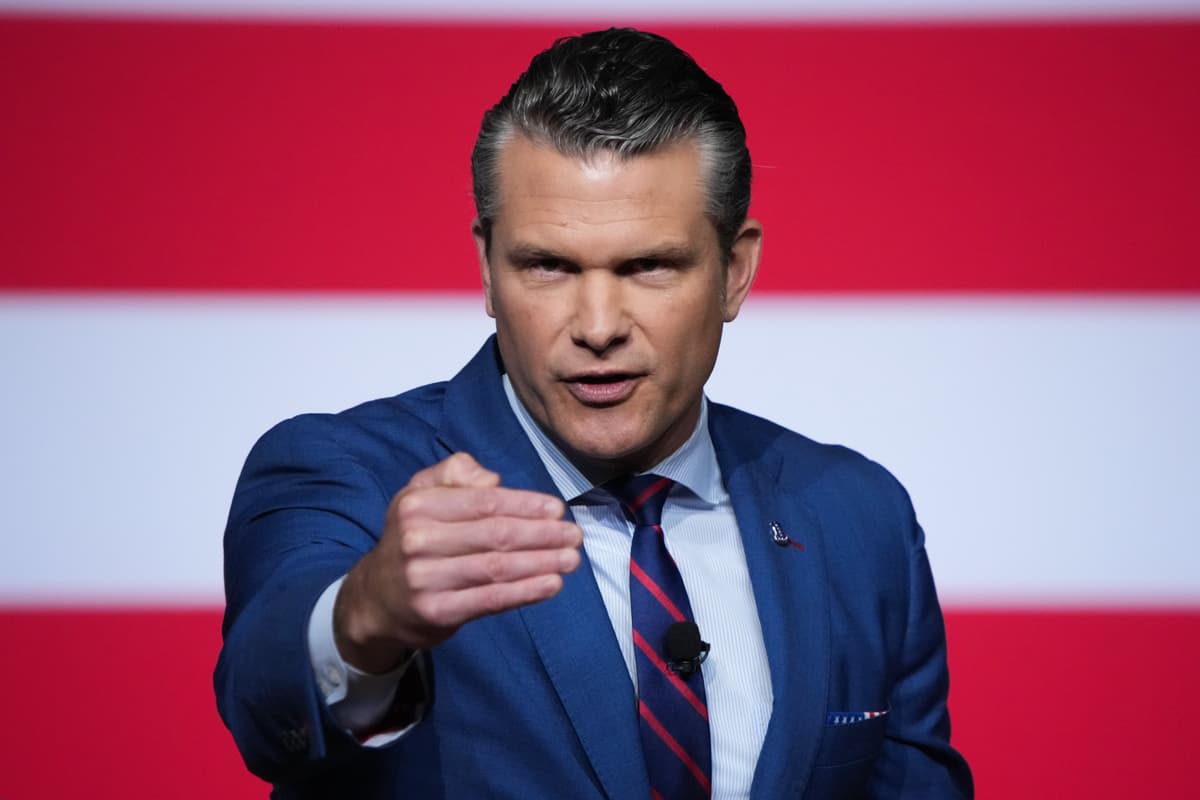
Secretary Pete Hegseth speaks to senior military leaders at Marine Corps Base Quantico in Virginia on September 30, 2025. Andrew Harnik/Getty Images

Secretary Pete Hegseth is revisiting some of the scenes of America’s two bloodiest wars since World War II, buttressing defenses against the same enemies, the Chinese and the Russians, with whom Americans fought and died in Vietnam and Korea.

In South Korea, Mr. Hegseth is focusing on a highly sensitive topic, transferring operational control to the top Korean commander in time of war from the American general who commands U.S. Forces Korea as well as the Combined Forces Command and the UN Command.

American and Korean negotiators are touching on the trickier aspects of this transfer while the Americans press the South to increase defense spending and contribute more to the costs of keeping 28,500 American troops on bases there, as President Trump demanded in his first term.

Mr. Hegseth got a first-hand taste of the standoff on the Korean peninsula after spending two days in Vietnam talking about shipping heavy arms for the Vietnamese Communists who had fought the Americans and their South Vietnamese allies with Chinese and Soviet weapons between 1965 and the American withdrawal in 1973.

Just after flying to Osan Air Base south of Seoul from Hanoi,  Mr. Hegseth headed to the Demilitarized Zone that has divided North from South Korea since the end of the  war in Korea. There he was greeted by South Korea’s defense minister, Ahn Gyu-back, who escorted him to the Joint Security Area where the war truce was signed in July 1953. Mr. Ahn said Mr. Hegseth had called the JSA “the frontline of division and a place of dialogue.”

That carefully constructed remark acknowledged the importance of the JSA as the scene of negotiations when Mr. Trump met the North Korean leader, Kim Jong-un, for the third time, in June 2019.  It was also at the JSA that Mr. Kim met the former South Korean president, Moon Jae-in, in 2018 while hopes were high for North-South rapprochement.

For Mr. Hegseth, the visit to the DMZ was typical of visits made by  thousands of sightseers, but it also symbolized the American-Korean alliance in a time of deepening North-South confrontation. Now, Mr. Kim refuses to see anyone from the South, which he has declared as the “enemy” while tightening his alliance with Russia’s president, for whom he has sent thousands of troops and steady shipments of arms for Russian forces in Ukraine.

Mr. Hegseth is pressing South Korea to invest more in its own defense while possibly increasing its share of the costs of American troops and bases, set at $1.1 billion a year under President Biden. Mr. Trump during his first term demanded $5 billion a year, but has not repeated that figure during his second term — and he did not mention defense while at Pusan seeing President Xi Jinping before last weekend’s conference of the Asia-Pacific Economic Cooperation group at nearby Gyeongju.

Mr. Hegseth, after meeting other defense ministers at Kuala Lumpur on the sidelines of another regional grouping, the Association of Southeast Asian Nations, flew to Hanoi,  where he talked about selling warplanes and other arms in a meeting with Vietnam’s leader, To Lam, general secretary of the ruling Communist Party, and also with Vietnam’s president, Luong Cuong, and the defense minister, General Phan Van Giang.

Mr. Hegseth was believed to have discussed the sale of aircraft, including transport planes and helicopters, for a regime that has been moving much closer to America in the 30 years since Hanoi formed diplomatic relations with Washington 20 years after the Vietnam War ended in 1975. Russia during the Vietnam War provided Hanoi with heavy ammunition, including short-range missiles responsible for shooting down a number of American warplanes, while China supplied rifles and machine guns.

The legacy of Vietnam hung heavy over Mr. Hegseth’s visit. As a symbol of regretful remembrance,  he “returned” to Vietnam some souvenirs from a dead Communist soldier, including a belt, a knife and a leather box. Mr. Pham gave Mr. Hegseth the identification cards of two American soldiers. More significantly, they talked about measures to combat Agent Orange that was sprayed over stretches of jungle, as well as the search for missing American soldiers.


The New York Sun

© 2025 The New York Sun Company, LLC. All rights reserved.

Use of this site constitutes acceptance of our Terms of Use and Privacy Policy. The material on this site is protected by copyright law and may not be reproduced, distributed, transmitted, cached or otherwise used.

The New York Sun

Sign in or  create a free account

or
By continuing you agree to our Privacy Policy and Terms of Use