Hollywood Stardom and Its Afterlife in the World of Bonita Granville

By concentrating on the person, much more than the actress, Kate Arndt achieves a rapport with her subject that is rare in biographies of film stars.
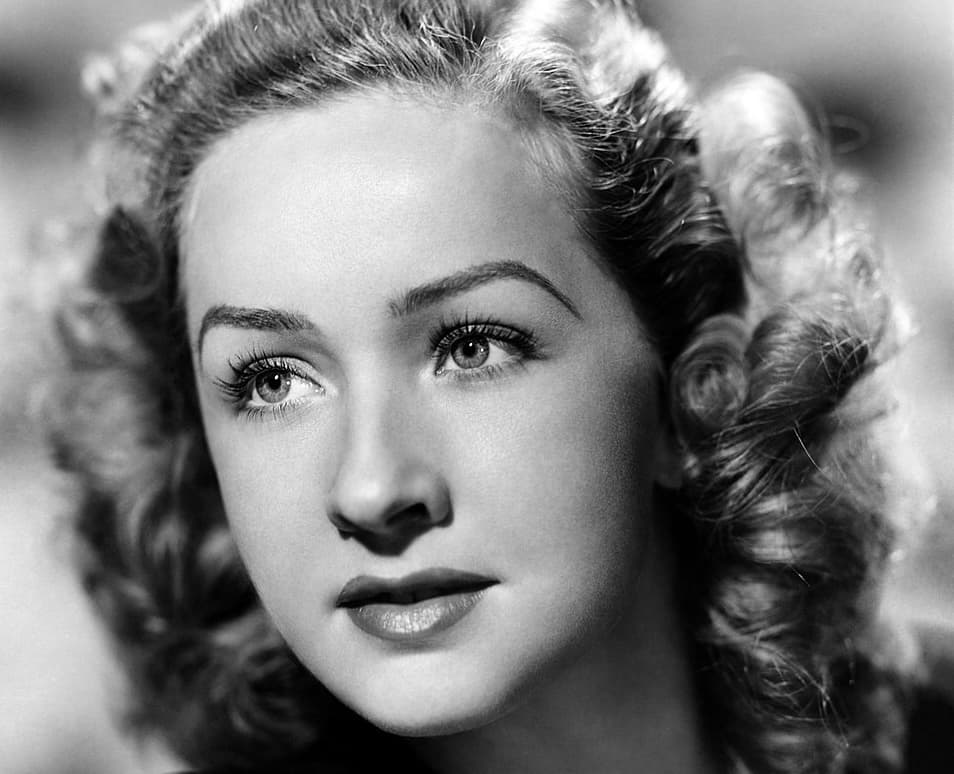
Via Wikimedia Commons
Publicity shot of Bonita Granville from the 1940s. Via Wikimedia Commons

‘Rare Beauty: Bonita Granville A Biography’
By Kate Arndt
BearManor Media, 234 Pages

Bonita Granville created a sensation in her portrayal of Mary Tilford, a malicious child in “These Three” (1936), a film adaptation of a Lillian Hellman play, “The Children’s Hour, in which two schoolteachers’ lives are ruined by Mary’s insinuation that they are having an “unnatural” affair. Hellman changed the play for Hollywood, making Mary allege a love triangle (Miriam Hopkins, Merle Oberon, and Joel McCrea). Scandalized, the well-to-do families who send their children to the private school remove them, resulting in its closure.

The movie manages a happy ending, with Oberon heading off to Vienna with McCrea, but it was Granville’s powerful portrayal of the malign Mary that prompted many letters scolding her and recommending that she reform. Actually, Granville was nothing like the evil Mary, and had to steel herself to play such an unpleasant character.

The throughline of Kate Arndt’s book follows an actress who remained unspoiled by stardom, after being raised by a strict Roman Catholic single mother. Granville, unlike contemporaries Judy Garland and Deanna Durbin, never lost her equilibrium, going on to portray Nancy Drew in four movies, and becoming a second-tier B film star.

Granville wanted more ambitious parts, and why she did not get them is left unexplained in Ms. Arndt’s book. It seems, though, that Granville would not compromise her integrity and engage in the vicious realm of studio politics and careerism as practiced by other actresses.

Granville had the normal desires of any young woman and hoped to marry a fellow child star, Jackie Cooper, but his self-destructive behavior — at one point he thought it better for her to have nothing to do with him, a man who might just kill her — led to the dissolution of their romantic attachment.

Ms. Arndt has had the benefit of interviewing several of Granville’s fellow actresses — all now deceased — and the cooperation of Granville’s daughter. Also, her access to the Granville archive at the Henry Ransom Center at Austin, Texas, makes this not only the first but likely the standard biography of Granville.

Sometimes Granville’s goodness seems almost too good to be true. She seemed to be always ready to commiserate with friends, but when she turned to writing a column answering the troubling questions of fans whose personal lives were in turmoil, her prose proved to be sensitive and insightful, suggesting her biographer has not exaggerated her subject’s virtues.

Readers looking for a discussion of Granville’s films will be disappointed. I wanted to know more about what kind of Nancy Drew she was (I have yet to see her films), and how good of an actress she was compared to contemporaries like Elizabeth Taylor and Deanna Durbin.

Sometimes the prose in this biography degenerates into fan magazine gush, but after reading the last part of Ms. Arndt’s book, I realized that in Granville the biographer found a therapeutic personality that has helped Ms. Arndt’s struggle with autism.

Although Granville lamented the lack of better roles and better pictures, she more than compensated for her disappointment in a successful marriage that turned her into an executive in partnership with her husband, a movie producer who worked closely with the Disney organization. 

On so many occasions, Granville might well have felt bitter about missed opportunities, about the toll publicity dates took on her desire to be honest about her preferences. Even the mean Mickey Rooney, who threatened to ruin Granville’s career if she did not sleep with him, did not turn Granville against him. She saw him as the product of a system that often resulted in bad behavior. 

Ms. Arndt insists that Granville came close to perfection as a human being. Some complained that she was too nice, even boring, yet her friends, especially women and her husband, not only found her lively and engaging but capable of putting their own problems in proper perspective.

By concentrating on the person, much more than the actress, Ms. Arndt achieves a rapport with her subject that is rare in biographies of film stars. If Granville’s friends felt her very presence was a gift to them, so it is for her biographer, who as a 12-year-old watched a Nancy Drew mystery and fell in love.

Mr. Rollyson is the author of “Lillian Hellman: Her Life and Legend” and “Ronald Colman: Hollywood’s Gentleman Hero.” He is now writing a biography of Eve Arden.


The New York Sun

© 2025 The New York Sun Company, LLC. All rights reserved.

Use of this site constitutes acceptance of our Terms of Use and Privacy Policy. The material on this site is protected by copyright law and may not be reproduced, distributed, transmitted, cached or otherwise used.

The New York Sun

Sign in or  create a free account

or
By continuing you agree to our Privacy Policy and Terms of Use