
Epstein Files Legislation Sails Through Congress Despite GOP Misgivings About Privacy, National Security

The speaker, who has been fighting to kill the bill for months, admits defeat and votes to pass the legislation.

AP/Jose Luis Magana
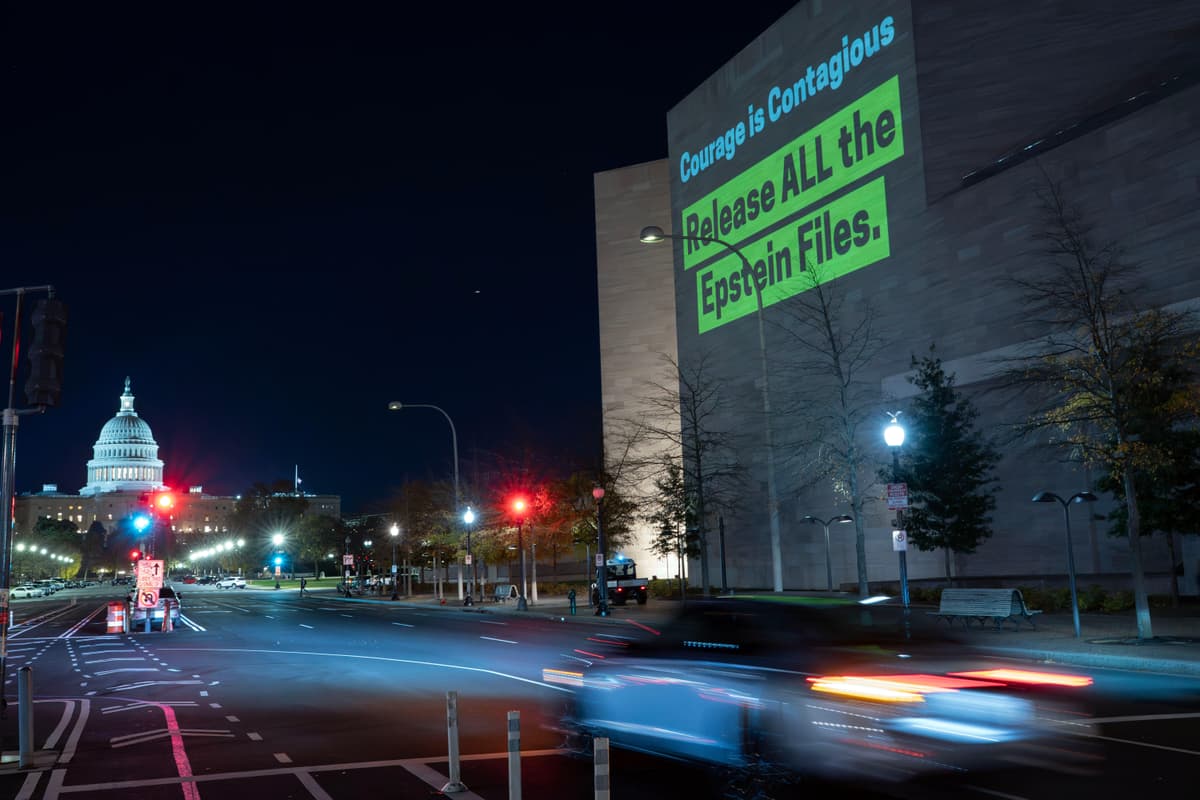
A projection on the wall of the National Gallery of Art calling on Congress to vote yes on the Epstein files transparency act. AP/Jose Luis Magana

Despite reservations from some lawmakers about victims’ privacy and the security of government secrets, Congress swiftly passed a bill to force a disclosure of the Jeffrey Epstein files in a nearly unanimous vote on Tuesday. A White House official tells the Sun that the president will sign the legislation Tuesday evening when it arrives from Capitol Hill. 

The House passed the bill from Congressmen Thomas Massie and Ro Khanna which could lead to the disclosure of more of the Epstein files within 30 signs of Mr. Trump signing the legislation. The vote to pass the bill in the House was nearly unanimous, with only one lawmaker voting no. 

The lone no vote, Congressman Clay Higgins, said in a statement that he is concerned about the broad scope of the bill. He says the Oversight Committee should be charged with investigating the matter.

Hours later, Senator Chuck Schumer went to the Senate floor to ask unanimous consent that the bill be considered passed. No senator objected to that request, meaning that the bill now heads to Mr. Trump’s desk. The White House did not immediately respond to a request for comment about when Mr. Trump plans to sign the bill.

Before the House vote on Tuesday, Mr. Massie praised Epstein’s victims who came forward over the summer to urge Congress to pass the legislation. 

“There is hope here,” Mr. Massie said at a press conference outside of the Capitol with Epstein survivors. “We fought the president, the attorney general, the FBI director, the speaker of the house, and the vice president to get this win.”

“But they’re on our side today, though!” he said jokingly, given the fact that the administration and House leadership suddenly embraced releasing the files in the past two days. “They are finally on the side of justice.”

Mr. Johnson announced shortly after that he would support the legislation, though he said that he wanted an amendment from Senator John Thune to add extra protections so victims who did not want to be identified would be protected. He also wanted to give the intelligence community and other agencies more power over redactions.

Ultimately, Mr. Thune did not take up that request, and instead allowed the legislation to pass the Senate without changes. 

“The truth is, the biggest proponents of this [bill] were never actually interested in transparency or ensuring justice or protecting victims of this unspeakable tragedy,” Mr. Johnson said at a press conference Tuesday morning, arguing for changes to the bill. “The truth is simple and straightforward and obvious for anyone who is willing to look at it objectively — clearly, this is a political exercise.”

One concern about the bill is a provision stating that no information related to ongoing investigations or prosecutions may be released by the Justice Department. That one line of the legislation could give Attorney General Bondi enormous power to redact documents, given the fact that she has publicly admitted she is investigating prominent Democrats for their ties to Epstein. 

Senator Mark Kelly, an Arizona Democrat, tells the New York Sun that he is concerned that the DOJ could use Ms. Bondi’s investigation into Democrats as a pretext to keep some of the information about Epstein hidden from Congress and the public. 

“I think the question is, ‘Did Donald Trump say those things about going after Democrats in order to prevent the release of the information that could be there about other people because of the ongoing investigation?’” Mr. Kelly asked Tuesday. “I think that’s one theory. I don’t know what his motivation was.”

“There should be investigations into anybody that has — whether it’s evidence of anybody committing a crime — there should be investigations,” he added. 

Beyond redacting victims’ names and information about ongoing investigations, the Justice Department will also be able to keep classified any information related to national security or foreign policy.


The New York Sun

© 2025 The New York Sun Company, LLC. All rights reserved.

Use of this site constitutes acceptance of our Terms of Use and Privacy Policy. The material on this site is protected by copyright law and may not be reproduced, distributed, transmitted, cached or otherwise used.

The New York Sun

Sign in or  create a free account

or
By continuing you agree to our Privacy Policy and Terms of Use