
How ‘Chainsaw Man’ Conquered the American Box Office: A Bionic Power Tool Shows Bruce Springsteen Who’s the Boss
Japanese anime is a surprisingly bright — and floridly violent — spot in an otherwise miserable film landscape.
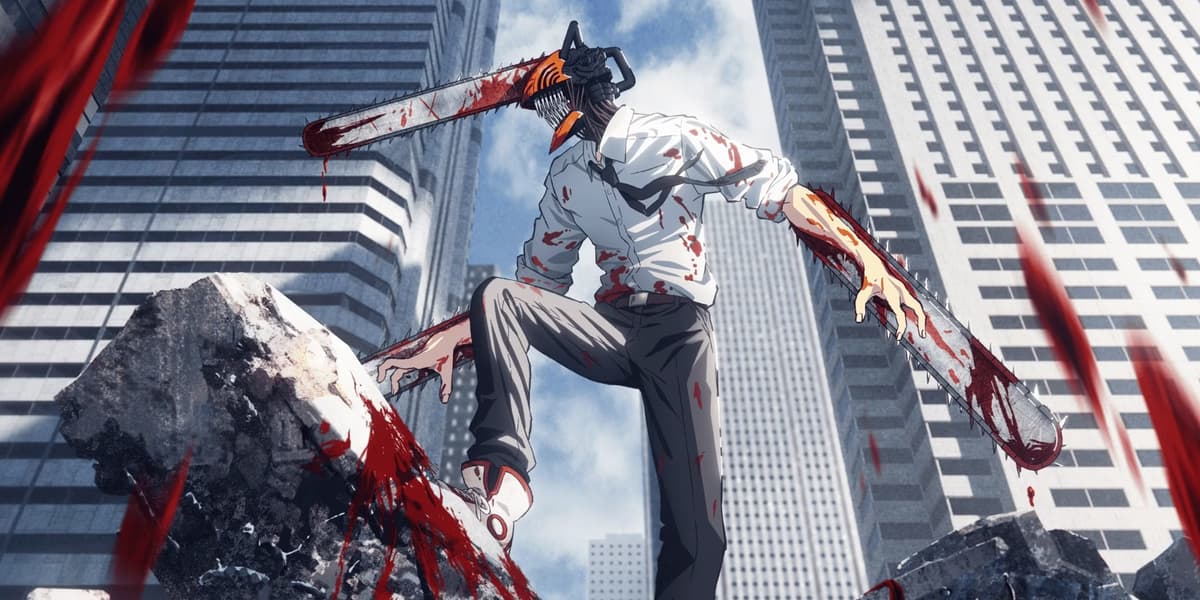

To say that 2025 has not been a good year for the box office would be an understatement. Many big-studio movies have performed underwhelmingly — not breaking even — or bombed spectacularly.
Amid this dire, downward spiral, a bright spot for the box office has been anime, or Japanese animation. Apart from horror movies — which benefit from being low- to mid-budget and are best enjoyed in a theater — anime movies have consistently performed better financially than any other genre. Like their Western competitors, these films usually rely on recognizable IP, namely a Japanese television series based on “manga” graphic novels, and are supported by a passionate and committed fanbase. The anime films are either continuations of the series’s narratives or a recap of the previous season.
Throughout the year, we have seen anime adaptations from outside the United States overperform. “Demon Slayer: Infinite Castle” has grossed $640 million worldwide, while a tiny entrant, “Jujutsu Kaisen: Hidden Death/Prematory Death,” earned a small but significant $8.51 million. “Ne Zha 2”, which as a Chinese animated film doesn’t qualify as anime, is currently the highest-grossing film of the year at $2.2 billion (only $50 million of its receipts were from outside China).
“Chainsaw Man – The Movie: Reze Arc,” the latest anime title to make a splash, won the American box office this weekend, grossing $17 million domestically and soundly trouncing the other new release, the ponderous Bruce Springsteen biopic, “Deliver Me From Nowhere.” The “Chainsaw Man” film has now passed $100 million at the global box office.
On the surface, the title “Chainsaw Man” is self-explanatory. Based on the manga by Takashi Fujimoto, it is centered on an immature teenager named Denji, whose impoverished life changes when his body is infused with chainsaws. These newfound powers are then weaponized by the Department of Public Safety, which uses Denji to hunt down devils. “Chainsaw Man” owes a lot to American cinema’s tributes to violence — most notably the works of Quentin Tarantino and David Cronenberg — and it wears these giants’s influence readily in its sleeve. But “Chainsaw Man” draws on its own strength when it depicts what it feels like to be dehumanized by one’s own powers.
“Chainsaw Man” follows the events of the Japanese TV series’s first season. Denji is romantically obsessed with Makima, the mysterious woman who heads Public Safety, but meets a girl named Reze, who works at a cafe where Denji gets his lunch. Throughout the series, we see him prioritize his life through Maslow’s Hierarchy of Needs. As soon as he finally has a steady job, he wants to touch a girl’s breasts, and immediately after accomplishing that goal, Denji wants to start a relationship with another woman. He’s chasing a destiny, but this destiny is manipulated by Reze, who turns out to be the Bomb Devil who wants the literal heart of Chainsaw Man.
While fans of the series will naturally embrace this installment, newcomers will also have something to enjoy, either as a gateway to the series or as a standalone installment. “Chainsaw Man” is ultimately a coming-of-age story with Dickensian impulses, and one of its main motifs borrows from Aesop’s fable of the country mouse and the town mouse, where the former is living a peaceful, but boring life, while the latter lives dangerously. In other words, the question for Denji is, considering how extremely finite his prospects are, who does he want to be, and does he owe it to Makima or Reze if he takes that destiny forward?
A common trope in anime is the sexual gratification of young, socially awkward men, especially when they meet a female character. “Chainsaw Man” certainly carries this theme. But it helps that the film is more grounded once Denji realizes he is being manipulated by the women in his life and wrestles with his newfound feelings towards them.
A significant reason why anime performs so well theatrically is the exquisite action sequences that require excruciating attention to detail, and hew closely to the ornate manga art on which they are based. The fights are also some of the most chaotic and intense sequences in all animation. “Chainsaw Man” is no exception, especially when it reaches its second half, in which Denji, accompanied by his colleague Beam, also known as the Shark Devil, battles against the Bomb Devil. Many of its sequences are an assault on the senses, but in the best way possible, and they owe a lot to the immense world-building of devils and fiends that often leans to the absurd.
If the box office so far has been any indication, anime has become more mainstream since the heyday of Studio Ghibli. But efforts like “Chainsaw Man: the Reze Arc” and “Demon Slayer” demonstrate that there are people still interested in going to movies that are exciting, creative, and new. American Hollywood just can’t compete.