How Israel’s Oldest Freed Hostage, a Potato Farmer, Rides a Tractor Again
‘When I returned from captivity, there was a row of tractors that greeted me. Today, the tractors here bring me back to that moment several months ago. I understand the pain here but I want to give a message of hope.’
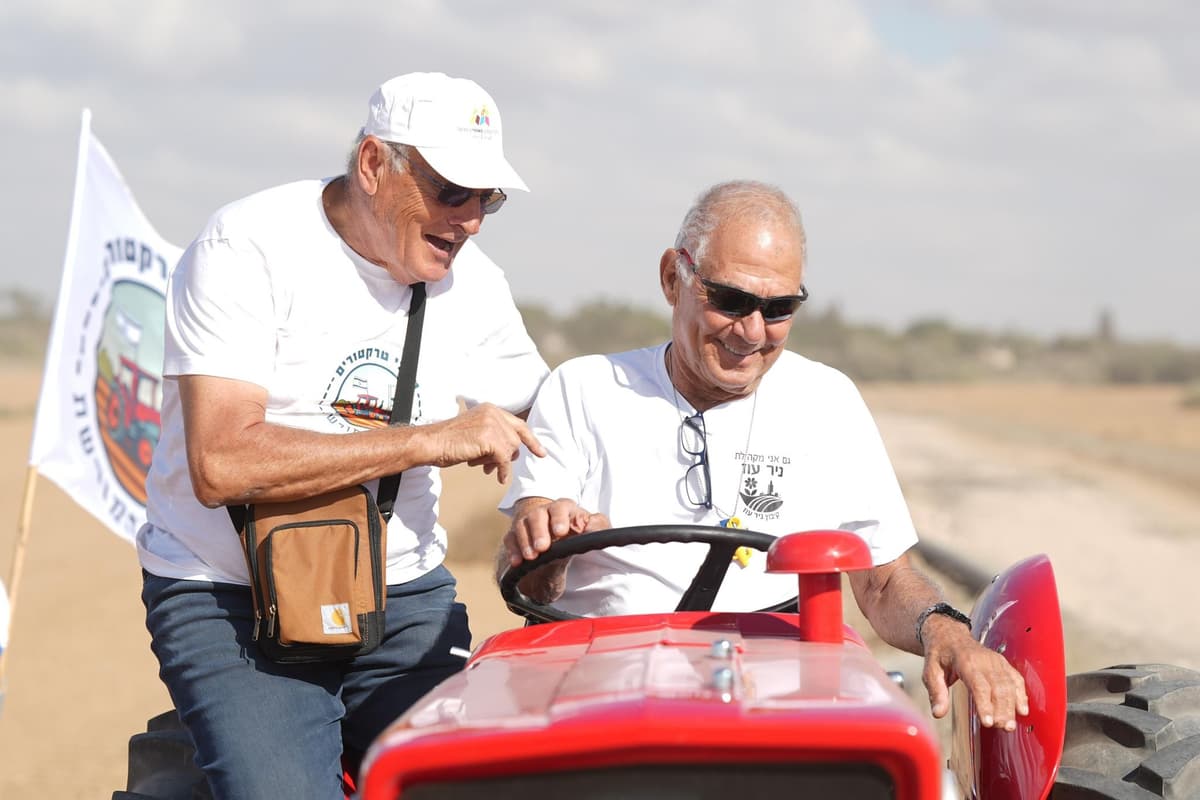
The day before the last 20 living Israeli hostages held by Hamas were freed, one former hostage, Gadi Mozes, returned to live in his home at Kibbutz Nir Oz.
The 81-year-old farmer and grandfather was abducted from Kibbutz Nir Oz on October 7, 2023, and was held by Hamas terrorists for 482 days, during which time he never saw another hostage. When he was released on January 30, 2025, he couldn’t imagine the warm welcome awaiting him. Fellow farmers and the Eshkol Regional Council organized a procession of tractors with Israeli flags to greet Mr. Mozes as he crossed the Gaza border into Israel.
On October 12, a similar procession of tractors once again traveled to Kibbutz Nir Oz along the Gaza border from Kibbutz Kfar Aza, this time in tribute to the late Sha’ar HaNegev Regional Council head, Ofir Libstein, who fell defending his community, Kibbutz Kfar Aza, as well as all of those who were murdered on that dark day.
Speaking in front of council heads who traveled from across Israel to take part in the tractor procession organized by the Center for Regional Government, Mr. Mozes tearfully explained how the tractors were symbols of agriculture and holding onto the land.
“When I returned from captivity, there was a row of tractors that greeted me. Today, the tractors here bring me back to that moment several months ago. I understand the pain here but I want to give a message of hope, a real hope that there is no other way but to believe and take action.”
This time around, Mr. Mozes himself rode on a red tractor, one out of the 40 tractors in Sunday’s procession that included antique tractors. The potato farmer expert and internationally renowned agronomist was held for much of his captivity in a room measuring 2 square meters, in which he would pace up and down and solve math problems in his head to keep his mind working while holding imaginary conversations with loved ones.
“The song that kept me going when I was in captivity was Israel’s national anthem, ‘Hatikva’ [‘The Hope’],” continued Mr. Mozes, who has lived on Kibbutz Nir Oz for nearly 60 years. “In captivity, our anthem suddenly took on a very different meaning. To say “my hope does not die,” was no simple feat. I had to gather strength from nowhere and hope that someday I would be freed, and that I would one day see my children and grandchildren and my community.”
“‘To be a free nation in our country’ are not just words. That statement from our anthem means so much in captivity, especially when you do not know what the next day will bring,” said Mr. Mozes.
The chairman of the Center for Regional Government, Shay Hajaj, added, “Who would believe that on the heels of the day that we planned to ride in Ofir’s memory, our fellow Israelis would be returned, both those who are living and in great sadness, those who are dead and will be buried in Israel? This is the moment that both pain and hope ride together.”
“To see Gadi Mozes on an old Ferguson tractor on the fields of Nir Oz on the very day he has returned to live in his kibbutz home, this is a picture of victory,” the head of the Ramat HaNegev Regional Council, Eran Doron, said to The New York Sun.