

How June Mathis Rewrote History in Silent Films From a Feminine Perspective

Thomas J. Slater rectifies many gaps in the historical record, thereby showing just how crucial Mathis became to the esthetic and commercial development of the motion picture.
Via Wikimedia Commons
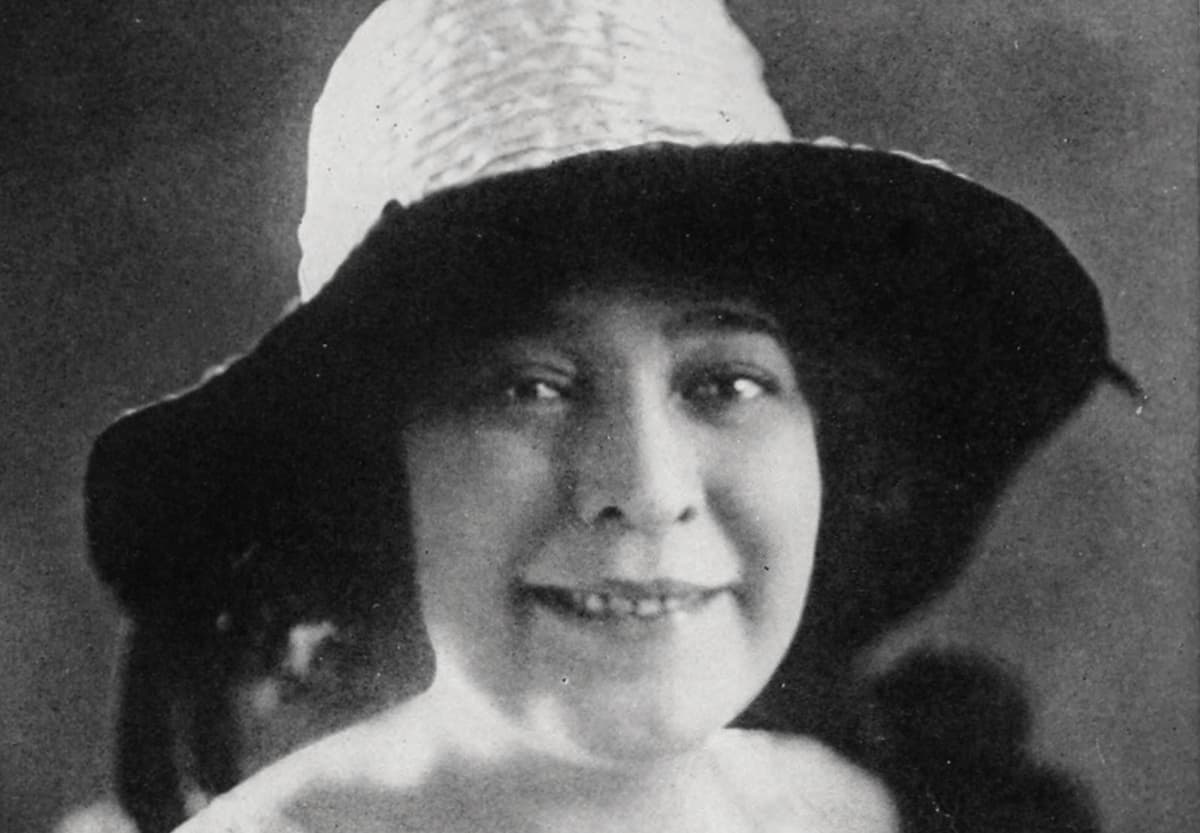
Screenwriter June Mathis from 'Who's Who on the Screen,' published by Ross Publishing Company, 1920. Via Wikimedia Commons

‘June Mathis: The Rise and Fall of a Silent Film Visionary’
By Thomas J. Slater
University Press of Kentucky, 304 Pages

So many silent films have been lost, and with them significant aspects of the early history of the Hollywood film industry that women like June Mathis did so much to establish. Thomas J. Slater rectifies many gaps in the historical record, thereby showing just how crucial Mathis became to the esthetic and commercial development of the motion picture.

Mathis began as an actress in her teens. After a decade of stage work, she realized her true talents as a writer that proved to be in demand in a nascent industry that had yet to enforce a male-dominated regime that made it difficult for women to work, as Mathis did — to write and produce important films such as “The Four Horseman of the Apocalypse” and “Blood and Sand.”

Mathis was a visionary in the sense that she believed film could be a profound medium of moral and esthetic truth. Especially after World War I, she endowed her scripts with a serious exploration of what women could contribute to the well being of humanity. Her male heroes, especially Rudolph Valentino, learned from women characters and became her idea of powerful males with feminine sensitivity — even spirituality.

Yet by 1927, the year of Mathis’s sudden death at the age of 40, her career had begun to falter. She was unable, for example, to complete work on “Ben-Hur.” Apparently her ambition to be a producer as well as writer on several projects at once interfered with the execution of what she hoped would be her masterpiece. As a result, she lost her place as a producer, and had to put up with male directors and studio executives who curtailed her work. 

As Mathis’s career declined, the story of her life became that of a woman who could not compete with her male contemporaries. Mr. Slater shows why that assessment is unjust and ahistorical. 

Before Metro Pictures became MGM, and Fox became Twentieth Century-Fox, the Hollywood studios were much more of a free-wheeling enterprise that welcomed women like Mathis. She could write long scripts that she knew had to be edited severely. She began with a literary property — usually a novel — and wrote a first draft screenplay as a faithful, detailed adaptation. As the film industry consolidated itself into corporate entities, and teams of writers worked on scripts, the role Mathis played became outdated.  

Mr. Slater’s biography, drawing on many of Mathis’s unproduced scripts — never before examined with such care — suggests that Mathis had a keener understanding of screen acting and camera movements than her male detractors acknowledged.

Of special interest is Mr. Slater’s treatment of melodrama, showing how in Mathis’s work what often has been regarded as sentimental and simplistic became the vehicle for acute analyses of human character, with the sexuality of stars like Valentino reflecting a broader range of experience than is often attributed to melodrama.

Melodrama brought audiences into the theater, but it also could be adapted to present social issues, including the treatment of minorities. Although Mathis, as Mr. Slater admits, often resorted to racial stereotypes, her scripts and some of her produced movies included a range of races and ethnic characters who otherwise might not have been portrayed on screen at all.

Mr. Slater does not say so, but it seems that Mathis made Valentino a better actor. He is quoted paying tribute to her, and Mr. Slater persuasively shows how Mathis and Valentino worked  together very closely.

This is a state-of-the-art biography, which means Mr. Slater has taken care to consult various studies of melodrama, several archives, and private papers, as well as to sometimes take issue with highly respected film historians who have not done justice to his subject.

Of special note is Mathis’s critique of militarism and the role women can play in shaping the male psyche for the better. Her notion of women as somehow more spiritually elevated than men may seem quaint, but in historical context she was highlighting the forceful role that women could perform and that she herself commanded in the early days of motion picture production.

Mr. Rollyson is the author of “Ronald Colman: Hollywood’s Gentleman Hero.”


The New York Sun

© 2025 The New York Sun Company, LLC. All rights reserved.

Use of this site constitutes acceptance of our Terms of Use and Privacy Policy. The material on this site is protected by copyright law and may not be reproduced, distributed, transmitted, cached or otherwise used.

The New York Sun

Sign in or  create a free account

or
By continuing you agree to our Privacy Policy and Terms of Use