

How Merrick Garland’s Mistake With Jack Smith Paved the Way for Dismissals of Trump’s Cases Against James Comey, Letitia James

Judge Aileen Cannon’s Mar-a-Lago documents case returns with a vengeance — this time to haunt President Trump.
Drew Angerer/Getty Images
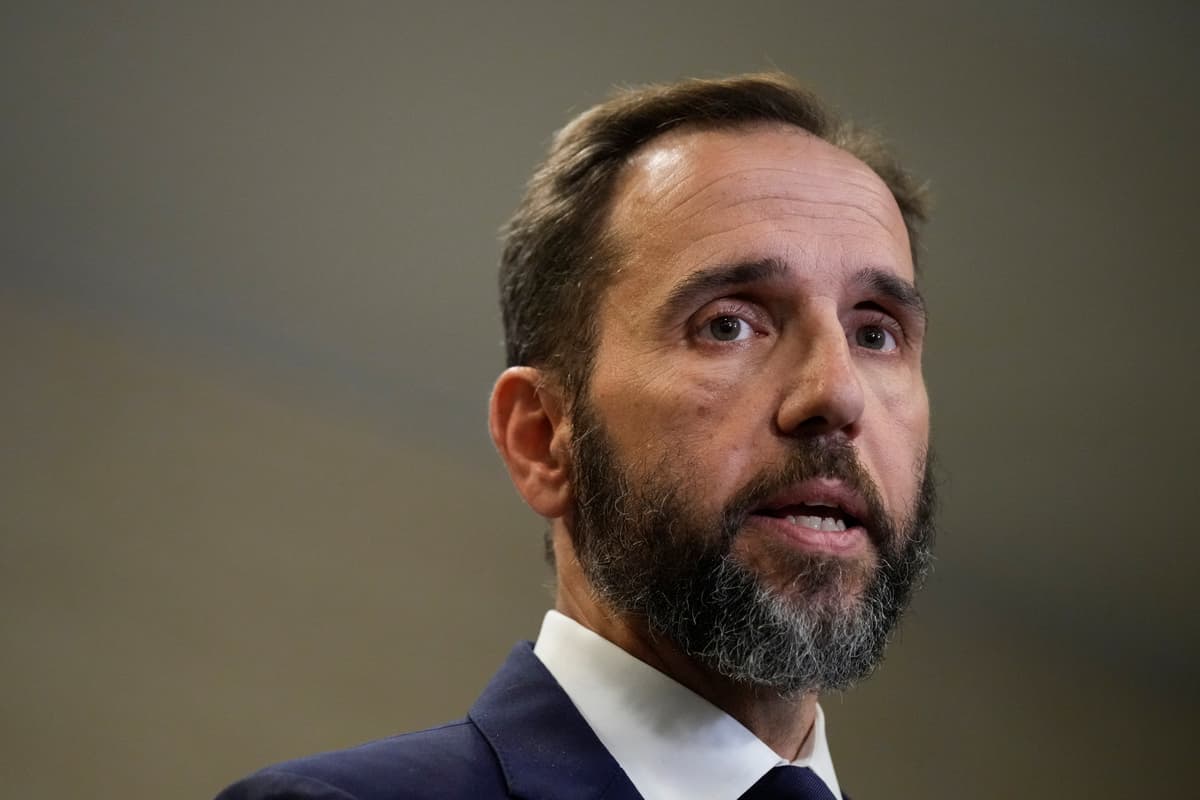
Special Counsel Jack Smith delivers remarks on August 1, 2023 at Washington, DC. Drew Angerer/Getty Images

The disqualification of the interim United States Attorney for the Eastern District of Virginia, Lindsey Halligan — and the dismissal of her cases against New York Attorney General Letitia James and former FBI director James Comey — might not have been possible without the earlier failure of Special Counsel Jack Smith.

Judge Cameron McGowan Currie, who was nominated by President Clinton, ruled that Ms. Halligan’s appointment by Attorney General Pam Bondi was “invalid” and that “all actions flowing from Ms. Halligan’s defective appointment were unlawful exercises of executive power.” The judge reckoned that to rule otherwise would mean that “the Government could send any private citizen off the street — attorney or not  … to secure an indictment …That cannot be the law.”

Judge Currie was assigned to make the disqualification by the judge presiding over the Comey and James cases, Michael Nachmanoff, an appointee of President Biden and former federal public defender. Judge Currie’s twin decisions dismissing the charges against Mr. Comey and Ms. James — for lying to Congress and bank fraud, respectively — are thick with citations to legal precedent about the appointment of prosecutors. These include a 1986 memorandum from the Department of Justice authored by the future Supreme Court Justice Samuel Alito that appears to bolster the argument that Ms. Halligan was unlawfully appointed.

Among Judge Currie’s citations, though, is a 2024 ruling by Judge Aileen Cannon of South Florida that Mr. Smith was defectively appointed by Attorney General Merrick Garland. The jurist, who was appointed to the bench by Mr. Trump in 2020, dismissed the charges in the Mar-a-Lago documents case against the once and future president as well as against his two co-defendants and employees, Waltine Nauta and Carlos De Oliveira. 

Mr. Trump won re-election before Mr. Smith could appeal his disqualification to the 11th United States Appeals Court, so Judge Cannon’s ruling is still black-letter law in her jurisdiction. That is true even as Mr. Garland, one of the most decorated jurists of his generation, scoffed that he would never have made such a “basic mistake about the law” as Judge Cannon ruled that he had committed. Some observers reckoned the documents case was the strongest of the four criminal ones arrayed against Mr. Trump.

But despite  Judge Cannon attracting criticism for her perceived bias toward Mr. Trump, Judge Currie appears to endorse her reading of the law as compelling — though not binding — precedent. Judge Currie ruled that Ms. Halligan was invalidly appointed because she was the second consecutive interim appointment in the Eastern District of Virginia. Neither Ms. Halligan nor her predecessor, Erik Siebert, achieved confirmation by the Senate. Judge Currie reasoned that the executive can only appoint one interim prosecutor — after that, the task falls to the judges in the district according to federal law.

For legal ballast Judge Currie, who was appointed by President Clinton, turns to Trump v. United States — Mr. Smith’s thwarted classified documents prosecution. Judge Currie cites Justice Clarence Thomas — he backed up Judge Cannon — who declared that “an officer must be properly appointed before he can legally act as an officer.” Judge Currie also cites Judge Cannon’s ruling that  “the proper remedy” for an unlawful appointment is “invalidation of the ultra vires actions.” 

Both Judge Currie and Judge Cannon take the position, stated by the latter and quoted by the former, that “Invalidation ‘follows directly from the government actor’s lack of authority to take the challenged action in the first place. That is, winning the merits of the constitutional challenge is enough’ …  there is no alternative course” besides dismissal “to cure the unconstitutional problem.”

Mr. Smith, while a longtime prosecutor at the Department of Justice and a veteran of war crimes cases at the Hague, had never been confirmed by the Senate when Mr. Garland chose him to pursue Mr. Trump for the Mar-a-Lago case and for January 6. America is not a member of the International Criminal Court, where Mr. Smith worked at the Hague.

Ms. Halligan, who is a former Miss Colorado finalist and served as a personal attorney to Mr. Trump in the documents case, had worked as an insurance lawyer and on the president’s Smithsonian museums taskforce. 

Judge Currie cites Judge Cannon in what might be the climax of her ruling — where she writes “I will invalidate the ultra vires acts performed by Ms. Halligan and dismiss the indictment without prejudice, returning Mr. Comey to the status he occupied before being indicted.” Right after that declaration comes “See Trump” and the reference to specific passages written by Judge Cannon.

The same citations to Judge Cannon appear in Judge Currie’s order disqualifying Ms. Halligan from the prosecution of Ms. James. Ms. Bondi has planned an “immediate appeal” of both rulings. On appeal, the DOJ is likely to attempt to differentiate Judge Cannon’s ruling disqualifying Mr. Smith from the validity of Ms. Halligan’s appointment. Mr. Smith’s case turned on the ability of the attorney general to appoint special prosecutors, not regular United States attorneys like Ms. Halligan.   

Ms. Bondi could also double down on an argument the government made — unsuccessfully — to Judge Currie. When it appeared that Ms. Halligan’s appointment was on shaky ground, the attorney general attempted to retroactively name her as a “special United States attorney” to offer a further patina of authority. In any event, CNN reports that in the wake of Ms. Halligan’s disqualification there is “panic over what to do.” 


The New York Sun

© 2025 The New York Sun Company, LLC. All rights reserved.

Use of this site constitutes acceptance of our Terms of Use and Privacy Policy. The material on this site is protected by copyright law and may not be reproduced, distributed, transmitted, cached or otherwise used.

The New York Sun

Sign in or  create a free account

or
By continuing you agree to our Privacy Policy and Terms of Use