

How the World, Spirits and All, Went for Victoria Woodhull
Much of what Eden Collinsworth has to tell us is not new information, but she has ingeniously positioned her narrative as a Plutarchian fable, with Richard Garnett, keeper of the papers at the British Museum, employed as Woodhull’s foil.
‘The Improbable Victoria Woodhull: Suffrage, Free Love, and the First Woman to Run for President’
By Eden Collinsworth
Doubleday, 304 Pages
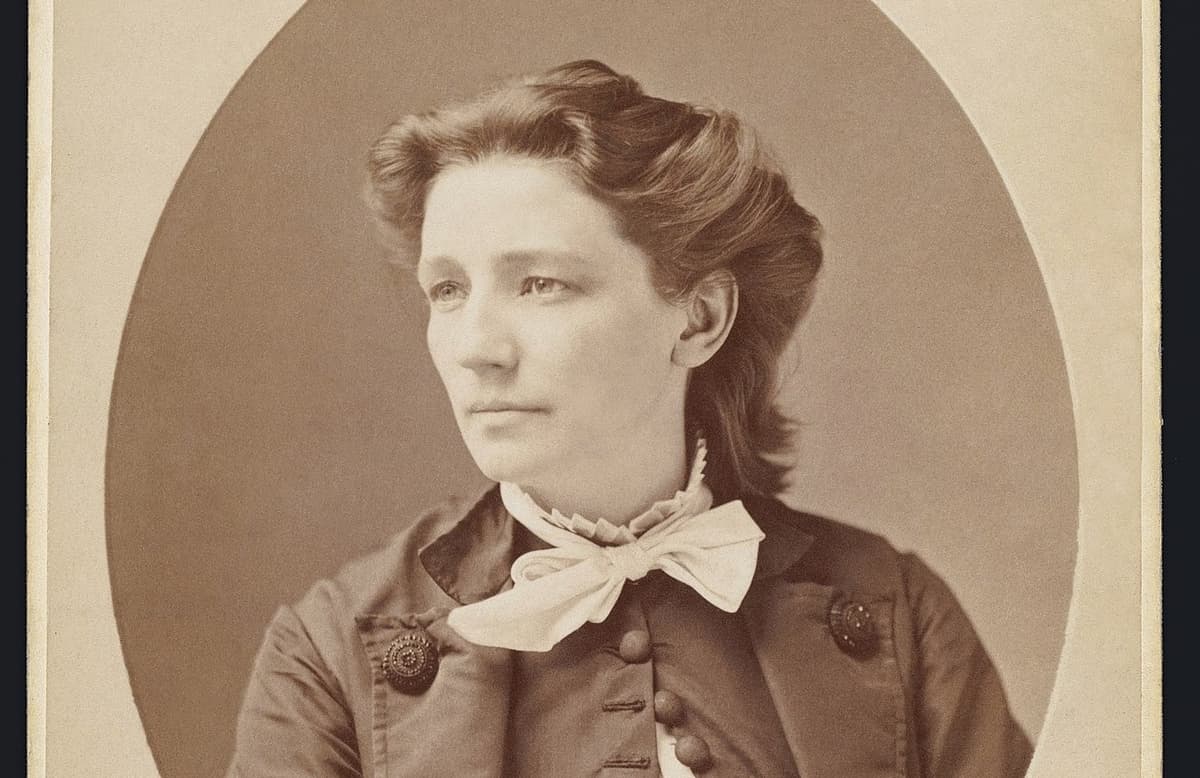
The apt title of Eden Collinsworth’s biography is a reminder that the rules of verisimilitude in fiction are far more restrictive than in nonfiction, though even by the lax standards of reality, Victoria Woodhull is, as her biographer posits, an improbable figure. The subtitle, for example, does not say enough, leaving out Woodhull’s career as a spiritualist and her rousing impersonation of a lady of the manor in her latter-day preeminence.
What to make of Woodhull perplexed and intrigued three husbands, a Gilded Age titan, Cornelius Vanderbilt, and the well-born scion of the English establishment. The key to her constantly changing persona seems to be her upbringing in a family of con artists, willing not only to fool the world but themselves. Ms. Collinsworth provides a splendidly illuminating portrayal of Woodhull’s parents. From them, Woodhull learned that a story sufficiently well told and bold could command a significant following.
When Woodhull announced one of her three campaigns for the presidency, she named Frederick Douglass as her running mate without bothering to ask him to join her ticket. A staunch advocate of free love, she denied she had ever been one as soon as she moved to England and decided to become a proper high-society lady. Often, when in trouble, she explained her change of direction by claiming visitations of spirits.
Much of what Ms. Collinsworth has to tell us is not new information, but she has ingeniously positioned her narrative as a Plutarchian fable, with Richard Garnett, keeper of the papers at the British Museum, employed as Woodhull’s foil. She sued him and the hallowed institution he revered for libel because among the papers he superintended was certain libelous material, Woodhull alleged, that damaged her reputation.
Throughout nearly all of Ms. Collinsworth’s book, she details Garnett’s fascination with Woodhull. He wondered: How could such a woman exist? How could she with such aplomb stare down in a courtroom one of the British nation’s most famous cross-examiners? How had she won the steadfast love of an Englishman who never did see through her prevarications, and used his fortune to back her at several stages of her notorious career?
In short, Richard Garnett becomes the Victorian standard by which Victoria — so different from his queen — became his nemesis. Garnett, a biographer of John Milton, William Blake, and Thomas Carlyle, was aghast at Woodhull’s effrontery but also grudgingly respectful of her pluck, Ms. Collinsworth supposes. I say “supposes” because Ms. Collinsworth goes overboard — as certain biographers are wont to do — in reading Garnett’s mind and what he “must have” thought. No matter: In the totality of this biography, the pairing of Garnett and Woodhull works just like Plutarch’s parallel lives.
Woodhull, by the way, won her libel suit, but it was a sort of pyrrhic victory. She was awarded a minimal sum and had to endure a cross-examination that delved into her sordid past that seems to have included a stint as a prostitute in San Francisco, though it was impossible to shame her. She not only repudiated free love but separated herself from the women’s suffrage movement, which had already abandoned her anyway.
As Ms. Collinsworth declares, Woodhull’s story is a rags-to-riches-to-rags-to-riches story, as she conned Vanderbilt into backing her brokerage firm (the first run by a woman) and then suffered setbacks in the market as he withdrew his support. She bankrupted her briefly successful newspaper, and finally ascended the English society ladder (sort of) — notwithstanding the ostracism of her husband’s family.
Oh, I didn’t mention Karl Marx. Even as she became a Wall Street entrepreneur, Woodhull aligned herself with the Communist Party. In the end, though, Marx himself excommunicated her, realizing that whatever principles Woodhull might espouse, they seemed entirely transactional.
Marx, like Vanderbilt, was just one of many powerful or influential males attracted to the good-looking Woodhull’s outspoken persona, captivating in its simplicity: Didn’t the 14th Amendment give the vote to “persons,” and weren’t women persons? She was the first woman to put that argument directly to a congressional committee. They wouldn’t go for it, but men, and many women, did keep going for Victoria Woodhull.
Mr. Rollyson’s forthcoming book is “Making the American Presidency: How Biographers Shape History.”