Hunt for Remains of Israeli Hostages Intensifies as International Leaders Work Out Details for Stabilization Force To Enter Gaza

Fragile peace holds, but Hamas is not moving to give up its role in the strip.
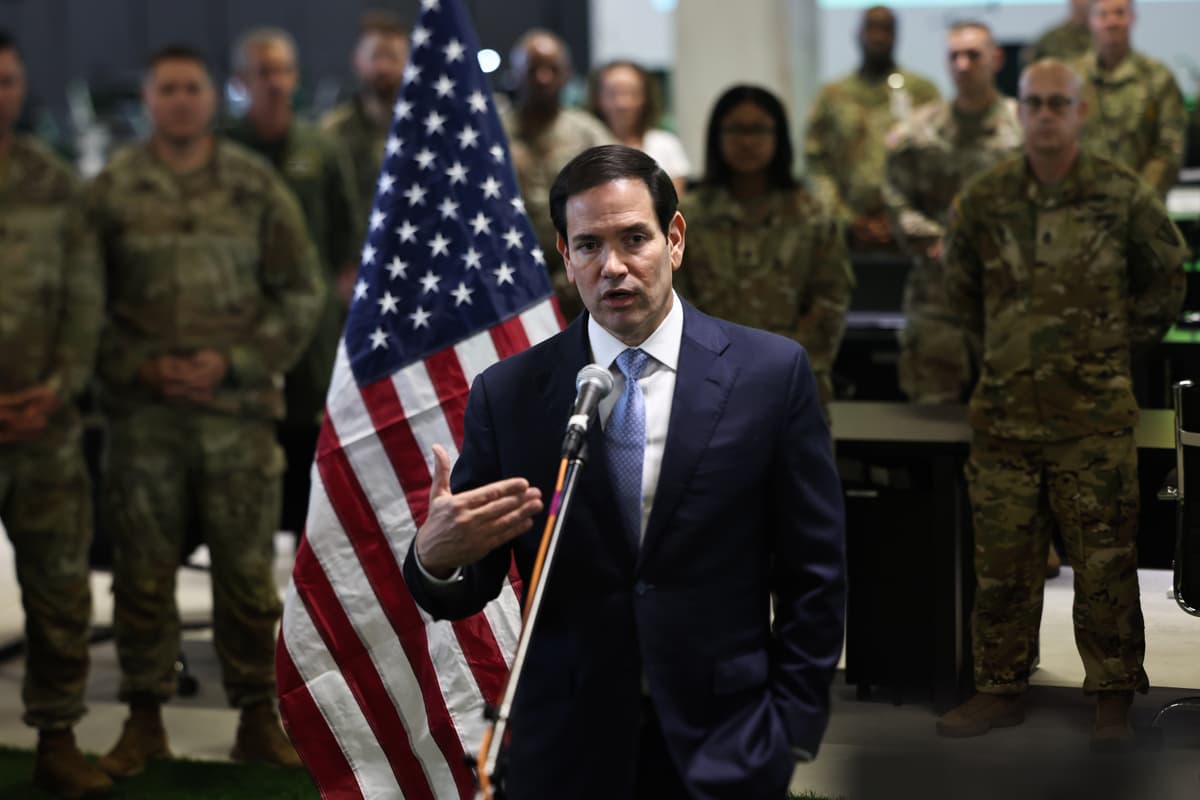
Fadel Senna/Pool Photo via AP
Secretary Marco Rubio after visiting the Civil-Military Coordination Center in Southern Israel. Fadel Senna/Pool Photo via AP

The International Committee of the Red Cross and an Egyptian team are scouring Gaza for the remaining 13 bodies of Israeli hostages still held by Hamas as international forces prepare to enter the territory to back up what is expected to be a provisional governing authority. 

The Red Cross says it is acting as a “neutral intermediary, at the request of the parties,” including Hamas, to facilitate the return of the remains of hostages in accordance with the ceasefire agreement. It is working with a “technical team” from Egypt, with permission from Israel.

Hamas has quickly reasserted control over a portion of the Gaza Strip despite ceasefire provisions that called for its demilitarization and the introduction of a stabilization force. Hamas had pledged to return all the hostages in an exchange for Palestinian prisoners held by Israel. 

Twenty living hostages were released on October 13, but Hamas has only slowly released the bodies of the 15 dead hostages. Another 13 are still unaccounted. Israeli officials said they believe Hamas knows where at least 10 of those bodies are, but it has been slow to extract them.

President Trump posted on social media on Saturday that some of  the bodies may be difficult to reach, but others are not. He also warned that Hamas will have a “massive problem” if it doesn’t commit to the ceasefire provisions and allow an “international stabilization force” to enter the territory.

“Hamas will not be hard to take care of, it will be very quick,” the president said during a flight to Asia after a quick stop in the Middle East. 

Dozens of countries have offered funding or personnel to establish a stabilization force in Gaza. President Trump said Saudi Arabia, the UAE, Qatar, Turkey, Indonesia, and Jordan will take the reins, however, Israel’s prime minister, Benjamin Netanyahu, said Sunday his government will decide which countries may enter the territory. 

“We are in control of our security, and we have also made it clear regarding international forces that Israel will determine which forces are unacceptable to us, and this is how we operate and will continue to operate,” Mr. Netanyahu said. “This is, of course, acceptable to the United States as well, as its most senior representatives have expressed in recent days.

On Saturday, Secretary of State Marco Rubio, while on a quick stopover at the Gaza coordination center in southern Israel, said a stabilization team will not include the United Nations Relief and Works Agency — known as UNRWA — despite claims by the group that it is a neutral party.

“UNRWA’s not going to play any role in it 
 UNRWA became a subsidiary of Hamas,” he said. 

Mr. Rubio said that several countries are contributing to make sure that the ceasefire holds without disruption and that aid is not looted or stolen by Hamas or others. The secretary added that as Gaza is demilitarized, Israel will step back from its “Yellow Line,” the area that Israel controls within Gaza. 

“That’s the long-term plan,” he said. “The Israelis have made it abundantly clear they have no interest in occupying Gaza.”


The New York Sun

© 2025 The New York Sun Company, LLC. All rights reserved.

Use of this site constitutes acceptance of our Terms of Use and Privacy Policy. The material on this site is protected by copyright law and may not be reproduced, distributed, transmitted, cached or otherwise used.

The New York Sun

Sign in or  create a free account

or
By continuing you agree to our Privacy Policy and Terms of Use