
Imported Italian Pastas Could Soon Disappear From American Supermarkets Following New Trump Tariffs
The companies are accused of dumping pasta on the American market.
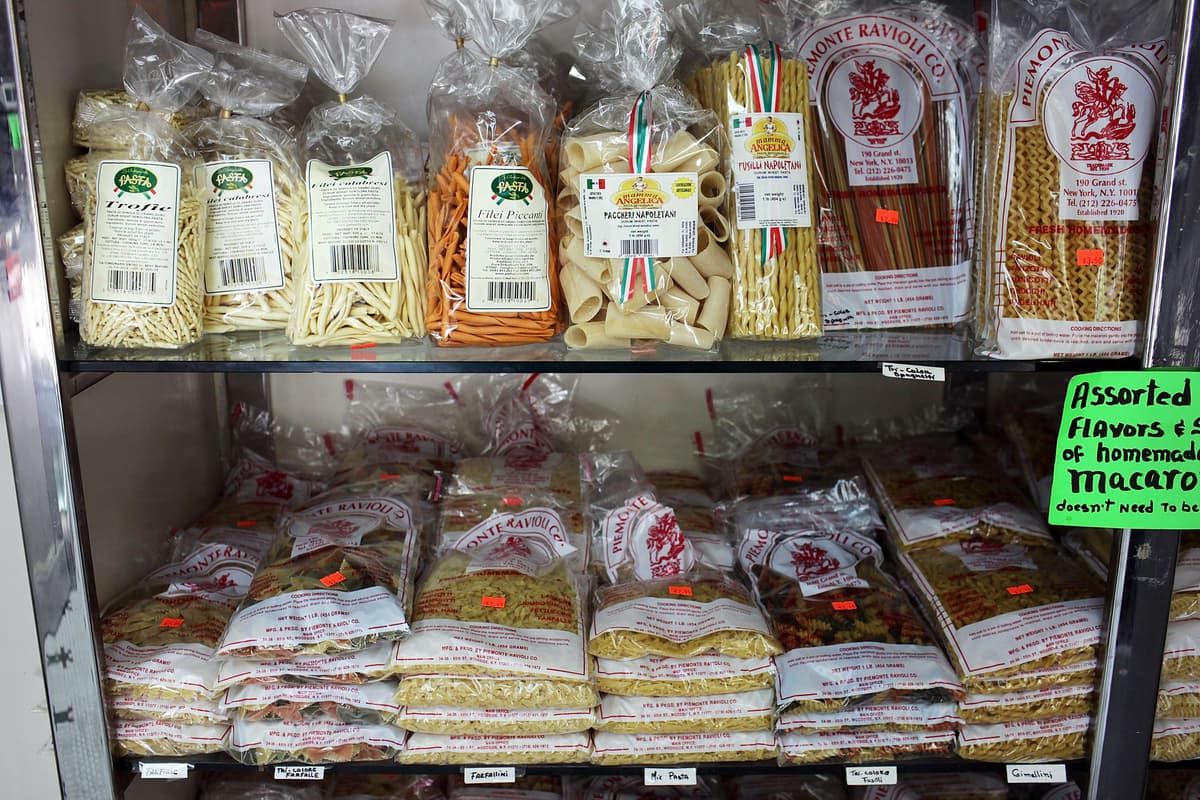
It could soon become much harder, if not impossible, to find quality Italian pasta at American grocery stores due to crushing new tariffs on the products imposed by President Trump.
Several of Italy’s biggest pasta exporters say they plan to pull out of the American market because they now face a 92 percent antidumping duty after an investigation by the United States Department of Commerce. That duty — combined with 15 percent tariffs that President Trump has levied on imports from the European Union — is making it too costly to ship pasta to the United States.
At least 13 Italian pasta companies face the new duties, which are the highest the Trump administration has levied on any single product.
A long-running Commerce investigation concluded that Italian companies were selling pasta at below market prices to gain market share from American companies. There have been complaints and investigations into trade violations by Italian pasta companies for decades according to the Wall Street Journal, but the penalties have generally been small in the past.
The new, nearly 100 percent import tax imposed by the Trump administration has stunned importers. “The tariff just seems disproportionate,” one unnamed Italian official told the Journal.
The Commerce Department claims the companies submitted inadequate data during the investigation and were uncooperative.
America is one of Italy’s top export markets for pasta — worth almost $800 million a year, according to Reuters.
The president of Coldiretti, Ettore Prandini, told the Italian press that the tariffs would be a “death blow” to the Italian pasta industry and open the door for knockoff pasta products.
The European Union’s top trade official is trying to help Italy negotiate a better deal on the antidumping duties.
“We believe that this decision, as it was reached, was not based on the full facts and figures, and we are doing our utmost to present this to them,” the bloc’s trade commissioner, Maros Sefcovic, said last month.
The impact will be less severe for some companies — including the biggest Italian brand, Barilla — because they already produce pasta in the United States. Only about 12 percent of pasta sold in the United States is produced in Italy and imported.