Iran Slow-Walks Diplomacy While Accelerating Work Toward A-Bomb
Warnings that time has run out whiz past with each passing month, as Yanks grow exhausted.
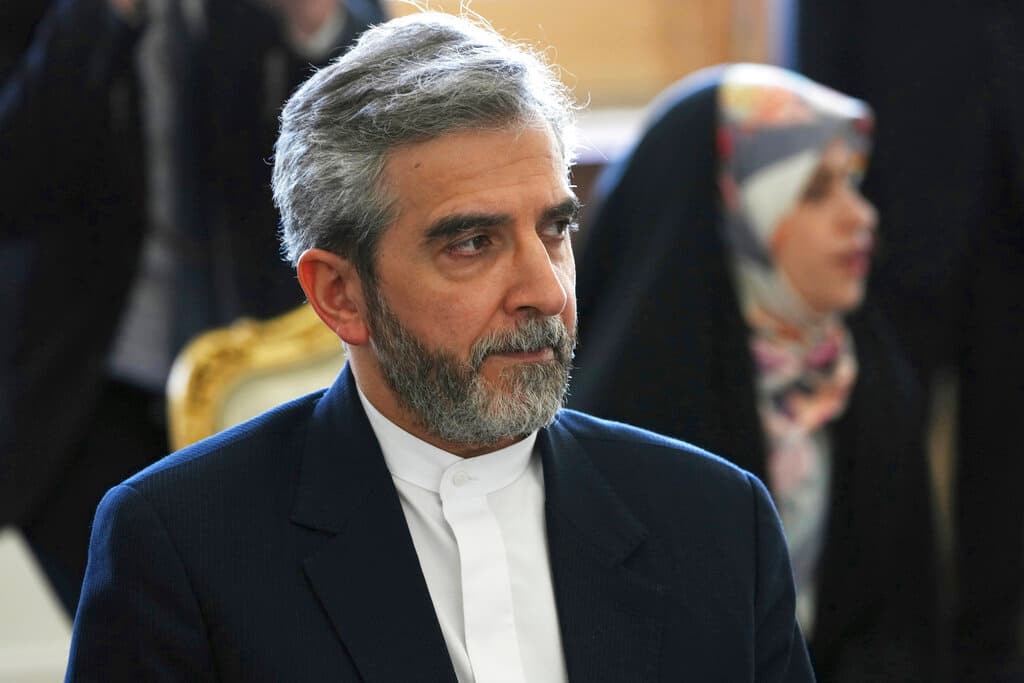
As Tehranâs negotiators master the art of manipulating Washingtonâs diplomacy, the current mood swing of President Bidenâs Iran team is markedly dour.
After a round of negotiations at Doha, Qatar, over the weekend, the state departmentâs special envoy for Iran talks, Robert Malley, seems exhausted. The Doha meeting âwas a little bit â more than a little bit â of a wasted occasion,â he told NPRâs Steve Inskeep this morning.
Asked if the Islamic Republic is in fact interested in renewing the 2015 Joint Comprehensive Plan of Action, Mr. Malley said, âOur assessment is they havenât yet made that fundamental decision.â The Iranians, he added, will âhave to decide sooner or later, because at some point the deal would be a thing of the past.â
Tehran has heard that song before. As soon as President Biden acceded to office, he vowed to rejoin the JCPOA, from which America withdrew in 2018. By June 2021, an unnamed senior official told Reuters that unless a deal is agreed on âin the foreseeable future,â America would rethink its approach.
In September, Secretary of State Blinken warned that âwe are getting closer to the point at which a strict return to compliance with the [deal] does not reproduce the benefits that the agreement achieved.â In December a state department official said America would not accept âa situation in which Iran accelerates its nuclear program and slow-walks its nuclear diplomacy.â
Also in December, Mr. Malley warned that âwe have some weeks left but not much more than that.â Unless the JCPOA is not revived by then, he added, âthe conclusion will be that thereâs no deal to be revived.â By January, the White House press secretary, Jen Psaki, warned ominously that Mr. Biden asked his team to prepare âa range of options.â Yet, âour preference is always diplomacy,â she hastened to add.
In January, Mr. Blinken reiterated the warning of âreal urgencyâ in finalizing a deal in âreally a matter of weeks.â He then disclosed that Washington is in discussions with the Europeans about âthe steps that we would take together if Iran refuses to returnâ to the JCPOA.
The one-year anniversary of Americaâs first warning that Iran must renew the deal âwithin weeksâ â or else â came and went. Washington, however, has yet to present an alternative plan. Instead, Mr. Malley and his European counterparts switch between giddy assessments that a finalized deal is just around the corner and grim predictions of failure.
Ignoring the Doha roundâs disaster, the European Unionâs top negotiator, Josep Borrell, this morning called the Iranian foreign minister, Hossein Amir-Abdollahian, to yet again beg for some diplomatic success. âIf we want to conclude an agreement, decisions are needed now,â Mr. Borrell tweeted afterward. âThis is still possible, but the political space to revive the #JCPOA may narrow soon.â
Just before the Doha meeting, Mr. Borrell let slip that rather than Tehranâs nuclear threat, Europeâs main concern is returning Iran to oil markets, where prices soared in the aftermath of Russiaâs invasion of Ukraine. A return to the JCPOA therefore âmust succeed,â President Macron of France added this morning.
Mr. Macron hosted the Israeli acting prime minister, Yair Lapid, who visited Paris in his first trip abroad in his new role. Standing next to his host, Mr. Lapid reminded Mr. Macron of a speech the Frenchman had made in 2018, soon after America walked out of the JCPOA. At that time Mr. Macron said a new, improved deal must be struck to supplement the flawed JCPOA.
Quoting that speech today, Mr. Lapid said Israel would support âa deal that is more efficient and better defined, a deal with no expiration date, a deal with coordinated international pressure that would prevent Iran from becoming a nuclear threshold state.â
In his confirmation hearing, Mr. Blinken also promised a âlonger and strongerâ deal that would address the JCPOAâs shortcomings. Today, however, Iranian negotiators are leading American and European negotiators by the nose even as Washington begs Tehran to renew that original, flawed 2015 deal.
As talks drag, âIran is violating the agreement and continues to develop its nuclear program,â Mr. Lapid told reporters at Paris, adding that Tehran hides âinformation from the world, it is enriching uranium beyond the level it is allowed to, and it has removed cameras from its nuclear sites.â
Iranâs negotiation tactic is to prolong talks forever. It prefers dangling a finalized deal as bait to actually inking one. On the other side of the table Mr. Bidenâs team is frozen in time, their moods swing between despair and unrealistic hope of fulfilling a vow to renew the JCPOA.
âIt doesnât suit the administration politically to say talks have, or are even about, to fail,â an Iran watcher at the Foundation to Defend Democracies, Behnam Ben Taleblu, says. The Biden team is in âa constant state of pessimism even as it reiterates the importance of deal and diplomacy.â