Is America Using Its Show of Force Against Caribbean Narco Traffickers To Send Messages to Venezuela and Mexico?
Secretary Rubio, after meeting with Mexico’s president, tells reporters that the old ways of doing things will not stop traffickers. Speculation is rising that Washington could soon target Mexico’s drug cartels and may be seeking regime change in Venezuela.
America’s show of force against Caribbean narco traffickers could signal to Mexico that its cartels may be targeted as well. Washington also may be hoping it will help topple the Venezuelan regime of President Nicolas Maduro.
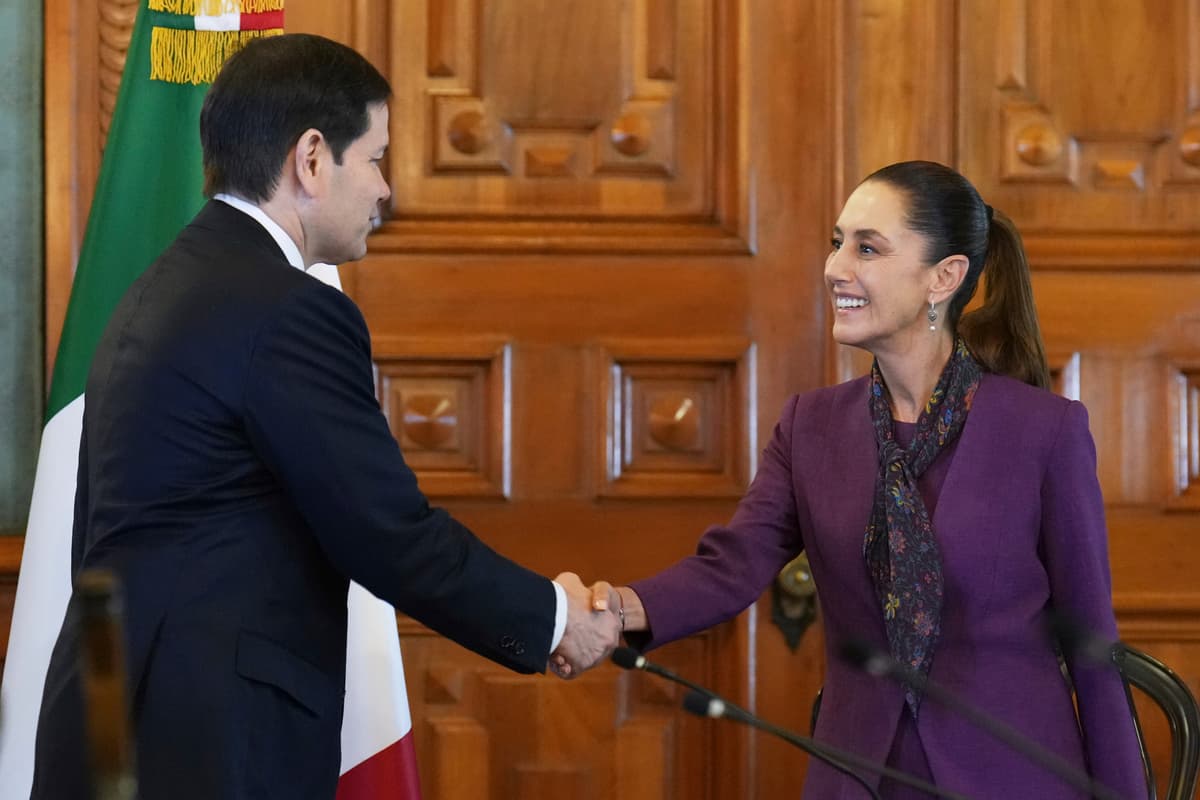
Secretary Marco Rubio, on his first trip to Mexico since becoming America’s top diplomat, met with President Claudia Sheinbaum at Mexico City on Wednesday. A day earlier, American forces struck a Venezuelan boat suspected of carrying narcotics, killing 11 people on board.
As Mr. Rubio conferred with Ms. Sheinbaum, federal authorities seized 1,300 barrels of chemicals on two vessels off Mexico’s shores, which were said to be fentanyl precursors shipped to Mexico’s notorious Sinaloa cartel from Communist China. The two events, off the Venezuelan and Mexican coasts, escalated America’s kinetic involvement in the war on drugs.
A message was sent, even as some in the region are confused about Washington’s intent.
The sunken Venezuelan boat carried “massive amounts of drugs coming into our country to kill a lot of people,” President Trump said Wednesday. “Obviously they won’t be doing it again,” as “when they watch that tape, they’re going to say, ‘Let’s not do this.’”
Is America signaling to Mexico that next it might dispatch troops south of the border to fight the drug outfits that flood America’s opioid markets while they kill, maim, and kidnap Mexicans in large numbers?
“There’s a lot of people in Mexico who would love to see the Americans come in and finish off the cartels,” a former Mexican foreign minister, Jorge Castaneda, tells the Sun. They may not be a majority, he says, “but they’re a very strong minority.”
Ms. Sheinbaum often uses nationalist language to quash such sentiments, indicating that cooperation with America, if at all, must be limited. “It has to do with collaboration, without subordination and within the framework of our sovereignty,” she said Wednesday before her meeting with Mr. Rubio.
Following the session Mr. Rubio told reporters that the old ways of doing things will not stop traffickers, who build their losses from intercepted deliveries “into their economics.” Instead, he said, “what will stop them is when you blow them up, when you get rid of them.” America, he said, will wage “war on narcoterrorist organizations.”
Last week Washington dispatched 5,000 sailors and Marines to the shores of Venezuela, led by the United States Ship Iwo Jima, raising speculation that the goal is regime change at Caracas. The sunken Venezuelan boat, Mr. Rubio said, was intercepted in international waters while it “headed towards the United States to flood our country with poison.”
In August, the Department of Justice offered a $50 million prize to anyone helping to secure the arrest of Mr. Maduro, who, according to Attorney General Pam Bondi, “is one of the most powerful drug traffickers in the world.” The Department of State offered $25 million for the arrest of Mr. Maduro’s right-hand man, Diosdado Cabello.
Venezuelan dissidents have long contended that much of Mr. Maduro’s hold on power depends on financial gains from trafficking in narcotics, gold, rare earths, and oil. The funds from those illicit commodities ensure the loyalty of the armed forces.
If drug exports stop, “Maduro will be in trouble, because he won’t have the money to pay all these guys,” a veteran American-based Venezuelan journalist, Maibort Petit, tells the Sun. Unless the regime can pay in cash, she adds, it will have to rely on nothing more than the troops’ ideology, which can be dicey.
Menahile, she adds, “the Venezuelan people are hungry and they don’t know what to do. They are scared, or they think about some magic that will be in the country, and everything will disappear.” Mr. Maduro and his Cuban backers suppress any potential uprising by paying off groups around the country that enforce regime loyalty.
As Washington escalates the drug wars, it is also easing sanctions against the Caracas regime. In July the Department of the Treasury granted Chevron a new license to operate in Venezuela.
On Tuesday, Caracas insisted that no boat was sunk, and that the images were generated by artificial intelligence. Now, though, it is claiming America is after its oil. “They come for Venezuelan oil, they want it for free,” Mr. Maduro told supporters Wednesday. “That oil does not belong to Maduro and even less to the gringos, it belongs to you.”
So is America after Venezuela’s drugs, its oil, a regime change, or all of the above? “It’s not clear whether what they want is just to scare off the drug traffickers, or to find a way to bring enough pressure on Maduro, so the army overthrows him,” Mr. Castaneda says.