Israeli Military Moves To Halt Deadly Assault on Syrian Druze, Curbing Power of Interim Leader at Damascus
At least 135 people have been killed at the Druze-majority city of As-Sweida since Sunday and many others humiliated by the assailants. The Damascus defense ministry declares a cease-fire after Israel strikes a Syrian tank.
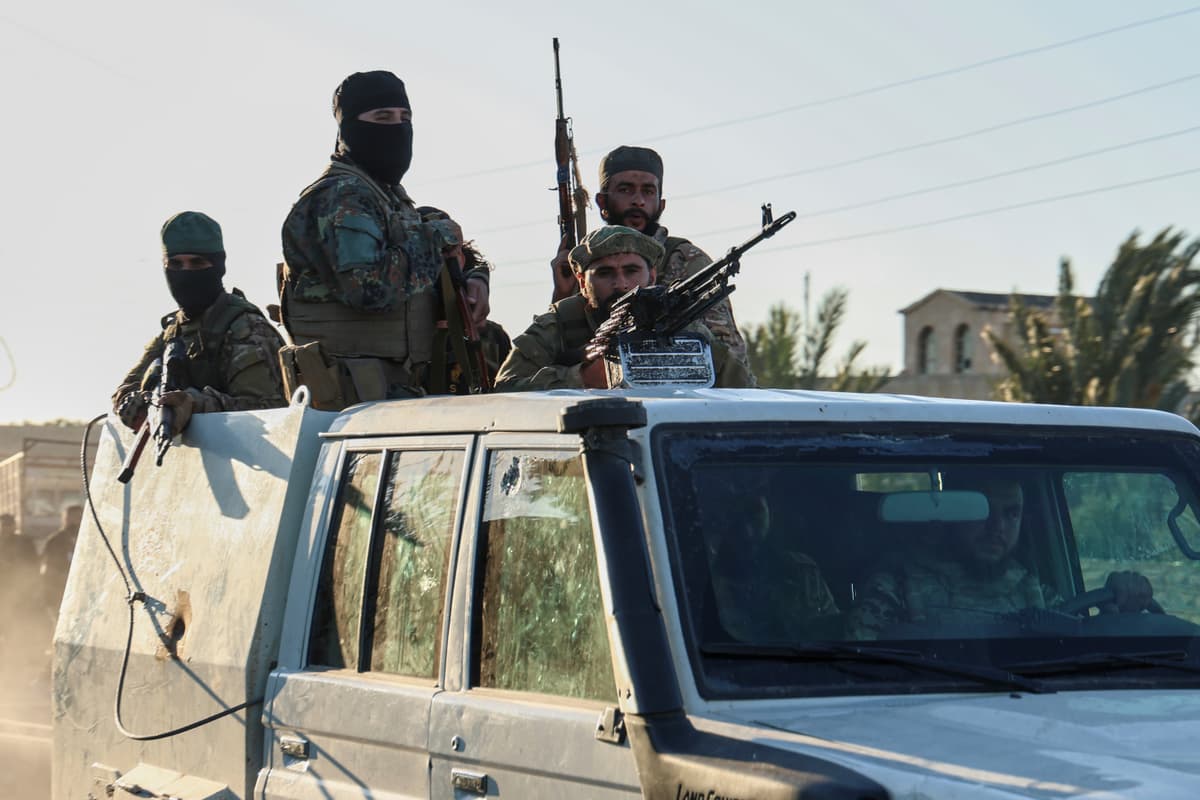
As Syria’s interim president, Ahmed al-Sharaa, attempts to solidify his hold on power at Damascus and to appeal for international help, Israel is marking its red lines, acting militarily to ensure that its interests, as well as those of a Syrian minority, will be maintained in any future agreements with its northern neighbor.
Amid a deadly three-day assault by allies of Mr. Sharaa against the Syrian Druze, the Israel Defense Force intervened Monday to deter Syrian forces from advancing farther toward the Druze-majority city of As-Sweida. At least 135 people have been killed there since Sunday and many others humiliated by the assailants. After Israel struck a Syrian tank, the Damascus defense ministry declared a Tuesday night cease-fire.
Will Jerusalem’s decision to protect the Druze by confronting Mr. Sharaa’s forces jeopardize American-backed efforts to promote peace between the new Damascus regime and Jerusalem? “A set of understandings with Syria, if at all, must be reached from a position of strength,” the founder of the northern Israel-based Alma research center, Sarit Zehavi, tells the Sun. “These are the laws of the jungle.”
Ms. Zehavi’s Alma center closely follows events on Israel’s northern borders, including in Syria. Mr. Sharaa, once known as Al Joulani, is a former Al Qaeda and ISIS leader. Israelis, including the Alma center, are finding it difficult to determine the degree of control Damascus’s new leader exerts over various jihadi armed groups in the country.
President Trump ordered the end of American sanctions that had been imposed against the Syrian regime of Mr. Sharaa’s predecessor, President Assad. During Mr. Trump’s first trip abroad of his second term in May, a host, the Saudi crown prince, Mohammed bin Salman, advised the president to meet Mr. Sharaa. Since their Riyadh handshake, Washington has been promoting Israeli-Syrian security agreements in the hope they would be followed by a formal peace treaty.
“I think there are opportunities now,” Prime Minister Netanyahu told Fox Business when asked about the prospect of Israeli-Syrian peace. “Whatever we can do in diplomacy, I think we should do discreetly, and then surprise people. We worked for three years on the Abraham Accords, and then all of a sudden we surprised people with four peace treaties. And I think more are coming.”
On Monday Mr. Netanyahu convened defense officials, including the IDF chief of staff, Lieutenant General Eyal Zamir, to discuss the Syria situation. The premier and the defense minister, Israel Katz, then “instructed the IDF to immediately strike regime forces and weapons that were brought into the Sweida area in the Druze mountains of Syria for the regime’s operations against the Druze,” they said in a statement.
Syrian forces, they added, entered an area abutting Israel’s Golan Heights “in violation of the demilitarization policy that prohibits the introduction of forces and weapons into southern Syria, which poses a threat to Israel.”
Israel, according to the statement, “is committed to preventing harm to the Druze in Syria due to the deep brotherhood with our Druze citizens in Israel and their historical and familial ties to the Druze in Syria. We are acting to prevent the Syrian regime from harming them and to ensure the demilitarization of the area adjacent to our border with Syria.”
The Sweida events started when neighboring Sunni Bedouins invaded the Druze city. They humiliated locals, including by shaving mustaches that are popular among Druze men. They also made locals crawl on the ground at gunpoint, forcing them to bark like dogs, according to videos that were widely distributed on social media. The Sweida Druze had been disarmed, save for light weapons allowed under previous agreements, making it easier for the assault to take place.
Groups of Sunni jihadis loosely affiliated with the Damascus regime joined the assault on the Druze. During the fighting, at least 135 people were killed, according to the London-based Syrian Observatory for Human Rights. “The Syrian regime is breaking its promises,” the spiritual leader of the Syrian Druze, Hikmat al-Hijri, said in a statement. “Either we resist, or we will be humiliated,” he added, and called for outside assistance.
The attacks on the Druze follow earlier deadly assaults by Sunni armed groups in western Syria, the stronghold of the Alawite community, which dominated Damascus before Mr. Sharaa seized power from the Alawi Assad clan. Various jihadist groups took advantage of the public backlash to Mr. Assad’s atrocities.
Whether Mr. A-Sharaa controls these groups “is the big question,” the Arab world watcher at Kann Television, Roi Keiss, said, adding, though, “Al Joulani’s jihadist past dictates events on the ground.”