

It’s a 200-Year Moment for Lord Byron, a Poet Called ‘Mad, Bad, and Dangerous To Know’
The poet appears in quite a different aspect in Anne Eekhout’s evocative novel, where in addition to being ebullient and mercurial, he is magnetic. Andrew Stauffer’s entry, meanwhile, is somewhat gimmicky.
‘Mary and the Birth of Frankenstein: A Novel’
By Anne Eekhout
HarperVia, 320 pages
‘Byron: A Life in Ten Letters’
By Andrew Stauffer
Cambridge University Press, 300 pages
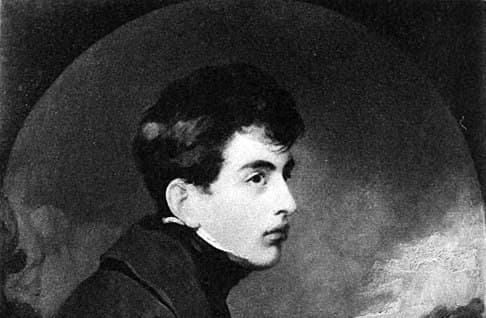
Lord Byron died on April 18, 1824, and so he is having a 200-year moment. The poet Lady Caroline Lamb called “mad, bad, and dangerous to know,” appears in quite a different aspect in Anne Eekhout’s evocative novel. Ebullient and mercurial, he is also magnetic, enchanting the writer Percy Shelley, who plays a sort of fey F. Scott Fitzgerald to Byron’s swaggering Hemingway.
Out of sorts after his failed marriage, Byron turned to the Shelleys, as Andrew Stauffer recounts in his somewhat gimmicky book: Residence in Geneva “set the stage for a particularly intense experiment in communal living for Byron, a welcome change of domestic texture from the stressed madness and impulsive cruelty of those final months at Piccadilly with Annabella.”
Called Albe in Ms. Eekhout’s novel, Byron draws out Mary Shelley and treats her as an equal, asking her to read a “new part” of “Childe Harold,” even before he consults her husband. He tells her: “I think it’s going to be good. I’d like you to read it and tell me what you think.” The narrator interjects: “Percy is not afraid that she will choose Albe over him. He is afraid that Albe will choose her over him.”
Mary does not think Albe is flattering her. He is addressing the daughter of Mary Wollstonecraft and William Godwin when he says: “I should like to read more of your work. Something that originated inside your head, not outside of it. A real story, a poem.” She demurs: “Perhaps I’m a writer like my parents. Perhaps I can only write about real things.” The smiling Albe replies: “I am fairly certain that is not the case. Is the difference between real and not real truly that great?”
His question gets Mary going, and he seems able to relax with her as he cannot with her husband. “Don’t whine Shelley,” the impatient Byron says: “You’re here with your wife, with your child. With me.” They all laugh, including Percy, but Mary doubts that Albe means the remark as a joke. Such passages expose the earnest Shelley and the bluff Byron.
Albe, in a friendly way, importunes: “Surprise us, Mary.” At first she is vexed to think that Albe is seeking to “pit herself against these men” — not only Byron and Shelley but also John Polidori, author of “The Vampyre, proposing that they each write a ghost story. Byron throws out a conceit about bringing the dead back to life through electricity as a way to galvanize their imaginations.
Mary thinks: “She does not need this. But something prevents her from voicing her thoughts. She thinks she wants to do it. She thinks something is there. Maybe. Maybe it is something terrible.” The wording here is brilliant, as if the “something terrible” is a presence, a ghost of a story that she now cannot help but begin to imagine.
Mary also thinks of death, and of her first child, a daughter who lived only a few weeks. The birth of Frankenstein, in this novel, is what Poe called a mournful and never ending remembrance, or as the narrator notes: “Mary’s brain always finds a path that leads to her little girl. … And when she asks herself if she ever wants that to end, she has no answer.”
Byron won’t let go when Mary hesitates, telling him: “I don’t know. … It’s happening. I’m writing. I’ve mainly been thinking a lot.” And for that Byron has an answer: “I spend too long thinking. Just start writing.” He wants, she wants, to give birth once more, to a life resurrected in a novel.
In Mr. Stauffer’s biography, we get the facts about Mary’s dream: “that my little baby came to life again – that it had only been cold & that we rubbed it by the fire & it lived – I awake & find no baby – I think about the little thing all day.” However mad or bad Byron may have been, in Ms. Eekhout’s novel, he brings Mary back to life nurturing her writing. Or as the narrator puts it: “Albe does whatever feels good. He is her friend” — a friend to literature, one might add.
Mr. Rollyson is the editor of “British Biography: A Reader” and author of “Lives of the Novelists.”