Jack Smith Breaks Long Silence, Denounces Trump Administration’s ‘Imaginary’ Case Against Him for Election Interference
The erstwhile special counsel’s lawyers argue that it is the 47th president, not their client, who is playing politics.
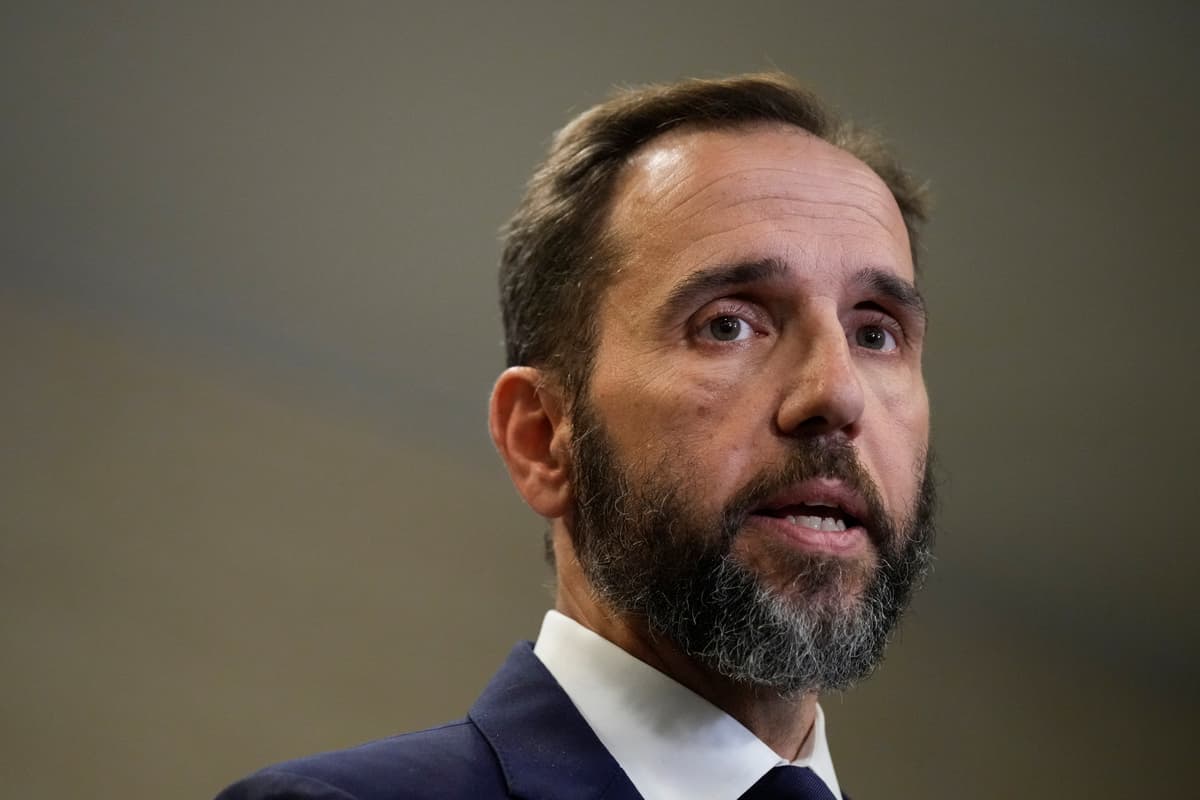

Special Counsel Jack Smith’s breaking of his silence — via his high-powered legal team — in respect of the government’s investigation into his prosecutions of President Trump could mark a new era of conflict between the hard-charging lawyer and the president he tried, and failed, to convict.
The riposte came in a letter to the acting special counsel, Jamieson Greer, at the United States Office of Special Counsel. That office, which is not part of the Department of Justice, is charged with investigating possible violations of the Hatch Act. That law bars federal employees from undertaking some varieties of political activities.
The letter, written by Mr. Smith’s lawyers at the white shoe law firm of Covington & Burling, is the first time that the prosecutor has been heard from since he resigned days before Mr. Trump swore the oath of office. Mr. Smith — whose whereabouts are unknown — had defiantly contended that the “evidence was sufficient to obtain and sustain a conviction” of Mr. Trump even if “the Constitution prohibits the continued indictment and prosecution of a President.”
Now Mr. Smith’s attorneys — Peter Koski and Lanny Breuer, both partners at Covington — insist that “there is no basis to find a violation of the Hatch Act and that these allegations are wholly without merit.” They describe their client, who was prosecuting war crimes at the Hague before being hired by Attorney General Merrick Garland, as a “prosecutor who has devoted his career to following the facts and the law.”
In February, Mr. Trump sanctioned Covington for representing Mr. Smith, stripping any of its lawyers who helped Mr. Smith of their security clearances. In an executive order the 47th president commanded Attorney General Pam Bondi to “immediately take steps consistent with applicable law to suspend any active security clearances held by Peter Koski and all members, partners, and employees of Covington & Burling LLP who assisted former Special Counsel Jack Smith during his time as Special Counsel.”
Mr. Breuer was a special counsel to President Clinton, defending him against independent counsel Kenneth Starr. Later, as a defense attorney in private practice, he represented Mr. Clinton’s national security adviser, Sandy Berger, when he was accused of stuffing classified documents into his socks and pants so he could steal them from the National Archives.
The Hatch Act scrutiny of Mr. Smith was launched by Senator Tom Cotton, who alleged in a letter last month to Mr. Greer — who is also the United States trade representative — that Mr. Smith’s twin prosecutions of Mr. Trump for January 6 and the storage of classified documents at Mar-a-Lago possessed “no legitimate purpose” and “no rationale except for an attempt to affect the 2024 election results.”
Mr. Smith’s attorneys call the senator’s argument “imaginary and unfounded” because, they claim, their client “followed well-established legal principles in conducting the investigation” into Mr. Trump. Judge Aileen Cannon in South Florida dismissed the Mar-a-Lago charges after finding that Mr. Smith was unlawfully appointed. The election interference case was dismissed after Mr. Trump won re-election and could claim “categorical” immunity.
Before Mr. Smith’s cases foundered, though, he pushed courts to consider his claims on an expedited basis — though he never explicitly mentioned the upcoming election. Instead, he repeatedly cited a “compelling public interest” in the disposition of his cases. Both Judge Tanya Chutkan and the District of Columbia Appeals Circuit were sympathetic to those arguments, though Judge Cannon insisted on a more deliberate pace.
Messrs. Koski and Breuer note that Mr. Cotton’s referral “does not allege that the criminal charges against President Trump were politically motivated or that the indictment was without merit. Instead, his allegations focus on the mechanical steps required to prosecute a case.” Mr. Trump’s DOJ has moved with alacrity to fire personnel who were seconded to Mr. Smith’s team in any capacity.
Mr. Smith’s team sees the roots of the Hatch Act investigation as traceable to “the whims of a political contest” and maintain that “the notion that justice should yield to politics is antithetical to the rule of law.” Mr. Trump, though, has long contended that the cases against him were entirely political, and that Mr. Smith was “deranged.” Mr. Garland appointed Mr. Smith three days after Mr. Trump announced his intention to retake the White House.
Covington, to support its position behind Mr. Smith, cites Judge Chutkan’s argument of 2023 that “I cannot, and I will not, factor into my decisions the effect it’s going to have on a political campaign for either side.” Judge Chutkan, an appointee of President Obama, as well as the left-leaning D.C. appellate court were overruled by the Supreme Court’s conservative majority, though, on the crucial question of presidential immunity. Trump v. United States dealt Mr. Smith’s case a blow from which it never recovered.
Mr. Smith’s prosecution resembled, Covington proposes, nothing so much as “the investigation of President Nixon. … Mr. Smith merely followed this precedent and pursued the same appellate litigation path established by the Supreme Court 50 years earlier.”
A disclosure made by Mr. Smith before he resigned reported some $150,000 in free personal legal services provided by Mr. Koski.