Jack Smith Was Warned That Secretly Surveilling GOP Lawmakers Brought ‘Litigation Risk’: Did He Violate the Constitution?

The special counsel secured subpoenas to surveil lawmakers — who are guaranteed a powerful form of immunity.

AP/J. Scott Applewhite, File
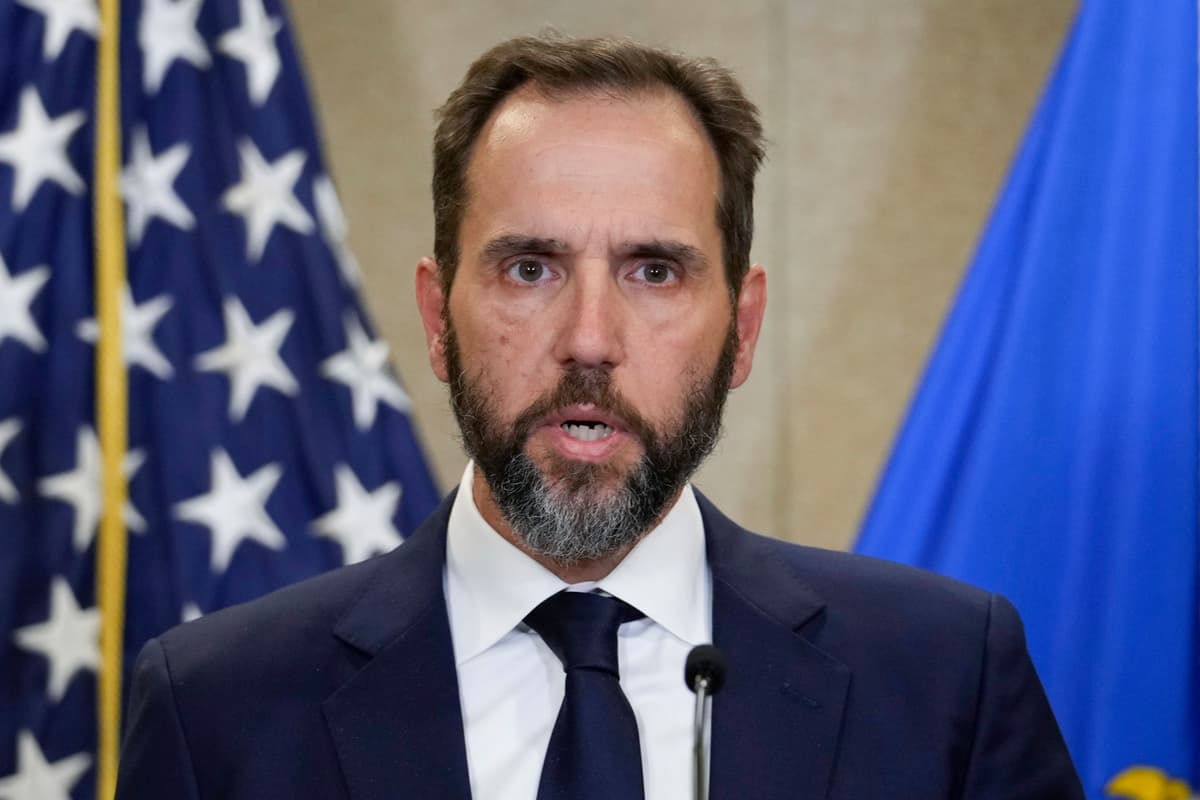
Special counsel Jack Smith speaks to the media about an indictment of former President Trump, Aug. 1, 2023, at Washington. AP/J. Scott Applewhite, File

Special Counsel Jack Smith knew about the “litigation risk” of surveilling Republican lawmakers — and pursued that strategy anyway as part of his failed quest to convict President Trump for election interference in the aftermath of the 2020 presidential election. 

That appetite for risk is evident in email messages released this week by Senators Charles Grassley and Ron Johnson as part of their probe into Mr. Smith’s “Operation Arctic Frost.” The name of the special counsel’s January 6 investigation alludes to a cold-hardy species of satsuma orange, a possible reference to Mr. Trump’s hue. Mr. Smith secured tolling telephone data for 10 senators and one congressman, all of them Republicans. Mr. Johnson calls it a “partisan dragnet.”  

The records unearthed by Messrs. Grassley and Johnson show John Keller, the principal deputy chief of the DOJ’s Public Integrity Section, writing in 2023 to Mr. Smith’s office that he “concurs in the subpoenas for toll records” for the solons, but that the “compelled disclosure” could violate one of the Constitution’s most formidable fences — “Speech or Debate” immunity.

That part of the parchment ordains that lawmakers “shall in all Cases, except Treason, Felony and Breach of the Peace, be privileged from Arrest during their Attendance at the Session of their respective Houses, and in going to and returning from the same; and for any Speech or Debate in either House, they shall not be questioned in any other Place.” It is an absolute protection for what courts have called “legitimate legislative activities” that has its roots in the Framers’ desire to protect against monarchical abuse.

An email message to Mr. Keller from one of Mr. Smith’s top deputies, Molly Gaston, disclosed that the special counsel intended “to issue subpoenas for January 4, 2021, to January 7, 2021, for Senators Marsha Blackburn, Lindsey Graham, Bill Hagerty, Josh Hawley, Cynthia Lummis, Ron Johnson, John Kennedy, Tim Scott, Dan Sullivan, and Tommy Tuberville, and Representative Mike Kelly.” Ms. Gaston called the subpoenas to the lawmakers, all Republicans and supporters of Mr. Trump, “narrowly tailored.”

Mr. Keller reasons that “even putting aside the government’s potentially meritorious argument that the calls over the relevant period — especially unsolicited incoming calls — would not constitute protected legislative acts. Given my understanding of the low likelihood that any of the Members listed below would be charged, the litigation risk should be minimal here.”

Mr. Grassley sees things differently, declaring in a statement that the records “show Smith and his merry band of partisans operating on a legally weak foundation by intruding on Members of Congress who were involved in core constitutional functions. Ultimately, the Biden DOJ threw the Constitution to the wind.” 

Mr. Smith, in addition to the subpoenas for the telephone metadata, also secured 19 non-disclosure orders directed at telephone providers. That meant that the lawmakers who were being surveilled were unaware that Mr. Smith had his eyes on them. The Judge who authorized the subpoenas and the orders was Judge James Boasberg, an Obama appointee who has locked horns with the Trump administration over the deportation of alleged members of the Tren de Aragua gang under the 1798 Alien Enemies Act. 

Mr. Trump has called for Judge Boasberg’s impeachment, and Judge Boasberg is pursuing contempt charges, alleging that the government refused his orders to return a plane of migrants being sent to El Salvador. The government earlier this week confirmed in a court filing that the command for the planes to stay on course came from the secretary for homeland security, Kristi Noem.

Mr. Smith’s surveillance drove the creation of a provision in a recent Senate spending bill that would have allowed individual senators to sue for $500,000 for each time they were surveilled without their knowledge — as long as they were not the primary target of the investigation. The provision was drafted to apply retroactively to Mr. Smith’s probe. The House of Representatives, though, unanimously voted to strip that provision. 

Ms. Gaston, the deputy to Mr. Smith, wrote to Mr. Keller: “We have intentionally limited the time period to narrow the chance of collecting material unrelated to January 6, and these are non-content records that will not reveal the substance of any communications.” Still, the disclosure that Mr. Smith was in some sense warned about the risks of securing the subpoenas could, in an ironic twist, turbocharge the effort to subpoena the special counsel.

Mr. Smith has not yet been formally summoned by Congress, though Congressman Jim Jordan has written the prosecutor a letter requesting his testimony. Mr. Smith has said he would answer questions under oath — but only at a public hearing and only if he is granted immunity for his testimony. Mr. Jordan last week requested records relating to Mr. Smith from more than a dozen financial institutions.


The New York Sun

© 2025 The New York Sun Company, LLC. All rights reserved.

Use of this site constitutes acceptance of our Terms of Use and Privacy Policy. The material on this site is protected by copyright law and may not be reproduced, distributed, transmitted, cached or otherwise used.

The New York Sun

Sign in or  create a free account

or
By continuing you agree to our Privacy Policy and Terms of Use