

James Comey Escalates Onslaught Against Criminal Charges in Effort To Have Trump’s Case Against Him Tossed

The former FBI director denies that he lied in response to testimony he calls ‘fatally ambiguous.’
AP/Alex Brandon, File
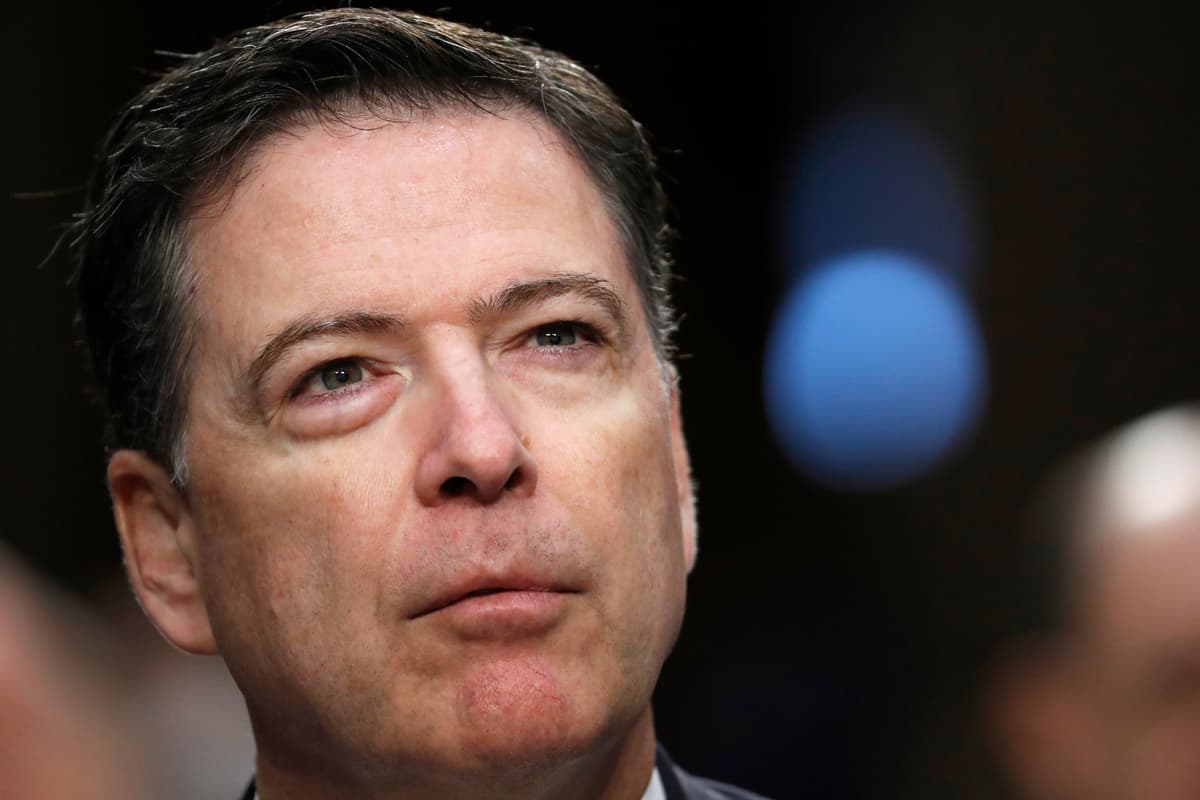
James Comey pauses as he speaks during a Senate Intelligence Committee hearing on Capitol Hill, June 8, 2017, at Washington. AP/Alex Brandon, File

The filing on Thursday of a motion to dismiss by a former director of the FBI, James Comey, underscores the aggression with which he is moving to end the criminal case against him before trial. The issue of dismissal will be decided by Judge Michael Nachmanoff, an appointee of President Biden.

Mr. Comey is accused of making false statements and obstructing Congress. The indictment against him was sought and secured by the interim United States attorney for the Eastern District of Virginia, Lindsey Halligan. Mr. Comey has pleaded “not guilty” to the charges and declared: “I’m not afraid.”

Mr. Comey has already filed two other motions to dismiss. One argued that Ms. Halligan is unlawfully appointed because she is the second interim appointment in a row made by Attorney General Pam Bondi. Federal law would appear to prohibit that method of filling prosecutorial posts. Mr. Comey also alleges that the case against him is “selective” and “vindictive” because it is motivated solely by President Trump’s animus toward him.

This latest motion takes aim at the substance of Ms. Halligan’s case and argues that the evidence she adduces is defective and insufficient. That case turns on testimony Mr. Comey gave in 2020 relating to an investigation into Russia’s influence on the 2016 presidential election. Now Mr. Comey argues that the testimony he gave was “literally true” and that his interlocutor, Senator Ted Cruz, embarked on a line of questioning that was “fundamentally ambiguous.” 

Mr. Comey’s lawyers write: “Fundamental to any false statement charge are both clear questions and false answers. Neither exists here.” They contend that conviction on the charges that their client faces requires “false answers to precise questions.” Mr. Comey argues that the “indictment contains no allegations” that his answers were false. 

In 2017 Senator Chuck Grassley asked Mr. Comey: “Have you ever been an anonymous source in news reports about matters relating to the Trump investigation or the Clinton investigation?” Mr. Comey responded, “Never.” Mr. Grassley then asked: “Have you ever authorized someone else at the FBI to be an anonymous source in news reports about the Trump investigation or the Clinton investigation?” Mr. Comey retorted, “No.”

Three years later, Mr. Comey appeared before Congress to answer questions relating to “Operation Crossfire Hurricane,” the investigation into Russian interference in the 2016 presidential election. Mr. Cruz declared that Mr. Comey’s deputy, Andrew McCabe, “has publicly and repeatedly stated that he leaked information to the Wall Street Journal and that you were directly aware of it and that you directly authorized it.”

Mr. Cruz continued by venturing: “Now, what Mr. McCabe is saying and what you testified to this committee cannot both be true; one or the other is false. Who’s telling the truth?” Mr. Comey replied, “I can only speak to my testimony. I stand by what, the testimony you summarized that I gave in May of 2017,” and said his testimony is “the same today” as it was three years prior.

Ms. Halligan’s indictment, though, references not Mr. McCabe — a witness with his own credibility issues — but instead a former FBI special employee and law professor, Daniel Richman, a close confidant of Mr. Comey’s. The government has confirmed that Mr. Richman is “Person 3” referenced in the indictment, even though he was not referenced in the questioning before Congress  

Mr. Comey argues that the statute under which he is charged does not “authorize the government to create confusion by posing an imprecise question and then seek to exploit that confusion by placing an after-the-fact nefarious interpretation on the ensuing benign answer …  basic due process principles in criminal law require that the questioner frame his questions with clarity so that a witness does not have to guess.”

The brief insists that “Mr. Comey could not have reasonably known that Senator Cruz was asking him to answer a broad question about anyone at the FBI” — including Mr. Richman — “when asked a specific question about Mr. McCabe.” Mr. Cruz, a graduate of Harvard Law School, “asked Mr. Comey two questions, each of which contained a discrete inquiry about Mr. McCabe and a discrete inquiry about FBI officials more broadly.”

Adding to the DOJ’s challenge in securing a conviction is that the statute of limitations has expired on Mr. Comey’s original testimony from 2017, making only his statements from 2020 chargeable — by a matter of mere days. The brief argues that  “although Mr. Comey did not respond directly to Senator Cruz’s questions, his responses were literally true.”

Now it is up to Judge Nachmanoff to rule whether he agrees with Mr. Comey’s argument that the government “cannot try Mr. Comey on cherry-picked statements from a four-hour hearing without specifying which statement it believes is false or misleading.” The former FBI director wants his case dismissed “with prejudice,” meaning that it could not be refiled.


The New York Sun

© 2025 The New York Sun Company, LLC. All rights reserved.

Use of this site constitutes acceptance of our Terms of Use and Privacy Policy. The material on this site is protected by copyright law and may not be reproduced, distributed, transmitted, cached or otherwise used.

The New York Sun

Sign in or  create a free account

or
By continuing you agree to our Privacy Policy and Terms of Use