Japan Elects Its First Female Prime Minister With Help From Far Right Party That’s Hawkish on Defense, Foreign Policy
History is made as a late political challenge to Japan’s ‘Iron Lady’ fails.
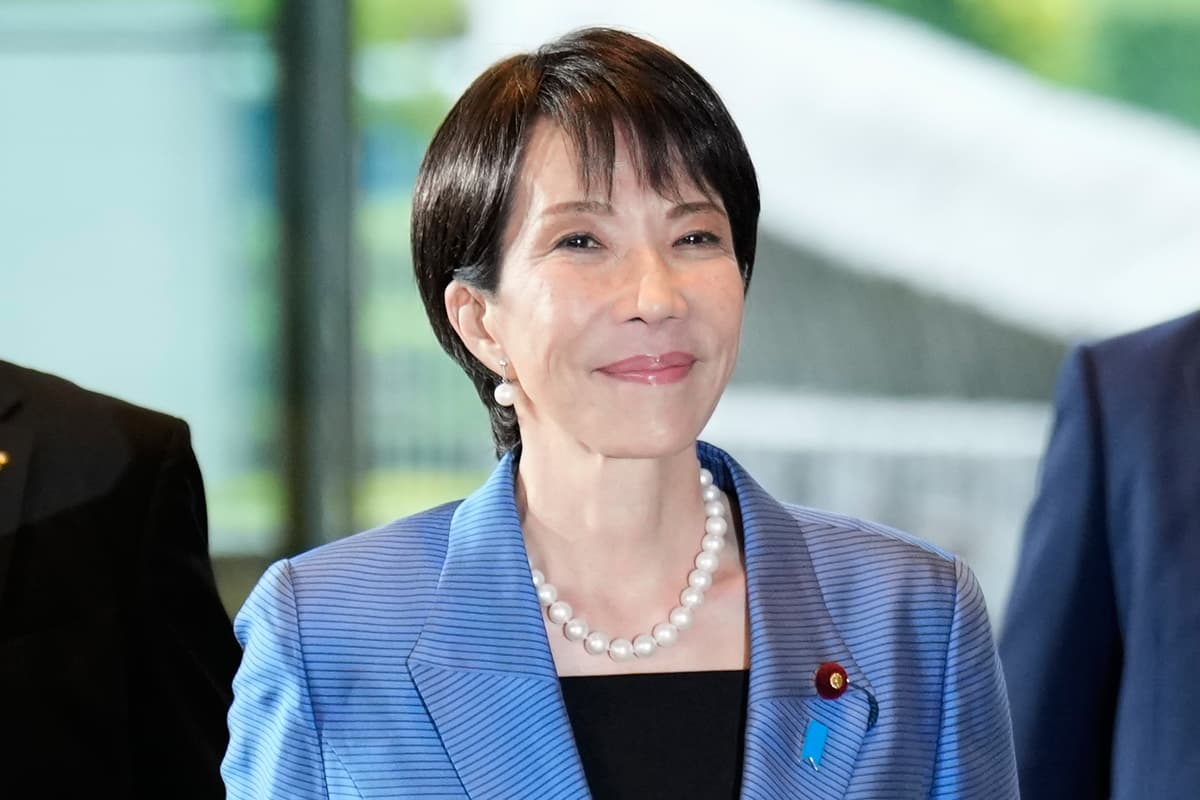
TOKYO — Japan has elected its first female prime minister thanks to a coalition with a minor far-rightist party that firmly endorses her hawkish views on defense and foreign policy while supporting her pledge to buttress the economy with defense spending.
Sixty-four-year-old Sanai Takaichi had to overcome a late political challenge when the Buddhist-backed Komeito backed out of its 26-year alliance with the long-ruling Liberal Democratic Party after the LDP elected her party president. The defection of the minor Komeito raised fears she might not get the majority needed in the Diet, or parliament.
In a frenzy of backstage deal-making, however, the woman seen as Japan’s “Iron Lady” won the support of the rightist Nippon Ishin, or Japan Innovation Party, based at Osaka. She then coasted to victory over the candidate of the left-leaning Constitutional Democratic Party, Yoshihiko Noda, who had served as prime minister in a similar crisis in 2011 and 2012. The final tally was 237 to 149.
Ms. Takaichi faces her next crucial test when she meets President Trump at Tokyo on October 28 on his way to the gathering in South Korea on October 31 and November 1 of leaders of the 21 economies in the Asia-Pacific Economic Cooperation group.
Ms. Takaichi and Mr. Trump are sure to talk about steep tariffs that America is imposing on Japanese products in the context of American military support for Japan, including 50,000 troops serving on crucial bases from around Tokyo to the southernmost prefecture of Okinawa. Mr. Trump has indicated Japan should pay far more toward the costs of the bases.
An agreement between the LDP and Nippon Ishin “spells out plans” to increase defense spending to 2 percent of the nation’s GDP, according to Asahi Shimbun, one of Japan’s huge national newspapers. That should be “music to the ears” of Mr. Trump, it said, considering his complaints that “America’s allies are not paying their way.”
Much will depend on the level of Mr. Trump’s enthusiasm for America’s defense of Japan and a tough policy against China. Many Japanese fear he will soften his seemingly tough policy when he sees China’s president, Xi Jinping.
Armed with first-hand insights on Mr. Trump’s outlook, Ms.Takaichi may have the chance at APEC to express her concerns directly to Mr. Xi about Chinese threats from the South China Sea to Taiwan to the Senkaku islands, an unpopulated cluster north of Taiwan that Japan holds and China claims.
All that summitry should mark Ms. Takaichi as a staunch nationalist anxious to discourage Chinese aggression against Free China, based on the island province of Taiwan ever since the victory of Mao’s Red Army on the Chinese mainland in 1949.
While prioritizing economic issues and dealing with endemic corruption inside her own Liberal-Democratic Party, Ms. Takaichi has leaned far to the right in her coalition with the Nippon Ishin after the defection of the LDP’s Komeito followers.
It’s not likely that Ms. Takaichi will call for abolition of Article 9 of Japan’s post-war constitution that bans sending troops overseas, but there may be ways to work around that prohibition by joining in more war games with American forces and possibly increasing the size of Japan’s euphemistically named “Self-Defense Forces.”
Combining commercial with military interests, Ms. Takaichi agreed with the Nippon Ishin to revoke the restriction on military exports, limited by laws to non-lethal materiel like vehicles and electronic gear. Japan could then emerge as a top arms exporter, a challenge that could lead to Japan’s renaissance as a military power.