
Jeff Bezos Takes CEO Role at AI Startup Project Prometheus With $6.2 Billion in Funding
It’s the first formal operational role for the tech giant since stepping down from Amazon in 2021.
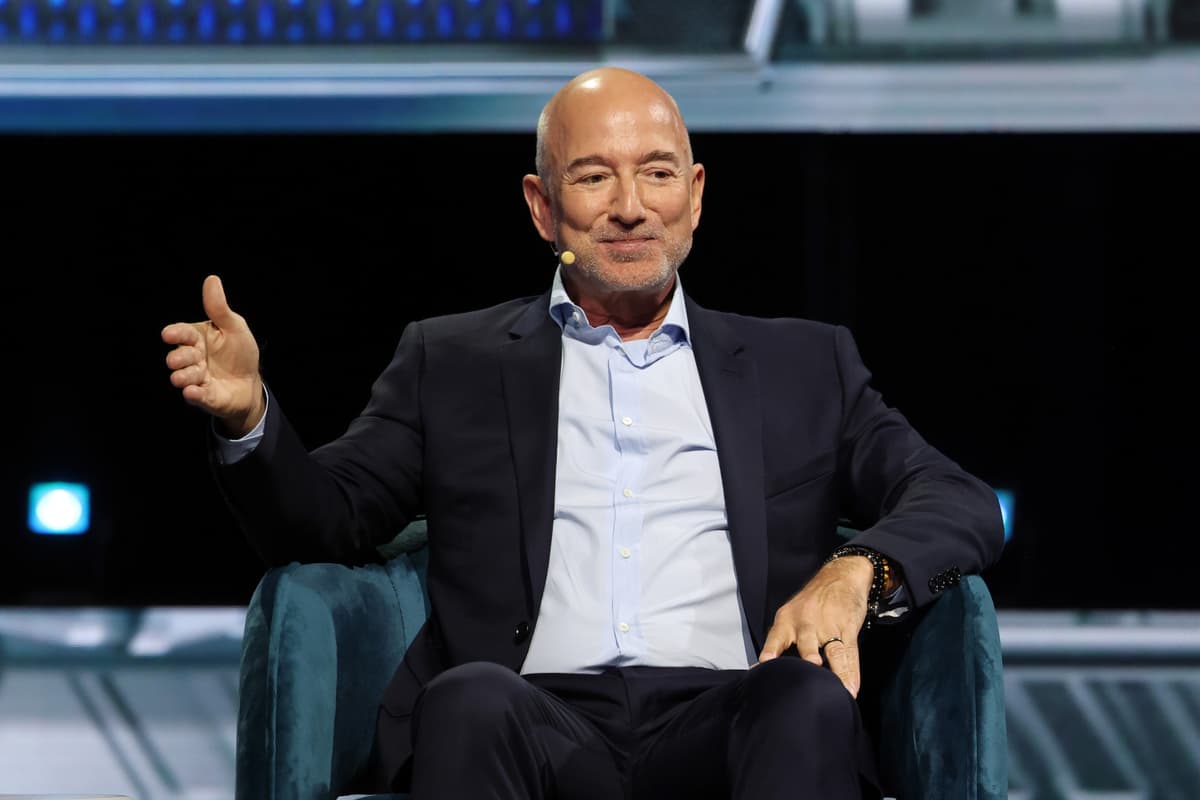
Amazon founder Jeff Bezos is setting his sights on AI, taking on a new role heading up a new startup that will focus on developing the emerging technology for use in engineering and manufacturing.
The tech industry giant will take the helm as co-chief executive officer along with co-founder Vik Bajaj, a physicist and chemist who once worked on semi-secret research division of Google known as “The Moonshot Factory.” They both will be heading up Project Prometheus, which already has a robust funding of $6.2 billion. It is the first formal operational role Mr. Bezos has taken with a company since stepping down as Amazon’s CEO in 2021. During that time, he’s taken interest in bolstering operations of Blue Origin, a direct competitor to Elon Musk’s SpaceX.
Project Prometheus, which has mostly kept a low-profile, focuses on AI technology that coincides with Mr. Bezos’ interest in sending people into outer space. The startup has already bolstered its staff with nearly 100 employees which include researchers that were poached from companies like OpenAI, Google’s DeepMind, and Meta, according to a report from The New York Times.
It is among a wave of companies that are turning their focus on applying AI to complete physical tasks like robotics, drug design, and scientific discovery. Their aim is to develop an AI platform that is able to learn in a more complex way. Currently, large language models develop their skills by analyzing massive amounts of digital text. Mr. Bezos has shown growing interest in juicing up AI’s capabilities, investing last year in another start up named Physical Intelligence, which is working towards applying new AI models to robots.
News of Mr. Bezos going all in on AI comes amid mounting concern that the industry is at prime risk of hitting a bubble, similar to previous tech booms, several Wall Street investors and economists have been warning that the pace and scale of investment in AI is quickly becoming unstable.
Investors Steve Eisman and Michael Burry, who are infamous for betting against the housing market before the 2008 financial crisis, which was the inspiration for the 2015 movie, “The Big Short,” have recently had a public disagreement about how Big Tech is accounting for massive spending on AI infrastructure.
Mr. Burry has been posting on social media allegations that major cloud and AI infrastructure providers are acting as “hyperscalers” that are using aggressive accounting techniques to pad their profits.
“ Understating depreciation by extending useful life of assets artificially boosts earnings -one of the more common frauds of the modern era,” he recently said on X. “Yet this is exactly what all the hyperscalers have done. By my estimates they will understate depreciation by $176 billion 2026-2028.”
“ORCL [Oracle] will overstate earnings 26.9%, META by 20.8%, etc. But it gets worse. More detail coming November 25th. Stay tuned.”
Mr. Eisman spoke out against Mr. Burry’s claims on his podcast, “The Real Eisman Playbook” saying that AI Infrastructure spending is not a consequential as he has suggested.
“Burry is arguing that the hyperscalers are artificially inflating their earnings simply by changing their depreciation schedules,” he said. “I just don’t think his concerns matter that much.”
“The big question as to AI spending is what kind of returns and cost savings these massive investments will or won’t bring.”