
Jerome Powell’s Consensus Frays as Fed Officials Clash Over Policy Path

Monetary policymakers divide over balancing inflation risks against labor market weakness amid government data blackout.
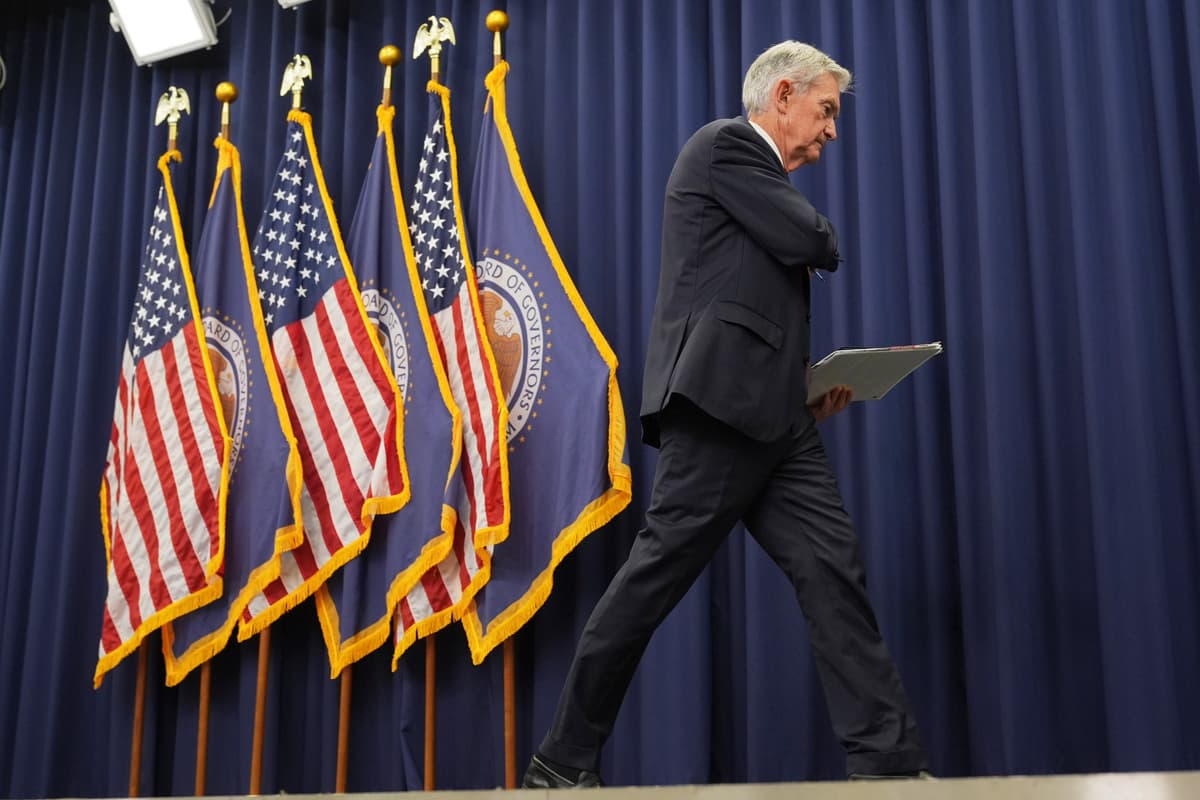
AP/Jacquelyn Martin
Federal Reserve Chairman Jerome Powell. AP/Jacquelyn Martin

What markets previously viewed as a sure-bet December rate cut now appears anything but certain, as Federal Reserve officials express rare competing views over monetary policy amid a government data blackout.

The rift first surfaced at last week’s Federal Open Market Committee meeting, which produced a 10 to 2 vote to lower borrowing costs by a quarter percentage point. The decision was historic not for the cut itself, but for the opposing rationales behind the dissents — newly appointed Fed Governor Stephen Miran voted for a larger half-point reduction, while Kansas City Fed President Jeffrey Schmid voted against any cut at all.

Fed Chairman Jerome Powell acknowledged the unusual divide in his post-meeting press conference, telling reporters that officials held “strongly differing views about how to proceed.” A December rate cut, he said, was “not a foregone conclusion. Far from it.”

The schism has widened as members of the central bank’s 19-person committee have publicly staked out positions ahead of the upcoming December meeting. By Monday, markets were pricing in just a 65 percent chance of a rate cut next month — down from more than 90 percent before Mr. Powell’s remarks.

At the heart of the debate is how the Fed should balance the risk of a weakening labor market against stubbornly high inflation — a task complicated by the ongoing government shutdown, which has suspended the release of key economic data.

Mr. Miran has emerged as the Fed’s most dovish voice, joined by Governors Christopher Waller and Michelle Bowman in advocating for further rate cuts to support the labor market.

“I think policy is too restrictive and that we’re too far above where neutral rates would be,” Mr. Miran said Wednesday during an interview with Yahoo Finance. “Given the state of the labor market, continuing to run policy that restrictive is to run unnecessary risks.”

He made those comments after private payroll data showed that American companies added 42,000 jobs in October, slightly above economists’ expectations and a reversal from September’s decline. Mr. Miran called the report “a welcome surprise” while maintaining that moderating wages and softening labor demand justify lower rates.

A growing number of Fed officials, however, have adopted more hawkish stances, either opposing a December cut or urging caution. President Lorie Logan of the Dallas Fed, President Beth Hammack of the Cleveland Fed, and President Raphael Bostic of the Atlanta Fed have all signaled discomfort with further easing while inflation remains elevated.

President of the Chicago Fed, Austan Goolsbee, despite supporting last week’s cut, said Monday he was “nervous about the inflation side of the ledger, where you’ve seen inflation above the target for four and a half years, and it’s trending the wrong way.” He added that he was going into the December meeting “undecided.” 

Governor Lisa Cook struck a middle ground while speaking at the Brookings Institution Monday, in her first public remarks since President Trump’s attempt to remove her from office. She described the Fed’s dual mandate — maximum employment and stable prices — as being “in tension” under current economic conditions.

“Keeping rates too high increases the likelihood that the labor market will deteriorate sharply,” Ms. Cook said, though she cautioned that “lowering rates too much would increase the likelihood that inflation expectations will become unanchored.” She called the December meeting “live” for a possible cut but declined to commit to one.

Ms. Cook pushed back on Mr. Powell’s suggestion that the “fog” of the government shutdown would require slower decision-making, noting that Fed staffers rely on “a wide variety of data from administrative sources and various private-sector providers to continually evaluate the state of the economy in real time.”

San Francisco Fed President Mary Daly offered a similar assessment, calling last week’s cut “insurance” against labor market weakness while keeping “an open mind” about December.

“It would be an unfortunate outcome, one that we would absolutely want to avoid, if we get inflation to 2 percent at the cost of millions of jobs,” Ms. Daly said, adding that the Fed must balance competing risks as inflation remains above target.


The New York Sun

© 2025 The New York Sun Company, LLC. All rights reserved.

Use of this site constitutes acceptance of our Terms of Use and Privacy Policy. The material on this site is protected by copyright law and may not be reproduced, distributed, transmitted, cached or otherwise used.

The New York Sun

Sign in or  create a free account

or
By continuing you agree to our Privacy Policy and Terms of Use